Upway’s $60M raise shows refurbished e‑bikes and used EVs are moving mainstream—cutting emissions, costs, and risk while powering the circular green economy.
Most companies treat used electric bikes as an afterthought. Upway just convinced investors it’s the main event—backed by a fresh $60 million Series C round that pushes its total funding past $125 million.
This matters because the way we handle used EVs and e‑bikes will decide whether green technology actually scales, or just becomes another waste stream. Refurbishing and reusing hardware is where climate impact, affordability, and smart business all line up.
In this article, I’ll break down what Upway’s funding tells us about the future of electric bikes, why refurbishing is becoming a serious piece of the green economy, and how businesses can position themselves around this fast‑growing circular market.
Upway’s $60M Raise: What’s Actually Happening?
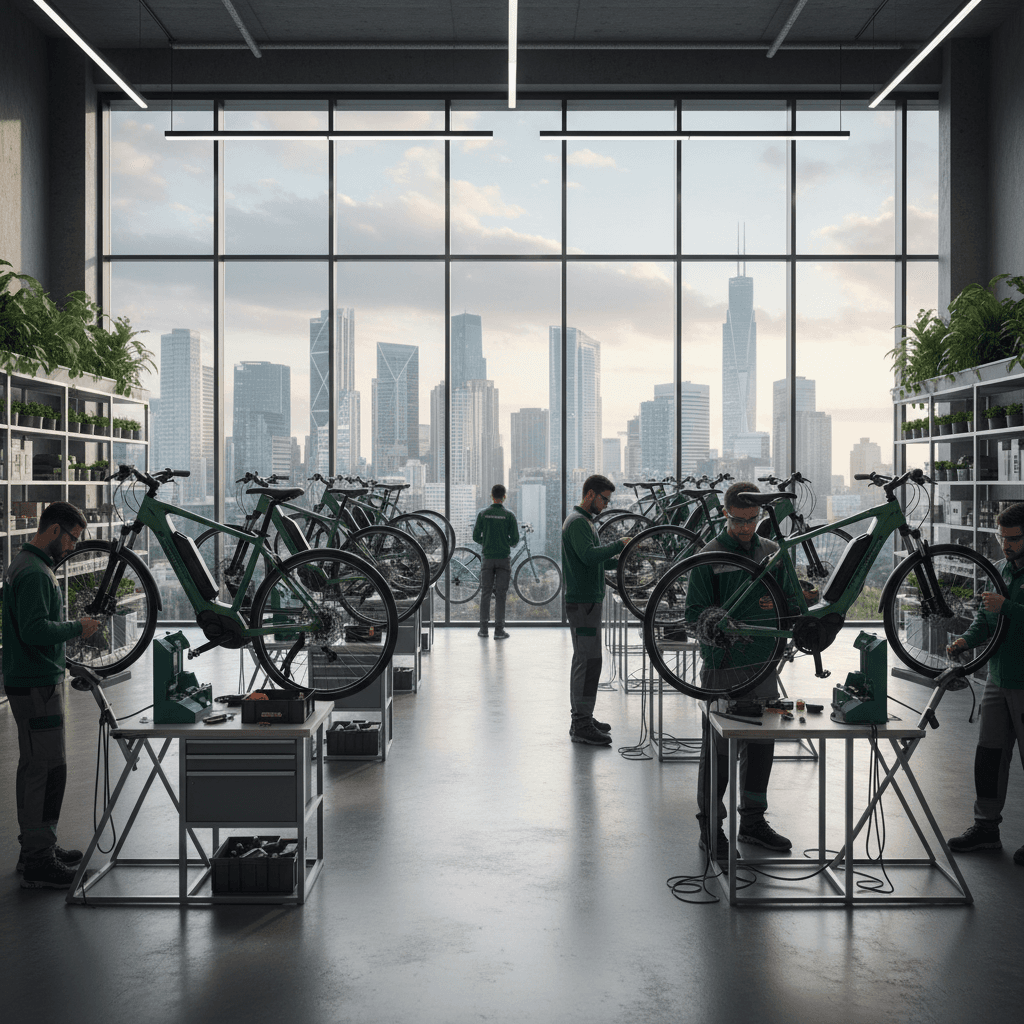
Upway, founded in 2021, focuses on buying, refurbishing, and reselling used e‑bikes. The company operates like a certified pre‑owned marketplace for electric bikes: inspect, repair, guarantee, and ship.
With the new $60 million Series C, Upway’s total funding now exceeds $125 million, which puts it in the top tier of e‑bike and micromobility startups globally.
From what’s been disclosed and based on typical growth-stage deployment, this capital is likely aimed at three main areas:
-
Expanding refurbishment capacity
More warehouses, more technicians, and more automation for diagnostics and parts management. -
Scaling into new markets
New countries or deeper penetration into existing markets like major European cities and North America. -
Building a trusted brand for used EVs
Stronger warranties, standardized quality checks, and better customer experience to make buying refurbished feel as safe as buying new.
The standout point from early reporting is that this round will create new green jobs in refurbishment, logistics, and operations. That’s a quiet but hugely important piece of the green technology story: we’re not just swapping fuels, we’re building whole new value chains.
Why Refurbished E‑Bikes Are A Big Deal For Green Technology
Refurbished e‑bikes sit right at the intersection of clean transport, circular economy, and green technology.
1. Lower Emissions, Faster
Manufacturing a new e‑bike has a carbon cost—mostly from aluminum, steel, and the battery. Life‑cycle analyses of e‑bikes typically show:
- Roughly 150–300 kg of CO₂e to produce one new e‑bike (varies by model and battery size)
- Most of that comes from the frame and battery production, not shipping
When you refurbish instead of manufacture:
- You reuse the majority of the frame and components
- You often only replace wear parts (brake pads, chain, tires) and sometimes the battery
Refurbishment can cut manufacturing‑related emissions by 50–70% per unit compared with producing a new bike. Scale that to tens or hundreds of thousands of units per year, and it’s not a rounding error anymore.
2. Affordability Drives Adoption
Green tech only works if people can actually afford it.
Brand‑new mid‑range e‑bikes often cost $2,000–$4,000. A refurbished equivalent can easily be 20–40% cheaper. That price drop does three things:
- Pulls more commuters out of cars and ride‑hailing
- Makes cargo and family e‑bikes realistic alternatives to second cars
- Opens access for students, gig workers, and lower‑income households
If your goal is maximum emissions reduction per dollar, subsidizing or supporting refurbished e‑bikes can outperform flashy new vehicle incentives.
3. Circular Economy By Design
Upway’s model is a live example of circular economy in transport:
- Bikes are bought back instead of abandoned or underused
- Components get tested, graded, and reused
- Batteries are retested, repurposed, or recycled
Instead of a straight line from factory to landfill, you get loops: use → refurbish → reuse → recycle. That’s exactly the kind of closed‑loop thinking the green technology movement is pushing for across energy, mobility, and industry.
How Upway’s Model Works (And Why Investors Care)
Upway isn’t just flipping used bikes; it’s building infrastructure and standards for used EV quality.
A Certified-Pre‑Owned System For E‑Bikes
At a high level, a refurbisher like Upway tends to follow a repeatable flow:
-
Acquisition
- Buy from individuals, fleets, or retailers
- Import lease returns and overstock
-
Technical Inspection
- Frame integrity check (cracks, alignment, welds)
- Motor and controller diagnostics
- Battery health check (capacity, cell balance, BMS)
-
Refurbishment
- Replace wear parts: chains, cassettes, tires, brake pads, cables
- Fix or swap defective electronics
- Cosmetic cleanup so the bike looks “like new enough”
-
Certification & Warranty
- Standardized quality checklist
- Warranty period (for example 1 year on motor/battery)
-
Resale & Logistics
- Online marketplace
- Delivery to the customer’s door
From an investor’s perspective, the value here is:
- Standardization: repeatable processes mean predictable margins
- Brand trust: customers learn that “refurbished” doesn’t mean “risky”
- Data: huge feedback loop on which brands and components last longest
That last one is underestimated: a refurbisher sees real‑world reliability data at scale. Over time, that becomes an asset for product design, procurement, and even insurance.
AI And Automation In Refurbishment
Since this post is part of our Green Technology series, let’s call out where AI and automation are quietly entering this space:
- Battery diagnostics: AI models can predict remaining useful life based on charge cycles, voltage curves, and temperature history
- Pricing engines: automated valuation based on brand, condition, age, and market demand
- Parts optimization: inventory algorithms that learn which components fail most and where shortages might hit
- Fraud detection: flagging suspicious listings or tampered components during intake
I’ve found that companies who treat refurbishment as an information problem as much as a mechanical one tend to scale faster and more profitably.
Why This Funding Round Matters For Cities And Businesses
Upway’s $60M round isn’t just a win for one startup. It’s a signal that used EV ecosystems are now investable, not experimental.
For Cities And Public Sector Planners
If you’re working on sustainable mobility or smart city projects, this trend opens up new tools:
- Subsidy design: You can structure incentives for refurbished e‑bikes, not just new ones
- Fleet end‑of‑life: Municipal or shared fleets can partner with refurbishers instead of bulk‑scrapping
- Equity programs: Refurbished bikes can power targeted programs for low‑income or underserved neighborhoods
Cities that align their policies with a circular e‑bike ecosystem can cut emissions faster and stretch public budgets further.
For Businesses Looking At Green Transport
If your company cares about decarbonization, refurbished e‑bikes and used EVs unlock several practical options:
-
Employee mobility programs
Partner with refurbishers to offer subsidized or salary‑sacrifice e‑bikes. -
Delivery and service fleets
Start or expand last‑mile fleets using refurbished cargo bikes instead of new vans. -
Sustainability messaging with substance
Citing real numbers—such as “X% of our fleet is refurbished or reused hardware”—lands better than vague green claims.
This is where theory meets practice: you don’t need to invent new technology, you just need to plug into a maturing circular supply chain.
Used EVs, Batteries, And The Bigger Circular Picture
Upway is one slice of a much larger trend: the rise of used EV and battery ecosystems.
From Used E‑Bikes To Used EV Platforms
The same logic that applies to e‑bikes applies to:
- Electric scooters and mopeds
- Light commercial EVs
- Stationary battery packs made from second‑life cells
We’re already seeing specialized markets for certified pre‑owned EVs and remanufactured battery packs. Upway’s raise shows that:
The market no longer sees “used EV” as a dumping ground. It sees it as a value stream.
Companies that can standardize testing, certification, and warranty around used electric hardware stand to own a big piece of this new green economy layer.
Battery Lifecycle: From Bike To Grid
One of the most interesting longer‑term plays around refurbishers is battery lifecycle:
- Healthy batteries stay in bikes after testing
- Degraded but functional packs can move into low‑demand applications (like stationary storage)
- Truly end‑of‑life batteries move into recycling feedstock
Upway and similar players become gatekeepers of battery condition data, which is exactly what recyclers, energy companies, and regulators want to understand. That’s where AI again ties in: predicting when and where wave after wave of used packs will be available.
How To Act On This Trend (Whether You’re A City, Business, Or Individual)
Here’s the practical part: what can you actually do with this information?
For City And Regional Policymakers
Focus on three levers:
-
Include refurbishment in all mobility planning
Don’t write strategies that only consider new vehicles. -
Design incentives that are brand‑agnostic
Allow vouchers or subsidies to apply to certified refurbished e‑bikes. -
Partner with refurbishers on data
Use anonymized usage and failure data to guide infrastructure planning and standards.
For Businesses
If you’re serious about green technology and ESG, consider:
- Launching employee e‑bike benefits where refurbished options are the default
- Switching short‑distance service or delivery routes to e‑bike or cargo bike fleets
- Setting procurement policies that prioritize refurbished when functionally equivalent
You don’t need a giant budget to start; you just need clear internal guidelines.
For Individuals
If you’re on the fence about buying an e‑bike, here’s my blunt view:
- A refurbished e‑bike from a reputable seller is usually a smarter move than a brand‑new low‑quality bike
- Look for: battery warranty, clear inspection checklist, and responsive support
- Treat it like buying a used car, but with much lower downside
The fastest way to support green technology isn’t always buying the newest thing—it’s keeping good hardware in use longer.
Upway’s $60M funding round is more than a startup milestone. It’s a clear signal that refurbished e‑bikes and used EVs are moving into the mainstream of the green economy.
For our Green Technology series, this is a perfect example of how climate solutions, smart business models, and AI‑driven operations intersect. Refurbishment turns sustainability from a marketing slogan into a working system: lower emissions, lower costs, and real jobs.
If you’re planning your 2026 sustainability roadmap, ask a simple question:
Where can refurbished, reused, or certified‑pre‑owned hardware replace “always buy new” in our transport and energy decisions?
Organizations that answer that now will be the ones investors, customers, and regulators point to as serious about the transition—not just talking about it.