New data from Texas shows petrochemical expansion piling toxic pollution onto communities of color. Here’s what it means for green tech, justice and jobs.
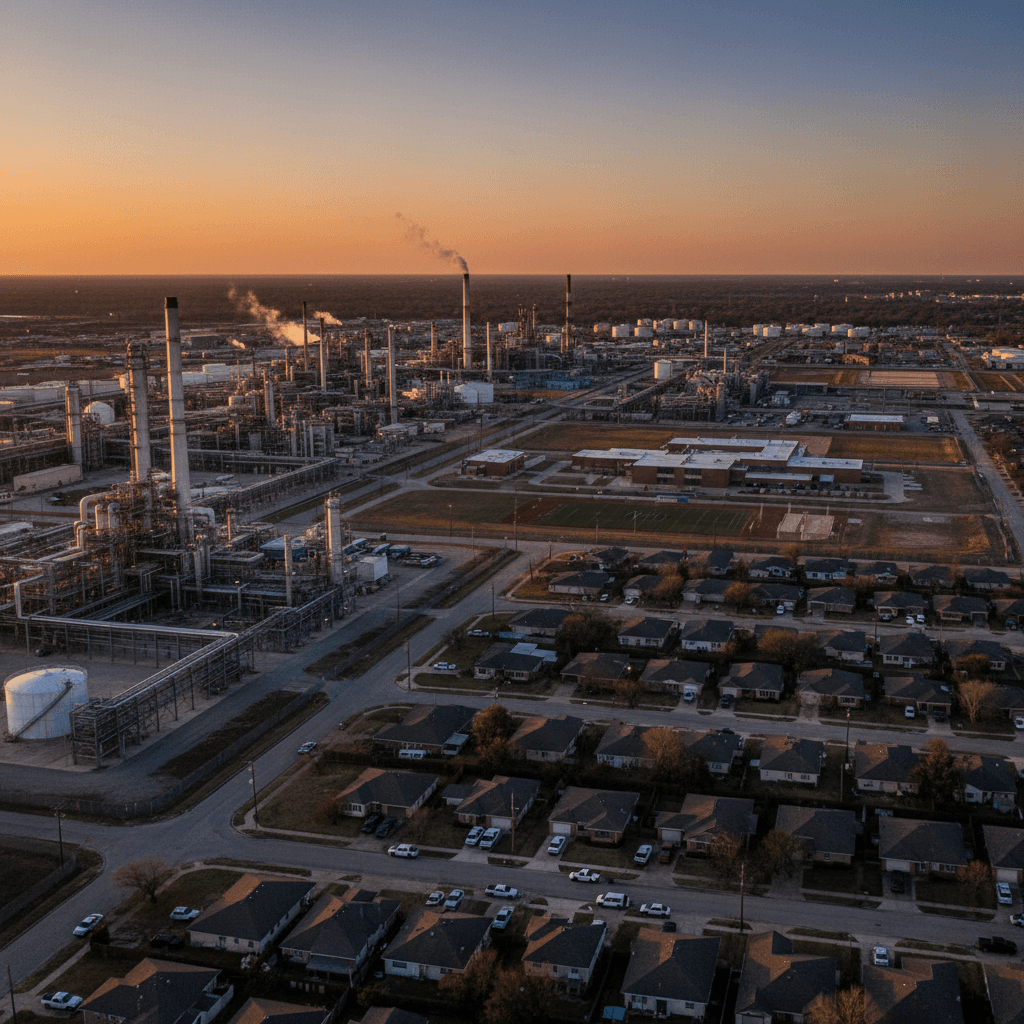
Texas Petrochemical Expansion, Pollution and Race: What the Data Really Shows
Ninety percent of proposed oil, gas and petrochemical projects in Texas sit in counties with higher shares of people of color and families in poverty than the state average. Nearly half of those sites are already in the top 10 percent for toxic pollution in the United States.
That’s not an accident. It’s a pattern.
A new analysis from the Bullard Center for Environmental and Climate Justice at Texas Southern University puts hard numbers behind what residents along the Texas Gulf Coast have been saying for decades: petrochemical expansion piles health risks onto communities of color while the economic upside flows somewhere else.
This matters because anyone serious about green technology, climate solutions or equitable economic development has to confront where the fossil fuel and plastics industry is still expanding – and who’s paying the real cost.
In this post, I’ll walk through:
- What the new Texas data shows about petrochemical expansion
- How this expansion locks communities into more pollution and climate risk
- Why the “jobs and growth” argument doesn’t hold up at the fenceline
- How green technology and policy can offer a different path – and where businesses and local leaders can act right now
What the Bullard Center Found About Petrochemical Expansion
The core finding is blunt: Texas petrochemical expansion is concentrated in overburdened communities of color that already face some of the highest toxic exposures in the country.
The numbers behind environmental injustice in Texas
The Bullard Center reviewed 114 oil and gas–related projects at 89 locations across Texas (as of early 2024): export terminals, refineries, plastics facilities, seawater desalination plants and related infrastructure.
Here’s what stood out:
- ~90% of proposed facilities are in counties with higher-than-average concentrations of people of color and low-income households.
- Nearly 50% of project locations are already above the 90th percentile nationally for toxic exposure using the EPA’s Toxics Release Inventory.
- Several locations near Port Arthur and Beaumont rank in the 99th percentile for toxic emissions; ten more sit in the 98th percentile.
The projects cluster mainly around existing petrochemical hubs:
- Houston Ship Channel
- Port Arthur / Beaumont
- Freeport
- Corpus Christi
In other words, the state isn’t spreading risk; it’s stacking new sources of pollution on neighborhoods already carrying the heaviest burden.
“America is segregated and so is pollution.” – Robert Bullard
Bullard’s been documenting this since the 1970s, when he showed that all five Houston city-owned landfills and six of eight incinerators were placed in Black neighborhoods. Four and a half decades later, the pattern of siting remains almost unchanged.
How Petrochemical Growth Harms Health and the Climate
Petrochemical expansion doesn’t just add a few stacks on a skyline. It locks in decades of toxic air, water impacts and climate-warming emissions.
What comes out of these plants
Petrochemical facilities release a cocktail of pollutants that are well-studied and anything but abstract:
- Benzene – a known human carcinogen linked to leukemia and other blood cancers
- Ethylene oxide – classified as a human carcinogen; associated with breast and lymphoid cancers
- Vinyl chloride – causes liver cancer and damage to the central nervous system
- 1,3-butadiene – linked to leukemia and other cancers
- Fine particulate matter (soot) – drives heart disease, strokes, asthma and premature death
- Heavy metals and acids in wastewater – contaminate waterways and groundwater
The Chevron Phillips Chemical complex in Port Arthur offers a concrete example. One ethylene unit is already permitted to emit each year:
- 612 tons of volatile organic compounds (VOCs)
- 192 tons of airborne soot
The company has applied to add another furnace that would increase VOCs and soot emissions further. That’s exactly the dynamic Bullard is pushing back on: layering “just a bit more” pollution on a community that’s already at the breaking point.
Climate risk baked into local air
Petrochemical facilities are built to run for 30–50 years or more. Approving a new plastics plant in 2025 isn’t just a local zoning issue; it’s a decision to:
- Lock in fossil fuel demand for decades
- Increase greenhouse gas emissions across production, transport and disposal
- Expand the global plastics glut, which already exceeds demand
The irony is hard to ignore: as governments and companies announce net-zero targets and invest in green technology, capital is still pouring into fossil-based plastics infrastructure in the same neighborhoods already dealing with refineries and export terminals.
This isn’t a transition. It’s a doubling down.
The Myth of “Jobs and Growth” for Fenceline Communities
Industry groups love to tout jobs, wages and tax revenue. On paper, plastics and petrochemicals do move a lot of money. In 2024, Texas plastics producers sold about $61.5 billion in materials and employed roughly 54,000 people, more than any other state.
But here’s the thing about those economic benefits: they mostly skip the people breathing the emissions.
Who gets the petrochemical jobs?
According to Bullard and decades of local testimony:
- High-paying plant jobs overwhelmingly go to workers who live outside the immediate area.
- Workers commute in and out; the wealth commutes with them.
- Fenceline neighborhoods show higher poverty and unemployment rates than the regional average, even as industrial footprints grow around them.
So while industry PR highlights “family-supporting jobs,” the families most exposed to benzene and soot are often not the ones getting those paychecks.
What communities actually get
What nearby residents reliably receive instead are:
- Higher health risks from chronic exposure
- Lower property values and reduced household wealth
- Emergency flaring, spills and accidents that disrupt daily life
- Psychological stress from living near hazards they didn’t choose
If the “social contract” around industrial development is supposed to balance risk and reward, the numbers in Texas show something closer to extraction: communities of color absorb risk; profits and payroll largely go elsewhere.
For anyone building a green technology or clean energy business, this should be a cautionary tale. You can’t just change the fuel and keep the same extractive siting logic. Justice has to be baked into where and how projects are built.
Why This Matters for the Green Technology Transition
If you care about climate solutions, you have to care about where petrochemicals expand. The more money and political energy locked into plastics and fossil infrastructure, the harder it gets to scale clean alternatives at the speed we need.
Petrochemicals vs. a just green transition
A credible, just transition has to do at least three things at once:
- Cut fossil fuel demand quickly enough to meet climate targets.
- Reduce toxic exposures in communities already overburdened by pollution.
- Create real economic opportunity in those same communities.
Massive new plastics and petrochemical buildouts in Port Arthur, the Houston Ship Channel or Corpus Christi pull us in the opposite direction on all three.
Meanwhile, markets are signaling trouble for the petrochemical growth story itself:
- Demand for plastics is still growing but slowing, according to industry analysts.
- Overcapacity is emerging globally; some projects in Texas have already been cancelled or paused.
- Companies like ExxonMobil have hit pause on planned ethylene crackers, while others have scrapped polypropylene and polycarbonate projects.
So Texas communities are being asked to accept more risk at the exact moment the financial logic of endless plastics growth is weakening.
Where green technology fits in
This is where green tech and sustainable business leaders can actually shift the trajectory.
Better options already exist and are scaling fast:
- Plastics reduction and reuse systems for packaging, retail and logistics
- Material substitution with safer, lower-carbon alternatives
- Electrified, cleaner manufacturing that can be sited away from overburdened communities – or built with them as partners
- Community-owned energy projects (solar, storage, efficiency) that keep value local
But those alternatives don’t automatically win. They need policy support, capital and – crucially – intentional siting rules that protect communities instead of sacrificing them.
What Businesses, Policymakers and Communities Can Do Now
The reality is simpler than most people think: we know what a more just, green approach looks like. The question is whether enough decision-makers are willing to choose it.
For policymakers and regulators
If you’re in government at any level in Texas or another petrochemical state, there are concrete levers you can pull:
- Stop stacking pollution: deny permits that add to already extreme toxic burdens (90th percentile and above) unless there’s a net reduction.
- Require cumulative impact analysis: evaluate new projects based on total pollution in a community, not facility-by-facility.
- Tie incentives to justice outcomes: tax breaks and subsidies should require local hiring, strong health protections and transparent monitoring.
- Rebuild environmental data tools: tools like EJScreen, which was taken offline at the federal level, are crucial for identifying overburdened communities.
For companies and green technology leaders
If you’re building climate or circular economy solutions, this is your chance to be part of the fix, not a new version of the problem.
Practical steps that actually matter:
- Adopt justice-based siting criteria: avoid locations already at the top tiers of toxic exposure unless the project clearly reduces total risk.
- Partner with fenceline communities early: not just public hearings, but shared decision-making and profit participation.
- Invest in plastic waste prevention, not just recycling: design services and products that reduce demand for virgin petrochemicals.
- Measure and disclose health and equity impacts alongside carbon metrics.
If you’re in green tech and looking for where your work can have the most impact, aligning with environmental justice communities in Texas and other energy states is one of the clearest opportunities.
For local residents and advocates
Communities aren’t powerless in this story, and they never have been. Across the Gulf Coast and beyond, local organizing has:
- Forced stronger pollution controls
- Blocked some new projects entirely
- Pushed companies and agencies into monitoring and health studies
Effective tactics often include:
- Building coalitions across neighborhoods and faith groups
- Partnering with universities, health experts and data scientists
- Showing up consistently in permitting processes
- Documenting health impacts and near-miss incidents
When that grassroots work connects with policy reform and green technology investment, the landscape starts to change.
Where Texas Goes From Here
Texas is at a crossroads. One path keeps stacking petrochemical units in Port Arthur, Houston, Freeport and Corpus Christi, betting on an oversupplied plastics market and asking Black and Brown communities to swallow even more risk.
The other path leans into green technology, pollution reduction and community-led development, using the same engineering talent and industrial base to build something healthier – and ultimately more resilient – than another generation of fossil-based plastics.
Petrochemical expansion in Texas isn’t just a story about one state. It’s a stress test for whether the energy transition will repeat the injustices of the fossil era or finally do something different.
If your work touches climate, energy, manufacturing or community development, this is the moment to pick a side – and to align your projects, investments and partnerships with communities that have carried the cost of pollution for far too long.