Tesla is shifting from pure EV champion to AI and robotics powerhouse. Here’s what that Musk 4.0 era means for green technology, investors, and climate strategy.
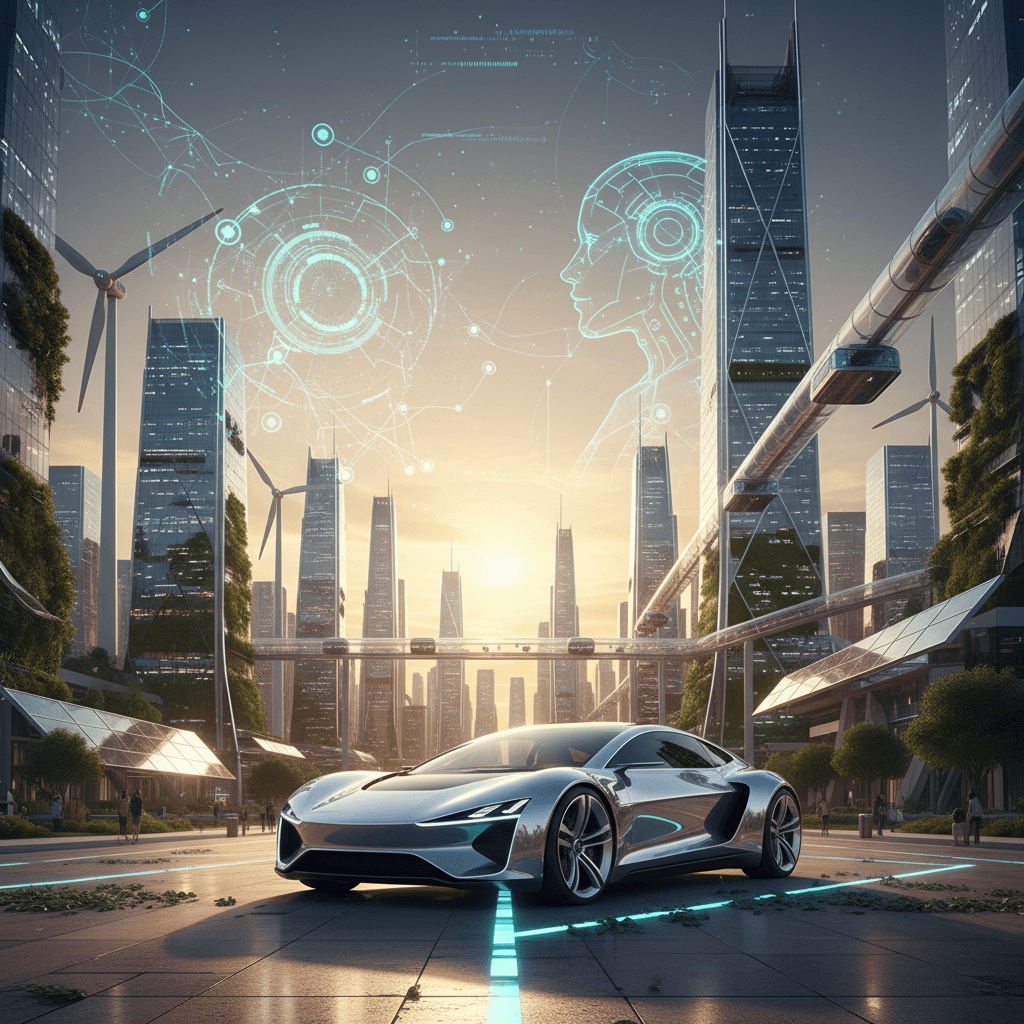
Tesla, AI, And The New Green Tech Arms Race
Nvidia briefly added more than the entire value of Tesla to its market cap in 2024. One chip company was suddenly “worth” more than the world’s most famous electric vehicle maker. That’s not a random market glitch — it’s a signal.
Tesla used to be the clean transport poster child. Now it’s repositioning itself as an AI and robotics company in what many call the Musk 4.0 era. Investors are watching Nvidia’s earnings to judge the future of AI, while trying to figure out whether Tesla’s shift away from a pure EV mission is smart, risky, or both.
This matters for anyone working in green technology. Tesla isn’t just another automaker; it’s a bellwether for how capital, talent, and policy attention move between electric vehicles, AI, and robotics. When Tesla shifts direction, the whole sustainable innovation ecosystem feels it.
In this post, I’ll break down what Tesla’s mission shift actually is, how it ties into the broader AI boom, and what it means for the future of clean transport and climate tech — especially if you’re making investment or strategy decisions for 2025 and beyond.
What Is “Musk 4.0” And How Has Tesla’s Mission Shifted?
Tesla’s original pitch was brutally simple: accelerate the world’s transition to sustainable energy by making electric cars desirable and scalable. For more than a decade, everything pointed in that direction — Gigafactories, vertical integration of batteries, Supercharger networks, solar, and storage.
The Musk 4.0 era looks different.
Tesla is now positioning itself publicly as:
- An AI company building full self‑driving (FSD) software
- A robotics company via the Optimus humanoid robot
- A data company training enormous neural networks on billions of miles of driving data
You can hear it in earnings calls and see it in capital allocation. More narrative energy is going into:
Dojoand AI training clusters- Robotaxis and autonomy
- General‑purpose robots for manufacturing and, eventually, households
than into affordable mass‑market EVs.
Here’s the thing about corporate “missions”: they’re only real if budgets, roadmaps, and hiring follow them. Over the last few years, Tesla’s cheaper mass‑market car has been repeatedly delayed, while AI headcount and compute investments have jumped. That’s the clearest sign of the Musk 4.0 shift.
From a pure business perspective, it makes sense: software margins beat metal margins. From a green technology perspective, it’s more complicated.
Why Wall Street Now Treats Tesla Like An AI Stock
On the day mentioned in the RSS snippet, the S&P 500 and Dow sagged while everyone held their breath for Nvidia’s results. Once Nvidia reassured investors that AI demand wasn’t stalling and that fears of overinvestment were overblown, global markets bounced.
The subtext: AI chips are now a macro driver. Nvidia is treated as a barometer for the entire AI economy.
Tesla has been trying to sit closer to Nvidia than to Ford or GM in investors’ mental models. The move makes sense because:
- AI companies receive higher valuation multiples than car manufacturers.
- Capital is flowing into AI infrastructure (data centers, chips, training platforms) at scale.
- Tech funds that once ignored automakers now look at Tesla as an AI‑native platform.
But there’s a catch. Investors aren’t just asking whether Tesla can build self‑driving cars. They’re asking:
- Is Tesla an AI platform with recurring software revenue, or still mainly a hardware manufacturer?
- Will self‑driving actually scale enough to justify AI‑style valuations?
- Does this shift strengthen or dilute Tesla’s original sustainable transport mission?
If you’re in the broader green technology space, you should care because this is where capital gets prioritized. Money chasing autonomous robotaxis is money that might not go into:
- Public transit electrification
- Grid‑scale storage
- Low‑cost EVs for emerging markets
The market’s love affair with AI is changing which climate problems look “fundable.”
Does Pivoting To AI Help Or Hurt Tesla’s Climate Impact?
Short answer: it can do both. The shift toward AI and robotics could significantly boost or quietly erode Tesla’s climate impact, depending on execution.
Where AI Can Amplify Climate Benefits
AI is not automatically good or bad for the planet. It’s a multiplier. Used well, it makes green technology more efficient, more reliable, and cheaper.
Tesla’s AI work could increase its climate impact if it:
-
Makes EVs radically safer and more convenient
If FSD actually reaches high reliability, car sharing and robotaxis could:- Reduce the number of private vehicles per household
- Increase utilization of each vehicle
- Cut lifecycle emissions per passenger‑kilometer
-
Optimizes energy use at massive scale
Tesla already uses AI in energy products. At their potential best, AI systems can:- Smart‑charge EVs when the grid is cleanest
- Coordinate home solar, batteries, and EVs into virtual power plants
- Smooth peaks and reduce the need for fossil peaker plants
-
Streamlines low‑carbon manufacturing
Robotics and AI‑driven factories can:- Reduce material waste
- Cut energy usage per vehicle or battery pack
- Enable more precise quality control, extending product life
That’s the optimistic scenario: AI as a force multiplier for decarbonization.
Where The New Mission Risks Undermining Sustainability
There’s also a less pleasant path, and we’re seeing early hints of it across the tech sector:
- Compute emissions spiral
Training and running large AI models is energy‑intensive. Data centers for AI are projected to consume several percent of global electricity by 2030. If that power isn’t truly clean, Tesla could:- Reduce tailpipe emissions via EVs
- But increase upstream emissions through AI compute
That’s a real risk if “Musk 4.0” becomes more about neural nets than about renewable energy build‑out.
-
Affordability takes a back seat
A world full of expensive AI‑laden robotaxis while ordinary people can’t buy a simple, cheap EV is not a climate success story. If Tesla pours more capital into robots than into sub‑$25,000 EVs, total global emissions reductions slow down. -
Mission drift at the brand level
If Tesla is seen mainly as an AI stock, climate‑driven customers and partners may shift attention to other EV makers, bus electrification, or micromobility firms that stay focused on the core sustainability mission.
The reality? AI‑heavy, profit‑rich Tesla could be incredibly good for the climate — but only if those profits and capabilities keep compounding into clean transport and clean energy infrastructure.
What This Means For The Green Technology Ecosystem
For founders, policymakers, and corporate sustainability teams, Tesla’s mission shift is a useful stress test.
1. Don’t outsource the climate mission to any single company
Tesla did enormous work proving that EVs are viable, desirable, and scalable. But betting your strategy on “Tesla will handle consumer EVs, we’ll focus elsewhere” has always been shaky.
In the Musk 4.0 era, it’s worse than shaky.
Other players now carry more of the responsibility for:
- Affordable city cars and two‑wheelers
- Electric buses and freight
- Charging infrastructure for workplaces and apartments
If you’re a municipality, utility, or fleet operator, you should:
- Plan for a multi‑vendor EV ecosystem
- Push for open standards on charging, data, and software
- Treat Tesla as one important supplier, not the climate savior
2. AI is now part of every serious green tech roadmap
Whether you’re running a solar startup, a grid operator, or a logistics fleet, ignoring AI in 2025 is a mistake.
Practical ways AI is already boosting sustainability:
- Grid management: forecasting renewables, adjusting loads, and preventing blackouts
- Industrial efficiency: optimizing heating, cooling, and process control in factories
- Mobility planning: using real‑world data to design better bus routes, charging locations, and low‑emission zones
Tesla’s AI push is just one highly visible example. The lesson isn’t “build a humanoid robot.” It’s “treat data and optimization as core to decarbonization.”
3. Investors need a clearer climate lens on AI bets
Most capital flowing into AI is chasing productivity, automation, and margin expansion. Climate is often an afterthought.
If you’re investing in green technology, you should be asking:
- How energy‑intensive is this AI workload?
- Is it tied to physical decarbonization (less fuel, less waste, fewer emissions), or just digital optimization?
- Are the data centers and training clusters actually powered by renewables?
Tesla sits right at that intersection: extremely physical (cars, batteries, robots) and heavily digital (AI, autonomy, robotics). It’s a perfect case study for building climate‑aware AI investment theses.
Actionable Moves For Businesses In The Green Tech Space
If you’re building or running a business in sustainable transport, clean energy, or climate tech, here’s how to respond to the Musk 4.0 moment.
1. Clarify your own mission hierarchy
Tesla’s evolution is a warning: when missions collide — climate, AI, robotics, financial returns — the one that wins is the one explicitly prioritized.
Answer three blunt questions:
- What’s our non‑negotiable mission?
- Where does AI support that mission, versus distract from it?
- How will we measure climate impact, not just revenue or user growth?
Write those down. Align product roadmaps and hiring with them. Otherwise, the AI hype wave will quietly pull you off course.
2. Use AI to make your green technology leaner, not just flashier
Good uses of AI in climate‑driven businesses share a pattern: they cut waste, emissions, or cost in measurable ways.
Examples that work in practice:
- Route optimization for electric delivery fleets that lowers energy use per delivery
- Predictive maintenance that keeps wind turbines, batteries, or EV chargers online longer
- Smart building management that trims 10–30% off heating and cooling consumption
If an AI project doesn’t have a clear line to lower emissions or higher resource efficiency, treat it with skepticism.
3. Design for resilience if big players change course
Tesla’s shift won’t be the last strategic pivot in climate tech. To stay resilient:
- Avoid single‑vendor dependence for critical infrastructure
- Favor open protocols and interoperable systems
- Build products that can plug into multiple ecosystems (Tesla, BYD, legacy OEMs, utilities, cities)
A healthy green technology landscape can survive any single company reinventing itself.
Is Tesla’s New Core Mission Smart — For The Planet?
From a shareholder perspective, it’s hard to argue against Tesla chasing AI and robotics. Nvidia’s rise shows how much value the market assigns to AI platforms, and Tesla does have unique data and integration advantages.
From a planetary perspective, it’s more conditional.
If Tesla uses its AI focus to:
- Shrink the number of cars needed per person
- Supercharge renewable integration and grid stability
- Drive down the cost of clean mobility worldwide
then the Musk 4.0 era will look like a powerful next chapter in green technology.
If, instead, AI becomes mostly a margin engine and branding exercise that sidelines affordable EVs and energy products, Tesla’s climate legacy will look more like a strong first act followed by mission drift.
For everyone else in the space, the lesson is clear: don’t confuse tools with purpose. AI, robotics, and data are tools. The purpose is cutting emissions fast enough to matter.
The companies that win this decade — commercially and morally — will be the ones that treat AI as an accelerator for decarbonization, not a detour. The question for your own roadmap is simple: which side of that line are you on?