Tehran’s near–Day Zero crisis is a preview for every arid city. Here’s how green technology and AI can keep smart cities from literally running dry.
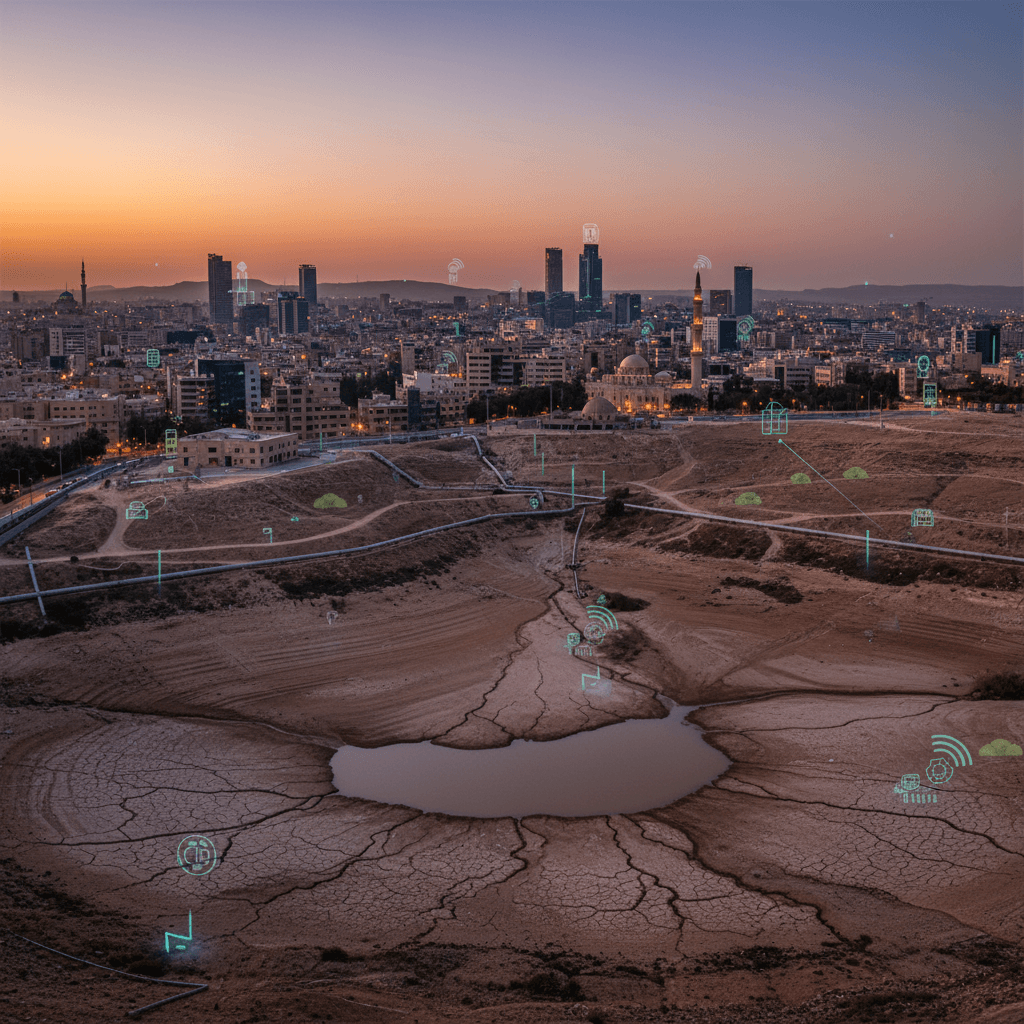
Most urban planners still treat water like it’s infinite. Tehran just proved how dangerous that assumption is.
Iran’s capital — home to more than 10 million people — is edging toward Day Zero, the point where a city can’t supply drinking water through its taps. One of its key reservoirs is already dry, another is below 8 percent, and the country is in its driest, hottest autumn in nearly six decades. Officials have openly talked about rationing and even evacuating the capital.
This matters because Tehran isn’t an outlier. It’s a preview. From California’s Central Valley to southern Spain and northern China, cities are pushing their water systems harder every year while climate change pulls supply in the opposite direction. The gap is widening — and traditional infrastructure alone won’t close it.
Here’s the thing about urban water security: you can’t fix it anymore with dams and prayer. You need green technology, data, and better incentives baked into how cities grow and how utilities operate.
In this post, I’ll break down what went wrong in Tehran, what other cities are getting right, and how AI-powered, green water technologies can keep thirsty cities off the Day Zero list.
How Tehran Got to the Brink of Day Zero
Tehran’s water crisis is the result of three forces hitting at once: climate stress, over-extraction, and bad incentives.
1. A brutal mix of heat and drought
Iran is already one of the world’s driest countries. Over 80 percent of its land is arid or semi-arid. That’s the baseline. Climate change then stacks the deck:
- Hotter temperatures increase evaporation from reservoirs and soils.
- Precipitation becomes more erratic: long dry spells punctuated by short, intense downpours that don’t recharge aquifers.
- Autumn 2025 was Iran’s driest and hottest in nearly 60 years, and Tehran went months without measurable rain.
When your capital relies on five major reservoirs and one of them has already gone dry, a season like that is enough to push you right up to the edge.
2. Water demand wildly out of sync with supply
Tehran’s per-capita water use is high even by city standards, but the deeper issue is national water bankruptcy: demand has been allowed to grow far beyond what the country’s rivers and aquifers can sustain.
A few specific choices made this worse:
- Thirsty crops in a thirsty country: Agriculture consumes up to 90 percent of Iran’s total water withdrawals. A big share of that goes to water-hungry crops in dry regions, driven by a policy obsession with food self-sufficiency.
- Megaproject mania: For decades, Iran doubled down on dams, deep wells, and massive water transfer schemes. Many of these projects ignored hydrology and ecological limits. Analyst Nik Kowsar calls the nexus of interests behind them a “water mafia” — a cluster of political and economic actors who profit as long as concrete keeps being poured.
- Groundwater over-pumping: When surface water shrinks, farmers and cities turn to wells. Without strict monitoring, aquifers collapse silently until land starts sinking and wells run dry.
None of this is unique to Iran. It’s the same pattern we’ve seen in parts of India, Mexico, and the western United States — just pushed to an extreme.
3. A system that can’t adapt quickly
Tehran’s water utility doesn’t have the tools or capital it needs to adapt:
- Sanctions and isolation limit access to advanced water treatment, digital monitoring systems, and financing.
- Tariffs and revenue models often don’t cover basic operation and maintenance, let alone investment in smarter systems.
- Inequity is baked in: When taps run dry, wealthier residents can buy bottled water or pay for private tankers. Poorer households can’t. That destroys public trust, which you absolutely need when you’re asking people to change how they use water.
You can see why the president’s comment about potentially evacuating Tehran landed like a psychological bomb. You’re not just talking about a technical failure. You’re questioning whether a major city can even exist where it currently stands.
Why Every Arid City Should Treat Tehran as a Warning
Tehran isn’t an isolated case; it’s sitting on the same fault line as dozens of other cities.
Cities that share Tehran’s risk profile tend to have three traits:
- Arid or semi-arid climate (Southwest US, Middle East, North Africa, parts of Australia)
- Growing urban population and rising per-capita water use
- Heavily stressed rivers and aquifers with little slack for bad years
We’ve already seen near-misses:
- Cape Town approached Day Zero in 2018 after a prolonged drought. Aggressive demand management, behavioral campaigns, and some lucky rain pulled it back at the last moment.
- São Paulo faced collapsing reservoirs in 2014–2015, resorting to rotating cuts and emergency measures.
- Western US cities are watching the Colorado River’s dwindling flows and groundwater depletion with increasing anxiety.
The pattern is always the same: a few bad years of climate stress expose decades of underinvestment in demand management and smart infrastructure.
The reality? Tehran is not the last city to face this, just the latest.
How Green Technology Can Keep Cities Off the Day Zero Path
Technology on its own won’t make it rain. But green technology and AI can radically improve how cities use, recycle, and manage the water they have.
Here are the levers that actually move the needle.
1. Smart water grids and AI leak detection
Most cities lose 15–40 percent of treated water through leaks before it ever reaches a tap. That’s insane when you’re rationing households.
A smart water grid uses sensors, meters, and analytics to track water in real time:
- Pressure and flow sensors detect anomalies that signal leaks.
- AI models flag unusual patterns at the neighborhood level, helping crews pinpoint hidden pipe breaks quickly.
- Smart meters show households and businesses their hourly water use, which alone often reduces consumption by 10–15 percent.
For utilities in arid regions, AI-powered leak detection is low-hanging fruit: you’re recovering water you already paid to treat and pump, with no new reservoir required.
2. Demand management that actually changes behavior
Rationing — like Tehran’s nightly pressure cuts — proves one thing: if you turn off the taps, people use less water. But it’s blunt, inequitable, and politically explosive.
Smarter tools create lasting reductions without constant crisis mode:
- Volumetric tariffs: The more you use, the higher the marginal price. Basic needs stay affordable; wasteful use gets expensive fast.
- Real-time feedback: Apps and dashboards show people how today’s consumption compares to last week or to efficient neighbors.
- AI-powered nudges: Personalized alerts — “Your irrigation is 40 percent above similar homes” — are more effective than generic campaigns.
Cities that combine volumetric pricing with digital tools routinely shave 20–30 percent off peak demand. That’s the difference between rationing and resilience.
3. Decentralized reuse and green infrastructure
One of the biggest mistakes in 20th-century water planning was assuming everything had to be centralized: huge treatment plants, giant pipes, one-way flows.
Green technology flips that logic:
- Building-scale reuse: Treatment systems in large buildings or housing complexes clean graywater (from showers, sinks, laundry) for toilet flushing or irrigation.
- District-level recycling: Neighborhood plants take wastewater from a few thousand residents and turn it into high-quality water for parks, industry, or cooling.
- Green infrastructure: Bioswales, permeable pavements, urban wetlands, and green roofs capture stormwater, reduce flooding, and help recharge local aquifers.
AI comes in when you start optimizing these systems together: predicting demand, deciding when to store vs. release, and balancing energy use with water savings.
4. Precision agriculture instead of water bankruptcy
Iran’s crisis is driven as much by fields as by faucets. That’s true in California, Spain, and many other regions too. If you don’t fix agriculture, cities will always be negotiating with farmers at the edge of catastrophe.
Here’s where green tech and AI really shine:
- Soil moisture sensors tell farmers exactly when crops need water — and when they don’t.
- Satellite and drone imagery combined with machine learning can estimate crop water stress across thousands of hectares.
- Smart irrigation controllers adjust schedules based on weather forecasts, soil data, and plant growth stages.
The numbers are not theoretical: precision irrigation routinely cuts water use by 20–40 percent while maintaining yields. When you’re talking about a sector that uses up to 90 percent of withdrawals, that’s gigantic.
For countries like Iran, where food security is understandably sensitive, green technology is a practical compromise: you don’t have to abandon self-sufficiency goals, but you do have to meet them with far less water.
5. Finance and business models that keep systems alive
The least sexy part of the puzzle is also the most decisive: how you pay for all this.
Many utilities, including in Iran, are stuck in a downward spiral:
- Tariffs are kept artificially low for political reasons.
- Revenues don’t cover maintenance, so leaks and breakdowns multiply.
- Service deteriorates, so customers are even less willing to accept tariff increases.
Breaking that cycle requires:
- Cost-reflective tariffs with strong protections for low-income households.
- Performance-based financing for efficiency projects (e.g., investors get paid from the water and energy savings achieved).
- Public–private partnerships that reward long-term system performance instead of short-term construction.
Cities that manage to adopt these models are the ones that can systematically roll out smart meters, sensor networks, AI analytics, and reuse systems instead of chasing emergency tankers every dry season.
What City Leaders and Utilities Should Do Now
If you’re responsible for a city in an arid or climate-stressed region, Tehran’s situation isn’t just news — it’s a checklist.
Here’s a pragmatic starting roadmap:
-
Diagnose your real risk
Map current and projected supplies, demand by sector, and climate scenarios. Don’t rely on “average” years; stress-test against multi-year drought. -
Cut invisible losses first
- Deploy leak detection tech in your most stressed zones.
- Pilot smart meters in high-use neighborhoods and industrial clusters.
-
Redesign tariffs and incentives
- Introduce increasing block tariffs with a lifeline tier for basic needs.
- Pair tariff reforms with digital tools that help people understand and manage their use.
-
Invest in decentralized reuse
- Update building codes to allow and encourage graywater reuse in new developments.
- Prioritize district-scale recycling for industrial parks, tech campuses, and major commercial zones.
-
Bring agriculture into the same conversation
- Promote precision irrigation and crop switching where feasible.
- Tie water allocations to adoption of efficient practices and monitoring.
-
Use AI where it adds real value
Not as a buzzword, but as a way to:- Predict demand and optimize pumping schedules.
- Detect leaks and non-revenue water.
- Target conservation programs where they’ll have the biggest impact.
I’ve found that cities making genuine progress on water resilience don’t start with grand masterplans. They start with one or two high-leverage pilots, prove they work, then scale aggressively.
Tehran’s Lesson for the Green Technology Era
Tehran shows what happens when 20th-century water thinking collides with 21st-century climate reality. Dams, canals, and deeper wells carried the city for decades — right up until they didn’t.
The next generation of green cities will look very different. They’ll treat water as a managed, data-rich cycle instead of a one-way flow from river to drain. They’ll rely on AI, smart sensors, and decentralized reuse as much as on pipes and pumps. And they’ll align prices and policies with physical limits instead of pretending those limits don’t exist.
Tehran is a warning, but it’s also a fork in the road. Other cities can repeat the pattern — or use green technology to write a different story.
If your organization is working on water, climate, or urban planning, this is the moment to ask: Are we still building for the climate our grandparents knew, or for the one we actually have?