Statera’s 680MW/1.36GWh Carrington battery shows how big storage, AI and finance are finally lining up to make the UK’s clean energy transition real.
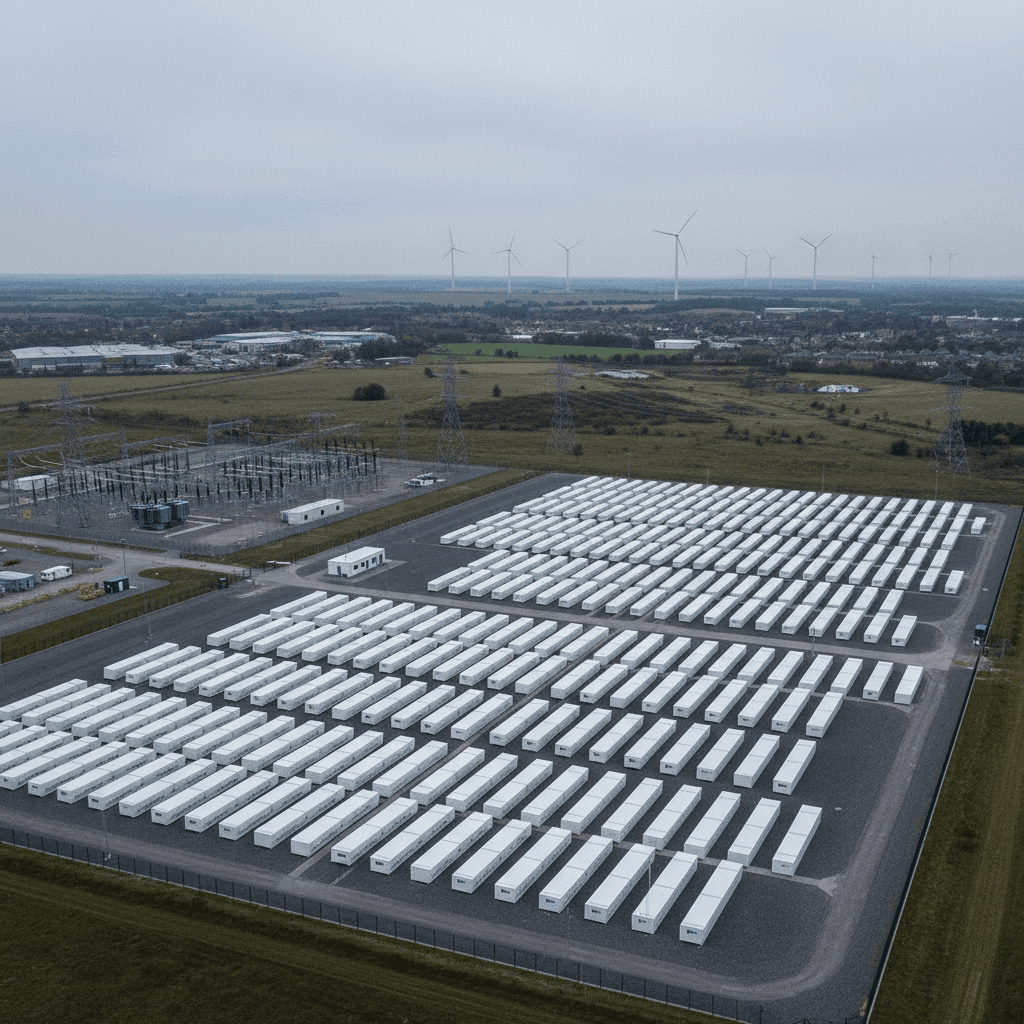
Why a 1.36GWh Battery in Manchester Really Matters
By 2030, the UK will need tens of gigawatt-hours of energy storage to keep a renewables-heavy grid stable. Statera Energy’s newly financed 680MW / 1,360MWh Carrington battery energy storage system (BESS) is one of the clearest signs that large-scale storage is finally moving from PowerPoint to concrete and steel.
Most companies get this wrong: they talk about net zero targets and green technology in the abstract, while the real story is about projects like this one actually getting financed, built, and connected.
This matters because large batteries are now the backbone of a clean power system. For anyone interested in green technology, AI-enabled energy systems, or sustainable investment, Carrington is a case study in where the market is heading – fast.
In this article, I’ll break down what the project is, why it’s a turning point for the UK grid, and how AI and smart software are the hidden engine that will make this battery earn its keep.
What Statera’s Carrington BESS Actually Is
Statera has secured £235 million in debt financing for the 680MW / 1,360MWh Carrington BESS in Greater Manchester. Construction kicked off in autumn 2025 at the Trafford Low Carbon Energy Park, with energisation targeted for 2027.
Here’s the core of the project:
- Power: 680MW
- Energy capacity: 1,360MWh (2-hour duration)
- Technology: Utility-scale lithium-ion BESS supplied by Envision Energy
- Location: Trafford Low Carbon Energy Park, near Manchester
- Jobs: Over 200 local roles during construction and operation
A 2-hour duration system is designed to respond fast and earn revenue across multiple services:
- Balancing sudden dips or spikes in wind and solar
- Providing frequency response within seconds
- Handling short-term capacity needs during peak demand
A 680MW battery can ramp faster than almost any traditional power plant, which makes it perfect for a grid dominated by variable renewables.
Carrington also builds on Statera’s 1GW strategic partnership with Statkraft, the Norwegian state-backed energy giant, which will provide route-to-market (RTM) services – essentially, the commercial brain that decides when and how the battery earns money.
Why Big Batteries Are Now Core Green Infrastructure
The key point: you can’t run a renewable-heavy grid without serious energy storage. Wind and solar are variable by nature; storage is what turns them into reliable, dispatchable resources.
In the UK, this is especially visible in winter 2025–26:
- Offshore wind output can swing by tens of gigawatts within a day.
- Solar vanishes in late afternoon just as people get home and start using power.
- Grid operators are paying more often for flexibility and fast-response capacity.
Large BESS projects like Carrington solve three structural problems:
-
Grid stability
Batteries deliver ultra-fast frequency response, voltage support, and inertia-like services. Instead of firing up gas plants for every wobble in the system, the grid leans on BESS. -
Renewable curtailment
When there’s “too much” wind in the system, it’s often curtailed. Storage soaks up that excess and releases it when demand picks up, making each MWh of renewable energy more valuable. -
Peak demand coverage
Instead of keeping expensive peaker plants on standby, a 680MW battery can discharge during the evening peak and recharge overnight or when renewables are abundant.
The reality? This is green technology as infrastructure. It’s not a showcase pilot. It’s an asset that directly replaces fossil-heavy flexibility and makes the UK’s net zero pathway technically viable.
The Financial Signal: £235m of Debt for a Battery
The fact that Carrington reached financial close with £235 million of debt is almost as important as the project itself.
Debt investors are typically conservative. They don’t back science experiments; they back assets with:
- Stable or predictable revenue streams
- Proven technology and suppliers
- Strong counterparties and contracts
The financing structure signals a few things about where the market is now:
1. Banks now understand the BESS business model
A few years ago, many lenders avoided standalone storage because revenues looked “merchant and messy.” Today, with:
- More mature ancillary services markets
- Capacity auctions
- Sharper RTM strategies from players like Statkraft
…banks are increasingly comfortable underwriting BESS cash flows over 10–15 years.
2. Partnerships reduce perceived risk
Carrington isn’t just Statera on its own. It’s a network of serious partners:
- Statkraft – route-to-market and trading
- Envision Energy – battery supply
- Siemens, Siemens Energy, Hitachi Energy, AECOM – engineering, systems, and integration
- ACS Construction Group, Roger Bullivant Limited – local delivery
From a lender’s perspective, this spreads risk across experienced players with long track records, rather than concentrating it on a single developer.
3. Storage is being treated as core energy infrastructure
Debt of this scale positions BESS alongside wind farms, solar parks, and gas plants in the capital stack. That’s a shift from “new tech” to core grid asset.
For investors and clean-tech businesses reading this, the signal is clear: utility-scale storage is now bankable at scale in mature markets like the UK.
Where AI Fits: Making 1.36GWh Actually Smart
Here’s the thing about a 1.36GWh battery: hardware alone doesn’t make it green or profitable. Software and AI are what turn it into a smart energy asset.
Carrington will be operating in one of Europe’s most complex power markets. Prices and grid signals shift minute by minute. Human traders alone can’t capture all of that value – or manage risk effectively – at this scale.
AI’s role in large-scale BESS operations
Modern battery projects increasingly rely on AI and advanced analytics for:
- Price forecasting: Predicting wholesale prices and ancillary service prices hours or days ahead.
- Optimisation: Deciding when to charge, discharge, or sit idle, based on forecasted revenue and degradation cost.
- Degradation management: Optimising battery cycles to extend asset life while still hitting revenue targets.
- Portfolio coordination: For owners with multiple plants, AI allocates capacity across sites to match grid needs and maximise returns.
In a two-hour asset like Carrington, the optimisation challenge is non-trivial:
- Discharging at the wrong time can “burn” your available capacity and leave money on the table later in the day.
- Charging when prices aren’t low enough eats into margins.
- Over-cycling the battery accelerates degradation and erodes long-term value.
A well-trained optimisation engine can improve BESS revenues by 10–30% versus manual or rules-based operation, based on what I’ve seen across projects in Europe and North America.
Green technology is increasingly software-defined
If you’re building in this space – whether as a developer, utility, or corporate offtaker – you’re not just selecting:
- A battery vendor
- An EPC
- A financing partner
You’re also choosing:
- A control platform
- A data strategy
- An AI/analytics stack (in-house or via partner)
The hardware is visible from the road. The real performance edge lives in the algorithms you run on top of it.
What This Means for Businesses and Cities
Carrington isn’t only an energy market story. It’s also a blueprint for how cities, corporates, and industrial clusters can plug into green technology and storage.
For city and regional leaders
Greater Manchester is quietly becoming a storage hub, with projects like Carrington and other long-duration technologies being built nearby. That brings:
- Grid resilience for homes, hospitals, and transport
- Local jobs – 200+ roles from one project alone
- A stronger pitch to green industry looking for reliable, low-carbon power
If you’re in local government or regional planning, this is the pattern to follow:
- Designate low-carbon energy parks with good grid connections.
- Streamline planning and permitting for storage.
- Align with national flexibility and net zero targets to attract financing.
For large energy users and corporates
You don’t need a 680MW project on your balance sheet to benefit from this:
- Corporate PPAs and flexibility contracts can be structured with storage-backed portfolios.
- On-site or near-site BESS can reduce peak charges and enable higher self-consumption of on-site solar.
- AI-driven energy management platforms now integrate behind-the-meter assets with grid-scale storage signals.
I’ve found that the most forward-thinking companies treat storage as a strategic hedge against volatile energy markets, not just a cost-saving gadget.
How This Fits in the Green Technology Transition
Within our broader Green Technology series, Carrington is a textbook example of how multiple trends converge:
- Clean energy generation (wind and solar) needs flexible support.
- AI and digital tools provide that flexibility intelligently.
- Finance and policy finally align to scale real projects.
Statera’s stated goal is over 5GW of BESS capacity operational by 2030. They also develop gas and hydrogen-powered plants, reflecting where the market realistically is: a hybrid system where gas is phased down over time and storage plus renewables take on a larger share of firm capacity.
If you’re working in energy, sustainability, or digital infrastructure, the message is straightforward:
- Large-scale storage is no longer optional for a decarbonised grid.
- AI is moving from “nice to have” to “necessary” in operating that storage profitably.
- Cities and businesses that position themselves early around these assets will have a structural advantage in cost, reliability, and emissions.
Now is the right moment to ask: Where does storage fit into your own net zero and resilience strategy – and what software will make it truly smart?