Non-lithium long-duration storage is moving from science project to necessity. Here’s how Eos and ESS Inc. fit into the future of clean, AI-era power.
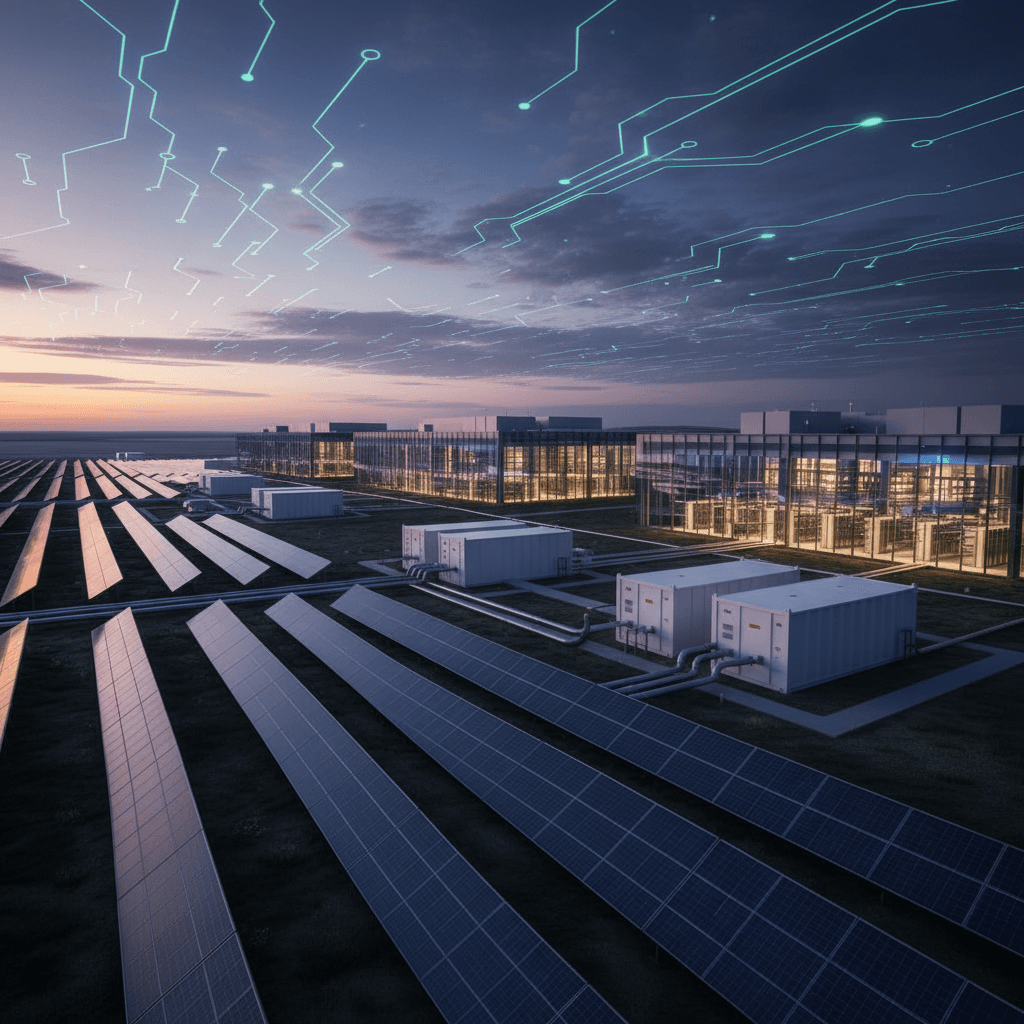
Non-Lithium Energy Storage’s Next Big Test
US zinc and iron-flow battery startups are learning the hard way that clean technology isn’t just about chemistry – it’s about timing, policy, and scale. Eos is doubling revenue quarter to quarter; ESS Inc. is fighting to stay a going concern. Both believe long-duration energy storage is coming. Only one of them will be right soon enough.
This matters because non-lithium long-duration energy storage (LDES) is one of the few tools that can keep grids clean and stable as data centres, AI workloads, and electrification drive demand through the roof. If you’re planning green data infrastructure, utility-scale renewables, or net-zero roadmaps, what happens to companies like Eos and ESS Inc. directly affects your risk, cost, and resilience.
In this Green Technology series, we’ve been looking at how AI, clean energy, and smarter infrastructure fit together. This post zooms in on a critical puzzle piece: non-lithium grid storage in the US, the new policy landscape (OBBBA, tariffs, FEOC rules), and what they mean for developers, corporates, and investors who actually need reliable storage—not just shiny slides.
1. Non-Lithium Storage: Where Things Really Stand
Non-lithium storage isn’t a future concept. It’s here, it’s deployed, and it’s under serious pressure.
Two companies illustrate the landscape:
- Eos – zinc-based batteries for multi-hour storage
- ESS Inc. – iron-flow batteries aimed at 10-hour-plus applications
Both target long-duration energy storage: multi-hour to multi-day systems that can:
- Smooth out wind and solar variability
- Replace or defer peaker plants
- Support data centres and industrial loads that can’t tolerate outages
The reality right now:
- Share prices have crashed from their SPAC-era highs
- Eos has fallen ~52% from a 2021 peak
- ESS Inc. has lost ~99% from its 2021 high
- Neither company is profitable; both burn cash
- Market demand and factory scale are still the make-or-break variables
From a green technology standpoint, this is the pattern we’ve seen before: the tech works on a pilot scale, but manufacturing ramp, balance-sheet strength, and policy consistency decide who survives long enough to matter.
2. Eos: Zinc Batteries Riding Policy Tailwinds
Eos looks like the more mature business story right now: high burn, but real traction.
Where Eos is winning
Eos’ numbers show that demand for non-lithium LDES is real, not hypothetical:
- Q3 2025 revenue: US$30.5 million
- ~100% quarter-over-quarter growth
- Annual guidance: US$150–160 million for 2025 (reaffirmed)
- Order backlog: ~US$644.4 million (≈2.5 GWh)
- Commercial pipeline: ~US$22.6 billion (≈91 GWh)
- Cash on hand (end of Q3): ~US$126.8 million
Those numbers matter for anyone planning large-scale green projects, because they show that developers and utilities are already placing multi-GWh bets on zinc batteries alongside lithium.
Eos is also executing on the boring but crucial part: manufacturing scale.
- Building up to 8 GWh/year of capacity in Marshall Township, Pennsylvania
- Investing US$352.9 million in lines and a headquarters move to PA
- Supported by about US$22 million from the state government
This is exactly what long-duration storage needs to get cheaper: repetitive, automated production on a gigawatt-hour scale.
Profitability is still a slog
Eos is not out of the woods:
- Adjusted EBITDA loss: widened slightly to US$52.7 million in Q3 2025
- Profitability is still dependent on:
- Hitting production volume targets
- Bringing costs down on its latest Gen-3 Znyth modules
Even so, Eos management is confident enough to talk about a “clear line of sight to profitable growth”. That’s a strong statement in a segment where most players avoid the P-word completely.
For project developers and large energy buyers, here’s what that means:
Zinc LDES is moving from “science project” to “bankable-ish,” especially when wrapped with strong offtake structures and policy support.
If you’re building a portfolio of green assets, Eos-style zinc projects are starting to belong in your medium-risk, high-upside bucket rather than your pure R&D one.
3. ESS Inc.: A Hard Reset Around 10-Hour Storage
ESS Inc. is on the other side of the curve: promising technology, brutal cash reality.
A company in reset mode
The company spent 2025 restructuring around a single flagship product:
- Legacy products (Energy Warehouse, Energy Center) were discontinued
- New focus: Energy Base, targeting very large, 10+ hour LDES plants
- Executive shake-up: CEO Eric Dresselhuys resigned; Kelly Goodman (former VP legal) is now interim CEO
The pivot is logical. The real gap in the market isn’t 2–4 hours—lithium-ion owns that. The gap is 8–12+ hours, where:
- Capacity-style services become critical
- Wind and solar curtailment is a daily headache
- Data centres and industrial loads need deep resilience, not just quick backup
Energy Base is built to own that space. The issue is timing.
Financial stress and delayed revenues
ESS Inc.’s numbers paint a tough picture:
- Q3 2025 revenue: only US$214,000
- Down ~91% from US$2.4 million in Q2
- Adjusted EBITDA loss: US$7.1 million (slightly improved vs Q2)
- Cash (unrestricted) at end of September: about US$3.5 million
- Auditor language: “substantial doubt” about going-concern status for the next 12 months
The company raised US$40 million in financing via Yorkville Advisors and announced a 50 MWh Energy Base pilot with Salt River Project (SRP) in Arizona—exactly the kind of utility partner you’d want.
But here’s the catch: meaningful revenue from Energy Base isn’t expected until 2026, after the product transition. That’s a long time to run with thin cash.
If you’re a buyer, that doesn’t mean you ignore ESS Inc.—it means you treat projects as strategic pilots, not critical infrastructure you can’t afford to lose.
For LDES more broadly, ESS Inc.’s situation is a reminder: the market wants long-duration, but capital markets are impatient, and that gap can kill good technology.
4. Why US Policy & Tariffs Suddenly Matter So Much
Non-lithium storage is becoming a policy story as much as a technology story.
FEOC rules, tariffs, and domestic content
For US-based developers and corporates, three forces are now pushing them toward domestic, non-Chinese supply chains:
- Foreign Entity of Concern (FEOC) rules for clean energy tax credits
- Projects tied too closely to “foreign entities of concern” risk losing access to the Investment Tax Credit (ITC)
- Tariffs on Chinese battery components and materials
- Raising the effective cost of imported lithium batteries and upstream materials
- Domestic content incentives and production tax credits (PTCs)
- Extra value if your project uses US-made batteries and components
Eos and ESS Inc. happen to tick several of those boxes:
- Their chemistries (zinc, iron-flow) are not dependent on lithium or cobalt
- They rely heavily on US and allied supply chains
- Their manufacturing footprints are rooted in the US
That gives them a structural edge when the final FEOC rules kick in fully in 2026 and more developers start asking, “Will this project still qualify for credits in five years?”
OBBBA and the post-Biden policy shift
Under the Biden administration, federal tools like the DOE Loan Programs Office (LPO) became crucial for scaling clean manufacturing. Eos was among the relatively few non-lithium players that secured support before the political winds shifted.
Now, with the OBBBA framework and a more constrained federal appetite for new commitments, we’re seeing a sorting effect:
- Companies that already locked in support (like Eos) can keep building
- Newer or slower-moving players (like ESS Inc.) have to rely on:
- State-level incentives
- Private capital
- Strategic customers who are willing to co-fund risk
For businesses building green technology roadmaps, the takeaway is simple:
Policy is no longer a nice-to-have backdrop. It’s a direct line-item in your technology risk calculation.
If your storage solution is entangled in FEOC supply chains or depends on volatile tariff decisions, your project economics could swing wildly in a single election cycle.
5. Data Centres, Load Growth, and Why LDES Is Suddenly Urgent
Here’s the thing about AI, hyperscaler campuses, and cloud growth: they’re power hogs with no tolerance for downtime.
Across the US, load growth is being driven by:
- Hyperscale data centres for AI and cloud
- Electrification of transport and industry
- New manufacturing linked to clean energy supply chains
Traditional grids were not built for this kind of constant, high-density load. Long-duration storage is one of the few tools that can:
- Soak up excess wind/solar when it’s plentiful
- Discharge for 8–12+ hours during peak prices or grid stress
- Reduce the need for new gas peakers and grid upgrades
Non-lithium LDES technologies—like Eos’ Gen-3 Znyth and ESS Inc.’s Energy Base—are particularly well-suited because they’re designed for:
- Heavy cycling (multiple full cycles per day)
- Long lifetimes with minimal degradation
- Safety (non-flammable electrolytes, simpler siting near loads)
How to actually use this in your strategy
If you’re responsible for energy or sustainability strategy, here’s how I’d approach it:
-
Segment your storage needs by duration
- 0–2 hours: grid support, quick-response balancing → lithium or supercaps
- 2–6 hours: firming renewables → mix of lithium and zinc-type LDES
- 8–12+ hours: deep resilience for data centres/industrial loads → flow, zinc, or other LDES
-
Cross-check every option against FEOC, domestic content, and PTC potential
- Ask vendors explicitly how they plan to comply with 2026 FEOC rules
- Quantify the dollar impact of domestic content bonuses and PTCs
-
Balance incumbents and innovators
- Use lithium for near-term, low-risk capacity
- Allocate a defined slice of your portfolio to non-lithium LDES pilots (with utilities or hyperscalers where possible)
-
Use AI to tune your storage mix
- Modern grid and energy management platforms (often AI-driven) can optimize:
- Dispatch across lithium + LDES fleets
- Charging windows vs renewable generation and tariffs
- Degradation-aware cycling strategies
- Modern grid and energy management platforms (often AI-driven) can optimize:
This is where our broader Green Technology theme comes back in: the smartest players aren’t just buying green hardware, they’re using AI and data to orchestrate that hardware into higher-value, lower-emission portfolios.
6. What This Means for Buyers, Investors, and Innovators
Most companies get this wrong: they either avoid emerging storage technologies completely, or they scatter small pilots with no real strategy. Both approaches waste time.
A better way to think about non-lithium LDES in late 2025:
-
If you’re a project developer or IPP:
- Treat zinc and iron-flow as portfolio tools, not silver bullets
- Lock in at least one LDES project that can qualify under the 2026 FEOC and domestic content rules
- Build commercial structures that share performance risk with vendors (availability guarantees, staged milestones)
-
If you’re a hyperscaler or large data centre operator:
- Push for co-developed storage projects with utilities using LDES for 8–12+ hours
- Tie storage deployment to your long-term AI and compute capacity plans, not just yearly budgets
-
If you’re an investor:
- Separate technology risk (chemistry, engineering) from capital structuring risk (SPAC hangover, policy exposure)
- Look for companies with:
- Actual revenue growth and order backlog (Eos-style)
- Clear manufacturing scale-up plans
- Credible answers on FEOC and domestic content compliance
The bigger picture for green technology is clear: AI-era energy demand can’t be met by lithium-ion alone, and it definitely can’t be met by fossil peakers if we’re serious about climate targets. Non-lithium LDES is moving from speculative to necessary.
The open question is which companies will still be standing when the 2026 rules kick in and the next wave of data centre and renewables projects hit FID. Those decisions are being made now, not five years from now.
If you’re planning your clean energy or digital infrastructure roadmap, this is the moment to decide where non-lithium storage fits in your stack—and how aggressively you want to move before your competitors do.