Maryland is adding 82 EV charging ports. Here’s what that really means for fleets, resilience, and how to design smart, cost-effective green technology projects.
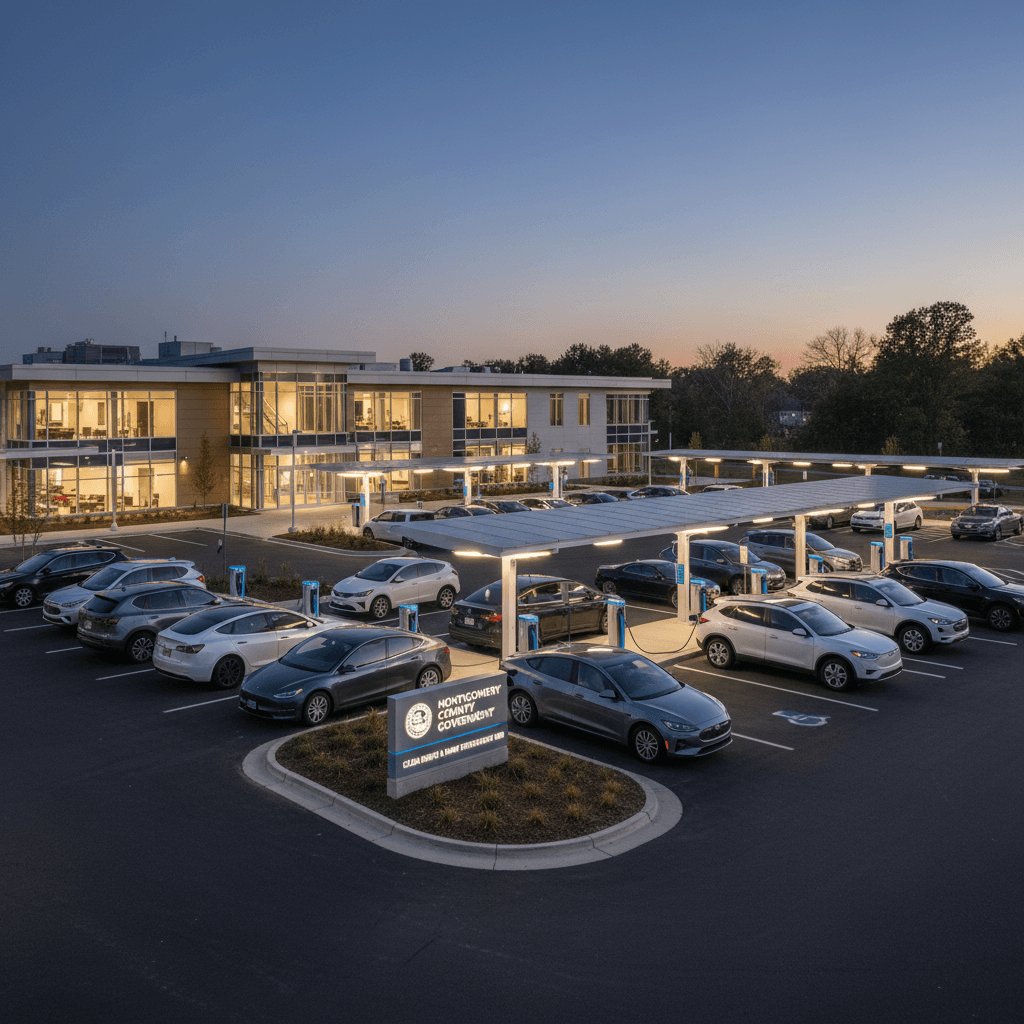
Maryland’s New EV Chargers And What They Signal
Most fleets don’t miss gasoline—what they miss is predictable, low-cost fueling. That’s exactly what Anne Arundel County in Maryland is buying with its new 82 electric vehicle charging ports, installed in partnership with Ameresco and the Resilience Authority of Annapolis and Anne Arundel County.
This isn’t just another ribbon-cutting. It’s a concrete example of how green technology is moving from glossy sustainability reports into parking lots, depots, and public facilities. And it’s a smart preview of where fleet and facility managers across the country are heading in 2026 and beyond.
In this post, I’ll break down what this Maryland project tells us about the future of EV charging, why fleet electrification is often a better financial decision than sticking with combustion vehicles, and how smart, AI-enabled energy management turns chargers into real resilience assets—not just shiny equipment in the ground.
What 82 New Charging Ports Really Mean For A County
The short version: 82 new EV charging ports can completely change how a county fuels its vehicles—and how it manages energy at public sites.
Ameresco’s collaboration with the Resilience Authority of Annapolis and Anne Arundel County is a play in three directions at once:
- Decarbonize county fleets by making EV adoption actually practical
- Cut fuel and maintenance costs with predictable electricity prices
- Strengthen energy resilience at public facilities using smarter infrastructure
For a typical county, the biggest barrier to adopting electric vehicles isn’t the vehicles themselves anymore. Prices are coming down, ranges are up, and there are now electric options for everything from pool cars to light-duty trucks and school buses.
The real bottleneck is infrastructure:
- Where do you charge 20, 50, or 200 vehicles every day?
- How do you avoid overloading existing electrical panels and transformers?
- How do you control costs when electricity prices fluctuate by time of day?
Installing 82 EV charging ports at county facilities means they’re not just dipping a toe in—they’re committing to electrification at scale. This is the level where fleets start retiring gasoline vehicles, not just piloting a handful of EVs.
Why Fleet Electrification Is Usually a Cost Win
The reality? Electric vehicles are often cheaper to own and operate than gasoline vehicles for fleets, especially when they rack up consistent daily miles.
Total Cost of Ownership: The Numbers That Matter
When I look at fleet decisions, I ignore the sticker price and go straight to total cost of ownership (TCO) over 5–10 years. For most light-duty public fleets in the U.S., you see patterns like this:
- Fuel costs
- Gas vehicle: the equivalent of $0.12–$0.18 per mile at recent fuel prices
- EV: often around $0.03–$0.06 per mile with managed charging
- Maintenance
- Fewer moving parts and no oil changes can trim maintenance by 25–40%
- Utilization
- Public fleets typically keep vehicles 7–12 years, which gives EVs plenty of time to pay back higher upfront costs
If a county sedan drives 15,000 miles a year, switching from $0.14/mile fueling to $0.05/mile can easily save over $1,300 per vehicle per year on fuel alone. Multiply that by dozens of vehicles, then add maintenance savings, and the equation changes fast.
This is why I’m pretty direct when talking to fleet managers: if you’re not actively modeling TCO for electrification, you’re likely leaving money on the table.
Why Chargers Are the Missing Piece
Of course, those savings are only real if vehicles can reliably charge where they park:
- Pool cars need dependable workplace charging
- Light-duty trucks need depot charging to be ready each morning
- Police, fire, and emergency vehicles need redundant, high-availability power
That’s where projects like the Anne Arundel County initiative matter. 82 ports spread across key facilities turn EVs from a “maybe someday” idea into a practical, schedulable asset.
Public Facilities As Clean Energy Hubs
Here’s the thing about public buildings: they’re sitting on untapped energy potential.
Schools, libraries, admin buildings, and public works yards have three assets that make them ideal clean energy hubs:
- Large parking lots – perfect for EV charging infrastructure
- Existing electrical service – often easier to upgrade than starting from scratch
- Predictable occupancy patterns – ideal for smart charging and solar integration
From Chargers to Smart Energy Systems
A project like this in Maryland isn’t just about outlets for cars. When it’s done well, it stitches together several layers of green technology:
- Networked Level 2 chargers that can schedule or throttle charging
- Onsite solar on rooftops or parking canopies to offset daytime loads
- Battery storage to reduce demand charges and provide backup power
- AI-powered energy management systems that coordinate all of the above
That’s where AI becomes central to real-world sustainability, not just a buzzword.
An AI-based controller can:
- Charge fleet vehicles when electricity is cheapest
- Prioritize emergency vehicles during outages
- Use battery storage to shave peak demand
- Shift charging to coincide with solar production, maximizing clean electrons
The result: more EV miles, lower emissions, and lower operational costs—without hiring a full-time engineer to babysit the system.
The Resilience Angle
Maryland has had its share of storms and flooding. The Resilience Authority’s involvement is important here, because EV infrastructure, when tied to solar and storage, can:
- Provide power for critical loads during grid outages
- Keep essential vehicles ready even when fuel delivery is disrupted
- Turn public sites into community resilience hubs in an emergency
Most organizations still treat EV chargers as single-purpose equipment. The smarter move is to treat them as core infrastructure in a broader resilience and energy strategy.
How Local Governments And Businesses Can Follow Maryland’s Lead
You don’t need to start with 82 ports to do this right. But you do need a plan.
Step 1: Map Your Fleet, Not Just Your Parking Lots
Before a single charger goes in the ground, the most useful exercise is a fleet and facilities assessment:
- Which vehicles park where, and for how long?
- What are the daily mileage patterns and duty cycles?
- Which sites already have the electrical capacity for several chargers?
- Which vehicles are the easiest wins to electrify in the next 2–3 years?
I’ve found that organizations almost always discover low-hanging fruit here—a group of vehicles that:
- Drive predictable, moderate daily miles
- Park at the same facility each night
- Have enough dwell time for Level 2 charging
Those are your first EV candidates.
Step 2: Right-Size The Charging Infrastructure
Overbuilding is expensive. Underbuilding is worse. The sweet spot usually involves:
- Level 2 chargers (6–10 kW) at depots and workplaces for overnight or long-dwell charging
- A limited number of DC fast chargers where turn-around times really matter
- Shared charging strategies, where multiple vehicles use the same port based on schedules
The mistake I see often: buying a few fast chargers, calling it a day, and then discovering they’re poorly utilized while most vehicles still fuel with gasoline.
Maryland’s approach—dozens of Level 2 ports across multiple county facilities—is much closer to what fleets actually need.
Step 3: Use Software and AI From Day One
Smart charging isn’t a “nice to have” once you get big. It makes sense almost immediately.
With basic EV charging management software, you can:
- Set charging windows to avoid expensive demand peaks
- Automatically prioritize vehicles that need to be ready earlier
- Track real-world energy use and compare it to gasoline baselines
- Generate reports for sustainability goals and funding requirements
As projects scale, AI-based controls become even more valuable. Instead of manually tweaking schedules, you let the system:
- Learn typical vehicle patterns
- Forecast building loads
- Adjust charging in real time to avoid grid constraints and costs
This is the kind of green technology stack that turns EVs, solar, and storage into a single, coordinated system.
Step 4: Tap Funding and Partnerships
Anne Arundel County didn’t do this in isolation—they partnered with Ameresco and worked through the Resilience Authority. That model matters.
For local governments and businesses, practical options usually include:
- Energy service performance contracts (ESPCs) where upgrades are paid from savings
- Public-private partnerships with energy solution providers
- Federal and state incentives for chargers, EVs, and distributed energy resources
If you’re a facilities director or sustainability lead, you don’t need to be an expert in every funding program. You do need to know which partners actually have experience delivering projects like this at scale.
Where This Fits In The Bigger Green Technology Picture
Maryland’s 82 new EV charging ports are one tile in a much larger mosaic.
Across our Green Technology series, a pattern keeps showing up:
- Smart hardware (chargers, solar, batteries)
- Software and AI to coordinate them
- New financing and policy tools to make deployment realistic
This EV charging project touches all three.
For organizations watching from the sidelines, the lesson is pretty straightforward: waiting for a “perfect” moment to electrify fleets or modernize energy systems is a losing strategy. Costs are already low enough, tools are mature enough, and examples like Anne Arundel County show the playbook is real, not theoretical.
If you manage fleets, facilities, or sustainability strategy, the next step is simple: start with a structured assessment of your fleet and sites, identify 10–20 vehicles that are obvious EV candidates, and design a right-sized charging plan around them.
The organizations that treat EV infrastructure as core energy infrastructure—like Maryland is doing—will enjoy lower operating costs, more resilient facilities, and a cleaner footprint long before their competitors catch up.