Ireland’s new market rules turn batteries into active wholesale traders, boosting storage revenues and accelerating the green technology transition.
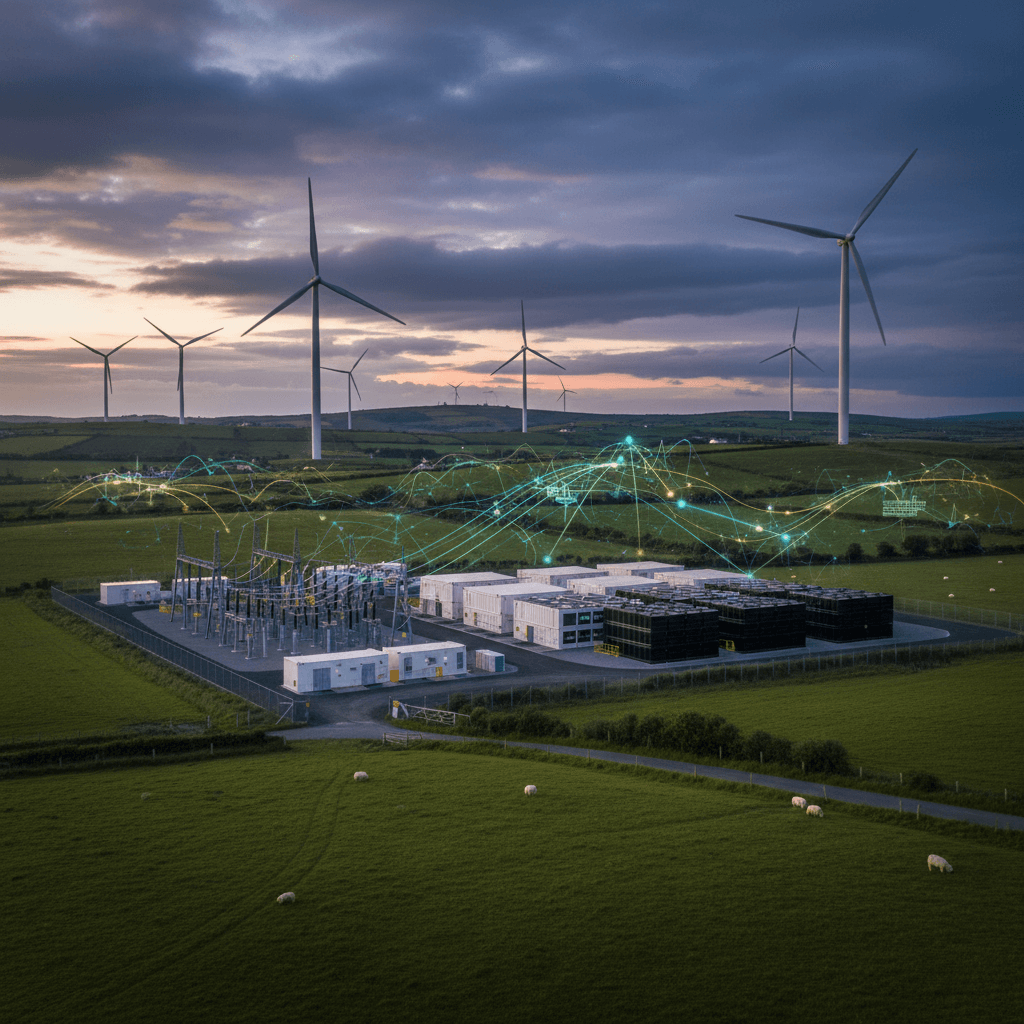
Ireland just made batteries real players in its power market
On 11 November 2025, Ireland switched on a new set of electricity market rules that quietly do something big: grid‑scale batteries can now trade directly in the wholesale market instead of sitting on the sidelines providing only stability services.
For a country that already saw about 34.9% of its electricity from renewables in August 2025, that change isn’t a technical footnote. It’s the difference between treating battery storage as an emergency helper and treating it as a core part of the power system – and a real business opportunity.
This matters for anyone interested in green technology because it shows what a modern, flexible grid actually looks like in practice. It’s not just more wind turbines and solar farms; it’s software, AI, and storage assets responding to price signals in real time.
In this article, I’ll break down what Ireland changed, why it’s a smart move for both climate and capital, and what lessons storage developers, traders and clean‑energy leaders in other markets can take from it.
What changed: From ‘set and forget’ to active trading
Ireland’s new Scheduling and Dispatch Programme (SDP) brings battery energy storage systems (BESS) into the Single Electricity Market (SEM) as active participants.
Until now, most large batteries in Ireland and Northern Ireland earned their money through DS3 (Delivering a Secure, Sustainable Electricity System), a programme that pays for fast frequency response and reserve services. The model was simple: commit capacity, provide grid services, get fairly predictable payments. You could almost “set and forget” the asset.
Under SDP-02, that changes:
- Batteries are treated as Energy Storage Power Stations (ESPS) in the market
- They can charge when prices are low (often when wind and solar are abundant)
- They can discharge when prices are high (during demand peaks or low renewable output)
- Operators can express preferences for charging/discharging windows, giving grid operators more granular information to schedule assets efficiently
GridBeyond’s modelling suggests that a 10MW, 2‑hour (20MWh) battery operating under the new rules can earn 12–37% higher annual revenue than staying in DS3 alone.
That’s not a marginal tweak. It’s a new business model.
Why wholesale participation is a big deal for green technology
The core problem modern grids face isn’t producing clean energy; it’s matching variable renewables with variable demand in real time. Wind and solar are cheap and clean but they’re not dispatchable on command. Batteries are.
Wholesale market access unlocks three big benefits:
1. Better economics for energy storage
A battery that can stack multiple revenue streams is far more bankable than one relying on a single ancillary‑services scheme.
Under Ireland’s new framework, a battery can:
- Continue providing frequency and reserve services
- Trade in Day‑Ahead, Intraday and Balancing markets
- Capture price spreads through energy arbitrage
More flexibility in where and how a BESS earns revenue means:
- Shorter payback periods for investors
- More appetite from lenders and infrastructure funds
- A clearer path for scaling from today’s ~1.4GWh across 30 sites to multi‑GWh fleets
I’ve seen this pattern across markets: once storage can touch multiple value pools, the development pipeline accelerates fast.
2. Higher renewable utilisation and less curtailment
When you let batteries respond to real‑time prices:
- Low prices during windy nights or sunny weekends encourage charging instead of curtailment
- High prices during cold winter evenings pull stored energy back onto the grid
The result is simple: more clean MWh actually used, fewer wasted. For a grid already pushing toward high renewable shares, that’s essential.
3. A smarter, more flexible grid
A grid with actively traded storage isn’t just greener; it’s more controllable.
By integrating BESS into the scheduling and dispatch process, system operators EirGrid and SONI gain:
- Granular visibility of state of charge (SoC) across the fleet
- The ability to co‑optimise thermal plants, renewables, and storage
- More tools to maintain stability as fossil plants retire
This is what green technology looks like in 2025: hardware (batteries) plus algorithms (trading and optimisation platforms) stitched into the heart of the electricity market.
The trade‑off: More upside, more complexity
Here’s the thing about active wholesale trading: it’s not passive income.
The old DS3 model largely rewarded capacity and technical capability. Once the asset was set up correctly, operations were relatively straightforward. Under SDP-02, you’re in a different game.
To actually achieve that 12–37% revenue uplift GridBeyond modelled, storage operators now need:
- Continuous price forecasting (Day‑Ahead, Intraday and Balancing)
- Real‑time state‑of‑charge management
- Algorithms that respect asset constraints (cycle limits, degradation, warranty rules)
- Automated bidding and dispatch to react to rapid price moves
Manual trading from a spreadsheet won’t cut it.
Why AI and optimisation software become non‑negotiable
Green technology isn’t just about swapping one fuel for another; it’s about using intelligence to run assets better.
For a typical 10–50MW grid‑scale battery participating in a market like Ireland’s, you want your software stack to:
- Forecast prices across Day‑Ahead, Intraday and Balancing horizons
- Calculate optimal charge/discharge schedules based on:
- Expected spreads between low and high prices
- SoC constraints and safety margins
- Degradation cost per cycle
- Auto‑generate bids (and rebids) to capture changing opportunities
- Monitor actual system conditions and correct course in real time
This is where AI and machine learning are genuinely useful: not as buzzwords, but as tools to digest large amounts of historical and real‑time data and make better trading decisions than a human desk can consistently manage.
From a business perspective, this means the most profitable storage operators in Ireland will likely be those that:
- Invest early in data, forecasting, and optimisation platforms
- Integrate their batteries tightly with TSO market systems
- Treat trading and asset management as a single, unified discipline
Lessons for developers and investors in other markets
Ireland isn’t unique in needing flexibility; it’s just moving faster than many neighbours in making market rules match physical reality.
If you’re developing or financing storage projects in Europe, North America, or Australia, Ireland’s shift under the Scheduling and Dispatch Programme offers a clear playbook.
1. Design projects for multi‑market participation from day one
Don’t model your project as if it will live forever on a single contract or ancillary service.
Instead, assume:
- Revenue stacking (ancillary + wholesale + possibly capacity)
- Policy and programme evolution over the asset’s 15–20 year life
- A need to respond to new market segments (e.g., long‑duration tenders, capacity auctions) as they appear
In practice, this means specifying:
- Duration that matches likely future value (2 hours is common now, but longer duration is gaining traction, especially with upcoming long‑duration energy storage procurement schemes)
- Controls and EMS that can integrate with multiple markets
- Contract structures that don’t lock you out of future upside
2. Treat optimisation as core IP, not an afterthought
Most companies get this wrong. They pour attention into project finance and EPC, then under‑resource how the asset will be actually run.
In a market like Ireland’s post‑SDP:
- Trading strategy can be the difference between 12% and 37% uplift
- Poor SoC management can quietly erode both performance and lifetime
- Misaligned incentives between owner, operator, and optimiser can destroy value
If you’re building a portfolio of storage assets, you want a consistent approach to:
- Algorithms and forecasting
- Risk limits and value‑at‑risk on trading positions
- Long‑term degradation strategy (fast cash now vs asset life)
3. Follow where policy is heading: flexibility and duration
Ireland is already consulting on long‑duration energy storage (LDES) procurement. That’s exactly where many other high‑renewable grids will end up as short‑duration batteries become ubiquitous.
The pattern looks like this:
- Start with short‑duration batteries to stabilise the grid and capture quick price spreads
- Gradually increase renewable penetration, pushing more variability into the system
- Introduce long‑duration tenders (4–12+ hours) to handle multi‑hour imbalances and seasonal challenges
If you’re planning projects now, you don’t want to be locked into a configuration that can’t respond as markets add LDES schemes or more sophisticated flexibility products.
How this fits into the broader green technology transition
Ireland’s move is a strong example of how AI‑enabled green technology actually scales:
- Policy opens the wholesale market to new assets (batteries)
- Smart software platforms orchestrate when those assets charge and discharge
- The grid uses more renewable generation without sacrificing reliability
- Investors see clearer revenue pathways and back more projects
The reality? It’s simpler than it looks on a whiteboard. You make markets transparent, you reward flexibility, and you give intelligent systems the authority to act on real‑time information.
For businesses in the green technology space – whether you’re building BESS projects, writing optimisation software, or managing clean‑energy portfolios – Ireland is worth watching closely. The country has moved beyond pilot projects and is now treating storage as a primary market actor.
If your own market isn’t there yet, the question isn’t if it will evolve in this direction, but when and how fast. The companies preparing now – with flexible project designs, serious optimisation capabilities, and a clear view of future policy shifts – will be the ones setting the pace.
Where to go from here
If you’re:
- A developer: stress‑test your pipeline against a scenario where wholesale revenues and active trading matter at least as much as ancillary contracts.
- An investor: ask hard questions about optimisation strategy, software stack, and market access, not just IRR spreadsheets based on static tariffs.
- A technology provider: focus on tools that make multi‑market participation and real‑time optimisation easier, safer, and more transparent.
Ireland has effectively turned its batteries into active citizens of the grid. Other countries will follow. The opportunity now is to build storage businesses – and supporting AI‑driven platforms – that are ready when that “new era” arrives in your market.