AEMO’s control of the Torrens Island battery shows how grid security can derail storage revenues. Here’s what that means for green technology projects and investors.
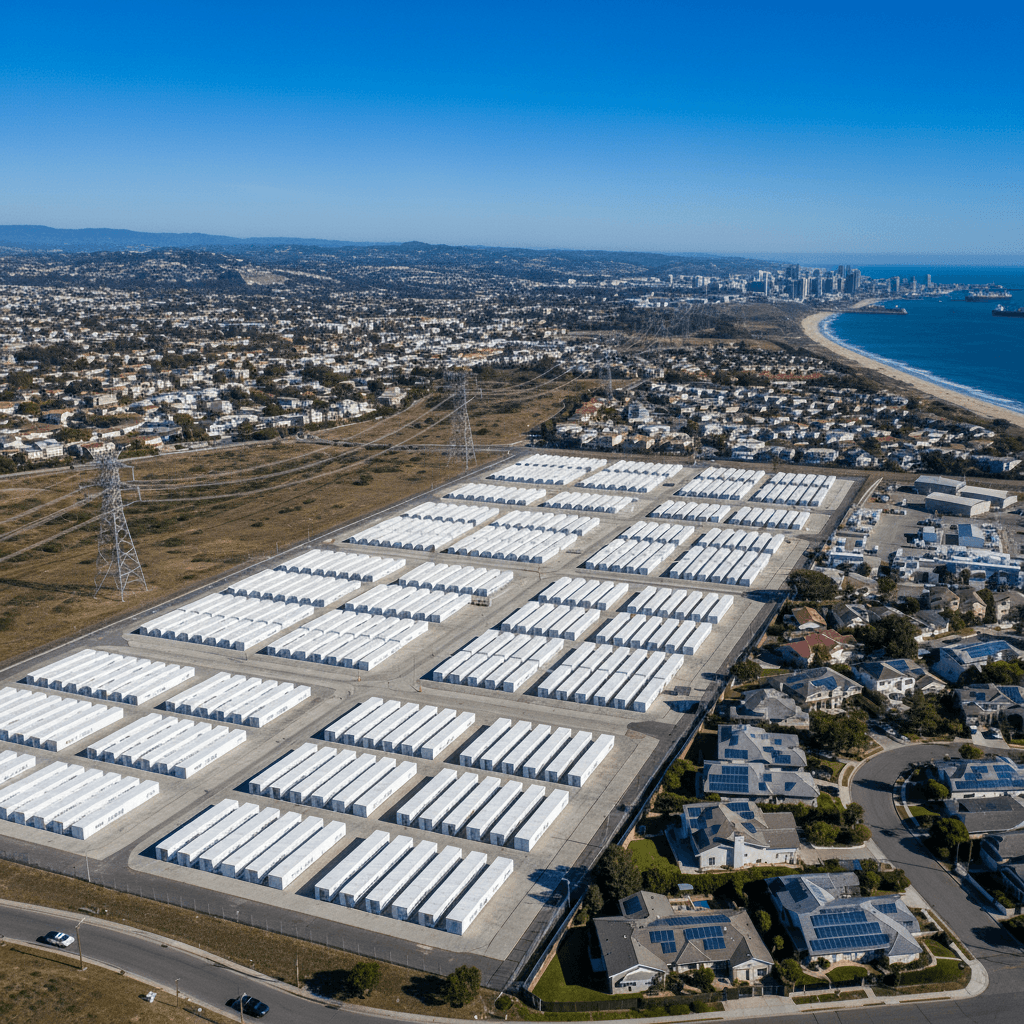
Grid Security vs Battery Profits: The Torrens Island Lesson
Most people look at big batteries and see a simple story: charge when power is cheap, discharge when it’s expensive, print money, support the clean energy transition. The reality on the ground in South Australia this spring has been a lot messier.
On three days in November 2025, the Australian Energy Market Operator (AEMO) overrode the normal market signals and directly controlled the 250MW/250MWh Torrens Island battery. The asset was blocked from charging in the very hours it would usually buy the cheapest power. Why? To keep the grid stable during extreme minimum system load conditions driven by rooftop solar.
This matters because it goes right to the heart of green technology economics: can large-scale battery energy storage systems (BESS) make money reliably in grids that are rapidly filling with renewables – and with increasingly interventionist operators? If you’re building, investing in, or relying on storage, you need to understand this tension between grid security and battery storage economics.
In this article, I’ll unpack what happened at Torrens Island, what it tells us about the future of clean energy markets, and how smarter design, software, and AI can keep both the lights on and the business case intact.
What Actually Happened at Torrens Island?
The Torrens Island BESS in South Australia is a 250MW/250MWh grid-scale battery completed in 2023. It’s designed to do what most large batteries in the National Electricity Market (NEM) do today:
- Arbitrage: charge when prices are low, discharge when they spike
- Provide frequency and other grid services
- Support a high-renewables system by being fast, flexible capacity
In November 2025, Modo Energy reported that AEMO issued ‘directions’ to Torrens Island under its minimum system load management framework. On 11, 12 and 15 November, the battery was explicitly instructed how to operate, rather than being left to follow price signals.
The economic hit – and the strange compensation
On 11 and 12 November:
- The battery was blocked from charging between roughly 07:00–15:00
- Those hours lined up with the cheapest one-hour charging windows of the day
- Lost arbitrage revenue (based on actual spot prices) was:
- AU$5,354 on 11 November
- AU$3,876 on 12 November
Under current National Electricity Rules, Torrens Island may be eligible for compensation when an asset’s dispatch is altered by intervention. But here’s the twist:
- Compensation is calculated using a 90th-percentile benchmark price over 12 months, not the actual spot prices on the day.
- For the November events, that benchmark-based formula suggests possible compensation of up to AU$37,895 and AU$28,091.
So a few things are true at once:
- The battery lost real trading opportunities because of system security directions.
- The compensation framework was designed for traditional generators, not bidirectional storage.
- In this case, the formula could actually overcompensate compared with actual losses.
- None of this is predictable for operators – which makes building a business case harder.
That unpredictability is the bigger problem. Investors can live with rules they don’t love. What they won’t accept is not knowing how the rules will be applied.
The Root Cause: Minimum System Load in a Solar-Heavy Grid
The Torrens Island episode isn’t a one-off oddity; it’s a symptom of how fast South Australia is decarbonising.
South Australia has already recorded 112 hours of negative operational demand in 2025. That means local generation (mostly rooftop solar) exceeded underlying demand in the region, turning the grid “inside out”.
When that happens:
- Scheduled units like gas plants and some grid-scale renewables are pushed offline.
- Grid stability tools baked into those synchronous assets (inertia, fault current, voltage support) go missing.
- AEMO steps in under its minimum system load framework to keep the system secure.
The framework, introduced in 2021, gives AEMO tools to manage risk when distributed PV is sky-high and demand is low – very common in mild spring weather with strong sunshine and modest aircon use.
Here’s the thing about minimum system load:
Minimum system load is the flip side of the classic “peak demand” problem. Instead of not having enough power, you’ve got too much of the wrong kind at the wrong time.
South Australia is an early warning for other high-solar regions. As more rooftop and utility-scale renewables come online without corresponding changes in grid architecture, these security-driven interventions will become more frequent, not less, unless the system evolves.
Why Grid Operators Are Overriding Battery Economics
From AEMO’s perspective, grid security beats storage economics every time. And they’re right to prioritise that. A blackout is more expensive than any BESS revenue hit.
So what’s really going on when AEMO directs a battery like Torrens Island?
Security first, profit later
During minimum system load events, AEMO has to:
- Maintain frequency and voltage within tight bounds
- Ensure enough synchronous generation or equivalent services are online
- Avoid “islanding” issues where a region like South Australia is cut off and must stand on its own
If letting batteries freely charge would:
- Push more asynchronous resources onto the grid (e.g., more solar and batteries, less synchronous), or
- Undermine specific system-security strategies in place,
then AEMO will take out-of-market actions. That includes directing specific dispatch trajectories, even if it destroys the economic rationale of those bids in the short term.
Why the current rules clash with storage reality
The existing compensation framework was built for a world of one-way generators, not bidirectional assets whose entire business model depends on price volatility and timing:
- It uses a 90th-percentile benchmark price instead of the actual spot prices.
- It doesn’t track the opportunity cost of lost arbitrage very well.
- It struggles with counterfactuals: what would a battery have done if it weren’t constrained?
Most companies underestimate how crucial this is. If you build a 15–20 year investment case around assumed arbitrage and FCAS revenues, and then find out every spring that your asset is being used primarily as a security tool under opaque rules, your IRR can unravel fast.
This is why both AEMO and the Australian Energy Market Commission are now actively looking at:
- Better recognition of price-driven impacts for storage
- Improved counterfactual modelling for bidirectional units
- More consistent, transparent, and predictable additional compensation methods
The storage industry should be vocal here. This isn’t just rulebook housekeeping; it’s about whether green technology capital flows into batteries or looks elsewhere.
What This Means for Green Technology Investors and Developers
The Torrens Island case is a stress test for the next wave of green infrastructure. Here’s how I’d interpret it if I was planning or financing new storage assets.
1. Model intervention risk explicitly
Future-ready financial models for BESS in high-renewables grids should:
- Include scenarios with frequent AEMO interventions during spring and mild-weather days.
- Sensitivity-test revenue reductions of 20–60% during those periods (Australia has already seen a 61% drop in some storage revenues in volatile conditions this year).
- Treat security-related directions as a core assumption, not a rare edge case.
If the deal only works when the battery trades freely 95% of the time, the deal is too fragile.
2. Design for multi-service resilience, not just arbitrage
The most resilient BESS projects in a green technology portfolio are the ones that earn money from multiple value streams, such as:
- Energy arbitrage
- Frequency control and ancillary services (FCAS)
- System strength and inertia (especially with grid-forming inverters)
- Network support and congestion relief
- Capacity contracts and long-term PPAs
When arbitrage gets clipped by operational directions, contracted or regulated revenue can keep the project whole.
3. Use software and AI to adapt trading strategies
Here’s where AI-powered green technology really pulls its weight.
Advanced trading and optimisation platforms can:
- Learn from historical patterns of minimum system load events in regions like South Australia
- Forecast probabilities of intervention on specific days and hours
- Adjust bidding strategies to minimise exposure to predictable constraints
- Optimise across compensation frameworks, not just spot markets
In other words, AI can help batteries anticipate when the market is no longer “real” and when system security will take over. For operators, this isn’t a nice-to-have anymore – it’s risk management 101.
4. Push for regulatory clarity early in project development
Developers and offtakers should be asking specific questions during project structuring:
- How will directions and interventions be handled in our contracts?
- Who bears the revenue risk of being constrained for system security?
- How do we factor uncertain compensation into minimum revenue guarantees or PPAs?
I’ve found that projects which surface these issues upfront get better terms, because both sides understand the risk instead of pretending it doesn’t exist.
How Smarter Grids Can Ease the Tension
The good news is that South Australia isn’t stuck in this pattern forever. The system itself is evolving.
More interconnection, fewer isolation events
Modo Energy’s analysis suggests that South Australia’s exposure to minimum system load events should fall over time as interconnection with New South Wales improves via Project EnergyConnect Stage 2.
More transmission means:
- Excess solar generation can be exported instead of pushing the local system into negative demand.
- Security can be managed on a wider geographic footprint, not just within one state.
- Batteries like Torrens Island are less likely to be islanded into constrained, intervention-heavy conditions.
Advanced inverters and grid-forming storage
As more grid-forming BESS and advanced inverter-based resources come online, they can provide services that historically only synchronous generators provided:
- Virtual inertia
- Fast frequency response
- Fault current and voltage support
That technical capability gives operators like AEMO more flexibility. When storage can actively support system strength, it’s less likely to be seen as a problem to be constrained and more as a tool to be dispatched.
Policy that reflects a storage-centric future
Long term, the rules need to catch up with where green technology is going:
- Treat storage as a first-class asset class, not an awkward hybrid of generator and load
- Benchmark compensation on real opportunity cost for bidirectional assets
- Give operators the tools to maintain security and reward flexibility fairly
The reality? This is simpler than it looks: if we want private capital to fund the storage that makes high-renewables grids possible, the rules have to be stable, transparent, and storage-aware.
Where This Fits in the Bigger Green Technology Story
The Torrens Island story is a perfect snapshot of where green technology is in late 2025:
- Renewables are no longer the marginal add-on – in places like South Australia, they dominate midday supply.
- Energy storage is moving from pilot to backbone, shouldering real responsibility for reliability.
- Grid operators are still adapting their rulebooks to this new reality, sometimes clashing with the economics of the very assets needed for decarbonisation.
For businesses, utilities, and investors working in clean energy, the lesson is clear:
Don’t just build green technology; build grid-native technology that can thrive under real-world operational constraints.
That means combining hardware like BESS with:
- Sophisticated AI-driven optimisation
- Thoughtful contractual design
- A clear view on regulatory evolution
As we head into 2026, the questions won’t be “do batteries work?” or “is solar cheap enough?”. Those are largely settled. The sharper question is: can we run markets and regulations in a way that keeps the grid secure while still rewarding the flexibility that storage brings?
If you’re planning large-scale storage or hybrid renewable projects and want to stress-test them against minimum system load risk, intervention scenarios, and emerging compensation rules, now’s the time to do it – not after your first spring of negative demand.