New data shows hydrogen can only cut 0.5–3% of global CO₂ by 2043. Here’s where it truly helps—and where electrification and other green tech are better.
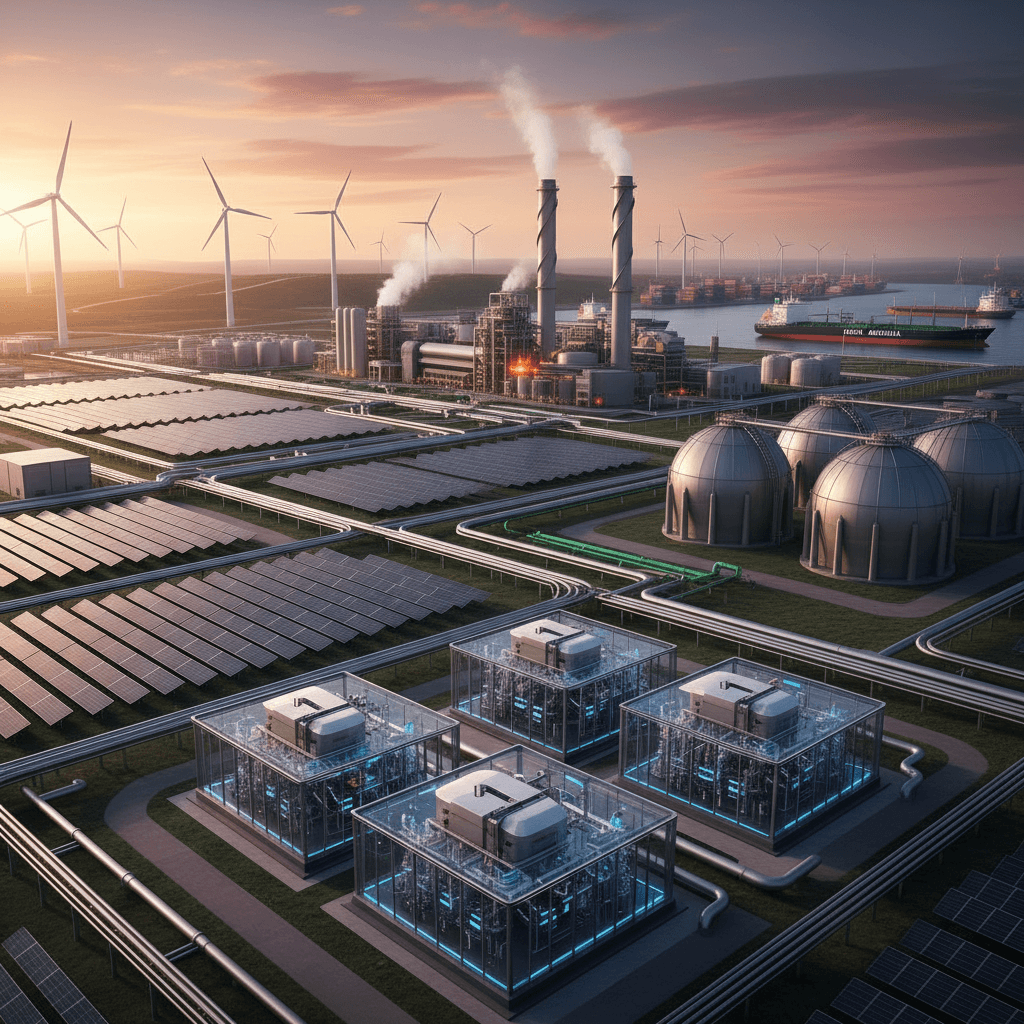
Most companies betting on hydrogen are overestimating what it can do for the climate.
A new global analysis of ~2,000 existing and planned hydrogen projects shows something uncomfortable: if every one of those projects is built, they’d cut only 0.5–3% of today’s annual CO₂ emissions by 2043. And a big chunk of the hydrogen would be used in places where smarter green technology—especially direct electrification—does a better job.
This matters because governments, investors, and heavy industry are committing billions right now. If scarce low‑carbon hydrogen goes into the wrong uses, we lose precious time and capital on the road to net-zero.
In this post, I’ll break down what the new research really says, where hydrogen does make sense, and where businesses should be pushing harder for electrification, bio-based solutions, and carbon capture instead.
Hydrogen’s climate potential: the big picture
The core finding is blunt: how you make hydrogen and where you use it matters far more than whether it’s called “green” or “blue.”
From the analysis of projects to 2043:
- Planned facilities would produce 110 million tonnes of H₂ per year.
- Production alone would emit about 0.23 Gt CO₂e per year.
- Once you include how that hydrogen is used, total life-cycle emissions jump to ~0.4 Gt CO₂e per year.
- Even then, net avoided emissions are only 0.2–1.1 Gt CO₂e per year compared with today’s fossil-based systems (around 0.5–3% of current global CO₂ emissions).
Here’s the thing about green technology and hydrogen: hydrogen is not a climate silver bullet. It’s a niche but essential tool—especially for sectors where batteries or direct electrification can’t carry the load.
For leaders working on green technology, AI-powered energy planning, or industrial decarbonization, the message is clear: treat hydrogen as a scarce, premium decarbonization resource and allocate it strategically.
Not all hydrogen is created equal
The study confirms something many engineers already suspect: some hydrogen is barely better than fossil fuels, and some can even be worse.
The life-cycle emissions of hydrogen production vary widely based on:
- Energy source (renewable electricity, nuclear, grid mix, natural gas + CCS, coal + CCS, biomass + CCS)
- Location (solar/wind capacity factors, grid carbon intensity)
- Technology configuration (electrolyser type, compression, storage, batteries for smoothing renewable output)
Key findings:
- Average emissions of planned hydrogen projects are 2.1 kg CO₂e per kg H₂ by 2043.
- When hydrogen is made via fossil routes (steam methane reforming without good CCS, coal gasification, or electrolysis on dirty grids), its climate impact can be more than 10× higher than low‑carbon routes.
- Hydrogen from biomass gasification with CCS can even create net negative emissions, but those projects are rare—and biomass is limited.
For anyone designing energy systems or green technology strategies, the takeaway is simple:
Hydrogen is only “green” if the entire upstream system—power, equipment, and infrastructure—is decarbonized and efficient.
That’s where AI-powered planning tools can be powerful: optimizing where to place electrolysers, how much to oversize solar/wind, and when to integrate storage to minimize both cost and emissions.
Where hydrogen makes the most climate sense
The study maps 14 different hydrogen applications and scores them on emission reduction per tonne of hydrogen used. When you treat hydrogen as scarce, that metric really matters.
The clear climate winners:
1. Ammonia (especially for fertilizers and shipping)
Low-carbon hydrogen used to produce ammonia shows strong emission reduction potential, particularly in regions where current ammonia production is coal- or gas-based.
Why it works:
- Ammonia production already uses huge volumes of hydrogen today, mostly from fossil fuels.
- Switching this existing demand to low-carbon hydrogen cuts emissions without needing entirely new value chains.
- Ammonia is also emerging as a promising fuel for deep-sea shipping, where electrification is unlikely to scale for long-haul routes.
2. Green steel (iron and steel production)
Hydrogen used for direct reduction of iron ore (H₂-DRI) significantly lowers emissions versus coal-based blast furnaces.
From a climate standpoint, this is one of the smartest uses of hydrogen because:
- Steel is a hard-to-abate sector with limited alternatives.
- Demand is huge and growing, especially in emerging economies.
- The relative climate benefit remains strong even in a decarbonized global economy scenario.
If you’re prioritizing industrial decarbonization projects for 2030–2040, steel is where green hydrogen genuinely earns its keep.
3. Second-generation biofuels (waste-based fuels)
Here the study focuses on hydrotreated vegetable oil (HVO) produced from used cooking oil and other waste streams.
Hydrogen is used to upgrade these waste oils into drop-in fuels. The result:
- Very high emission reduction per unit of hydrogen, even when compared with a low‑carbon reference system.
- Realistic scalability where waste feedstocks are available (though global volumes are limited).
This is particularly relevant for aviation and heavy transport that can’t be electrified quickly. Pairing hydrogen with waste-based biofuels is a smart way to stretch scarce sustainable biomass.
4. Synthetic fuels for aviation and shipping (with nuance)
Hydrogen-based synthetic kerosene or methanol can sharply cut emissions versus fossil fuels, especially when combined with direct air capture or sustainable biogenic CO₂.
However, when compared against the best possible biomass-based fuels in a fully decarbonized economy, the relative advantage shrinks. The real constraint is biomass availability:
- Fulfilling all future aviation fuel needs using only low-carbon biomass-based kerosene could require up to 35% of today’s global biomass supply.
That’s why I see synthetic fuels as a necessary complement: you can’t scale everything with biomass, and you can’t electrify every long‑haul plane or ship.
Where hydrogen is a bad bet (for emissions)
Some of the loudest hype around hydrogen is also where it performs worst from a climate perspective, especially when compared to mature green technology alternatives.
The research is clear: for these uses, hydrogen usually causes higher emissions than a good low‑carbon alternative.
1. Road transport (especially trucks and cars)
Hydrogen fuel cell trucks do reduce emissions compared with diesel, but when you compare them to battery electric trucks on low‑carbon grids, the picture flips:
- Battery trucks are more energy-efficient end-to-end.
- They use electricity directly instead of converting it to hydrogen, compressing it, transporting it, and converting it back.
- The fuel cell, high‑pressure tanks, and system components themselves add notable manufacturing emissions.
For passenger vehicles, the case against hydrogen is even stronger. Batteries win on efficiency, infrastructure maturity, and lifecycle emissions almost everywhere you can reasonably build charging.
2. Power generation
Using hydrogen to run gas turbines for power is almost always worse than:
- Feeding low‑carbon electricity directly to the grid, or
- Using storage (batteries, pumped hydro, other options) to balance renewables.
When the reference system is a low-carbon grid, hydrogen power plants are largely a climate downgrade. There may be exceptional cases for seasonal backup or islanded systems, but those are edge cases, not mainstream solutions.
3. Domestic heating
This is probably the most over‑sold use of hydrogen.
Compared to electric heat pumps running on decarbonized electricity, using hydrogen boilers for home heating:
- Consumes far more energy for the same heat output.
- Requires expensive and disruptive grid repurposing.
- Delivers lower emission reductions or even higher emissions in many scenarios.
Multiple independent reviews now converge on the same verdict: heat pumps, better buildings, and smart electric heating beat hydrogen hands down for homes.
How AI and data can make hydrogen smarter
This blog series is about green technology and the role of AI. Hydrogen is a perfect example of where data-driven decision-making beats slogans.
The underlying study used:
- Detailed life cycle assessment for each project
- Prospective scenarios of how the global energy system decarbonizes to 2043
- Location-specific factors like solar and wind capacity and grid mix
That same logic can be embedded into AI tools and digital twins that help:
- Rank hydrogen projects by emission reduction per tonne of H₂
- Site electrolysers where renewables are strongest and grids are cleanest
- Choose between hydrogen and electrification for each use case
- Flag greenwashing by contrasting claimed “green hydrogen” with actual lifecycle performance
I’ve found that when teams actually see side‑by‑side numbers—for example, hydrogen truck vs battery truck vs e‑fuel vs biofuel—the debate shifts quickly. Opinions give way to system-level thinking.
The reality? It’s simpler than you think:
Use hydrogen where you truly don’t have a better low‑carbon option. Electrify everything else.
What governments and businesses should do next
If you’re shaping climate, energy, or industrial strategy, here’s a practical way to act on this research.
1. Prioritize high-impact hydrogen applications
Focus policy support, subsidies, and R&D on:
- Ammonia (fertilizers and marine fuels)
- Green steel (H₂-based direct reduction)
- Second-generation biofuels that require hydrogen upgrading
- Synthetic fuels for aviation and shipping where no direct-electric alternative exists
These are the sectors where hydrogen has real climate leverage and aligns with broader green technology deployment.
2. Stop promoting hydrogen for low-value uses
Be explicit—both in policy and company strategy—about de‑prioritizing hydrogen for:
- Passenger cars
- Most road freight in regions where charging infrastructure is viable
- Routine power generation on decarbonizing grids
- Domestic space and water heating
There may be niche exceptions, but they should be justified with hard numbers, not lobby talking points.
3. Demand full life-cycle analysis for every major project
Subsidies, grants, and investor capital should require transparent life-cycle GHG assessments that include:
- Production
- Infrastructure
- Transport, storage, and conversion losses
- End-use technology manufacturing
Quantifying only hydrogen production emissions, as many roadmaps still do, misses about half of the total climate impact of hydrogen applications.
4. Treat the implementation gap as an opportunity
The study finds that even if every announced hydrogen project is built, global supply in 2043 would still lag behind what’s needed for stringent climate pathways.
That gap is actually useful: it’s room to course-correct.
The next wave of hydrogen investments can be:
- Bigger
- Better targeted
- Backed by AI-driven planning and robust environmental data
Done right, hydrogen becomes a precision tool in the green technology toolbox, not a blunt hammer swung at everything.
The bottom line for the green technology transition
Hydrogen will play a serious role in a net‑zero economy—but only if we’re disciplined about where and how we use it.
As part of the broader green technology story, hydrogen is most powerful when paired with:
- Massive renewable build‑out
- Smart electrification
- Strategic use of sustainable biomass and CCS
- AI systems that optimize complex, multi-step supply chains
If you’re developing climate strategies, digital tools, or industrial projects, the next step is to audit your hydrogen assumptions:
- Are you using hydrogen where batteries, heat pumps, or direct electrification would be cleaner and cheaper?
- Are you prioritizing steel, ammonia, advanced biofuels, and aviation fuels—or chasing low-impact pilot projects for PR?
There’s a better way to approach hydrogen: treat it like a scarce, climate-critical resource and deploy it where it genuinely moves the needle.