A $40 wooden bench in Indianapolis shows how small, human-scale design choices can unlock big gains for green technology, smart cities, and climate goals.
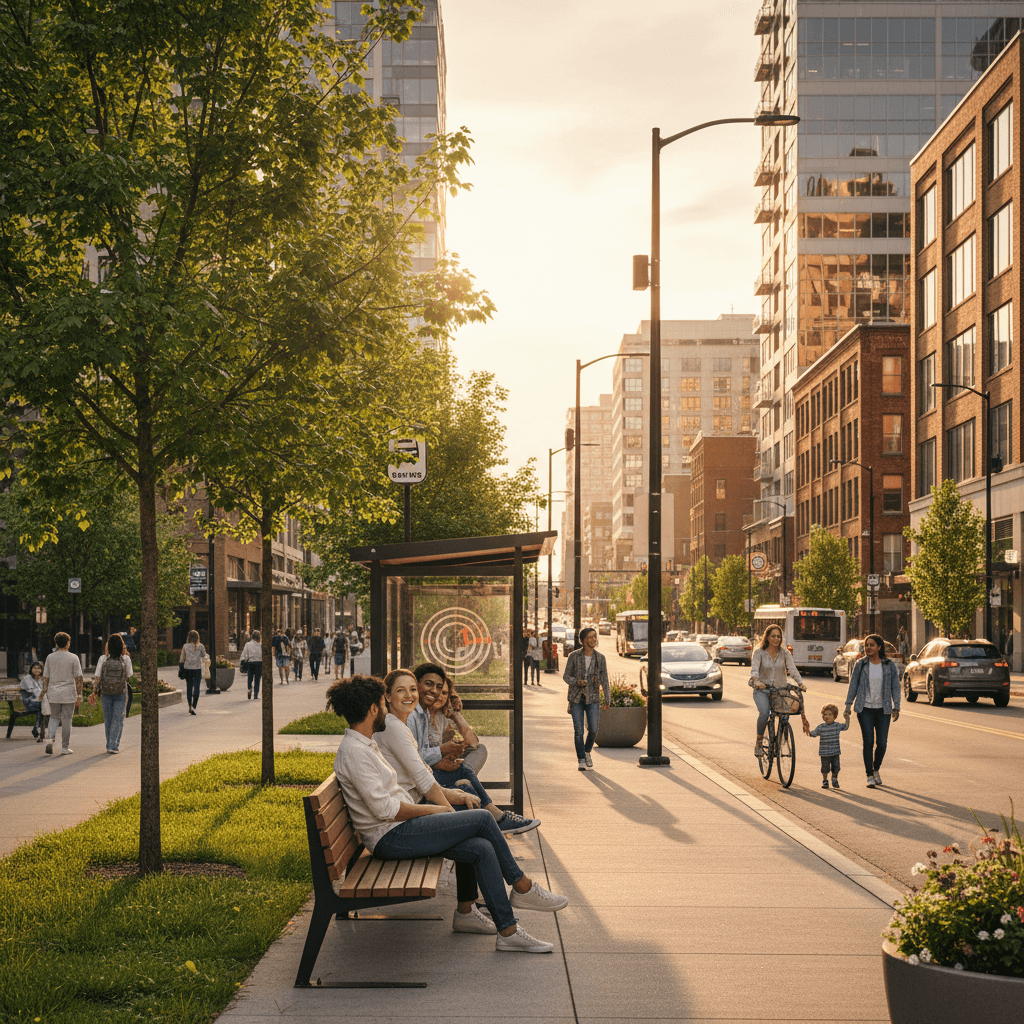
Most city climate plans miss something obvious: if people don’t actually enjoy being outside, they won’t walk, bike, or use transit very often. And when they default to cars, every other green technology has to work harder just to keep emissions in check.
That’s why a simple story from Indianapolis matters for any city or company serious about sustainability. One man, a few pine boards, and an Instagram joke turned into 22 new benches, a mini movement in guerrilla urbanism, and a clear lesson about how human comfort drives green technology adoption.
This post looks at what the “Bench Mench” project reveals about green urban design, how low-tech interventions support high-tech smart city and green technology investments, and how public agencies or private firms can turn this kind of “good mischief” into structured, scalable impact.
Benches, Behavior, and the Missing Piece in Smart Cities
The core lesson from the Indy Bench Mench story is straightforward: small, low-cost amenities can unlock big sustainability gains by changing how people move and use public space.
Anderson York didn’t set out to redesign Indianapolis. He just wanted a place for his family to sit near a rail trail crossing. So he built a basic Aldo Leopold-style wooden bench, dropped it by the trail, posted a tongue-in-cheek Facebook caption, and offered more benches for $40 via an Instagram account.
Within six weeks, he had 22 requests. Residents wanted benches at:
- Bus stops
- Parks
- Schoolyards
- Trail crossings
Nobody asked for smart sensors, digital kiosks, or an app. They wanted somewhere to rest while walking, to wait with kids, to breastfeed comfortably, or to pause on a bike ride.
Here’s why this matters for green technology:
- Walking and transit are climate tech too. Mode shift from cars to active or shared transport is one of the fastest ways cities cut emissions. But comfort is a precondition.
- Physical comfort drives usage. If people know there’s a safe, comfortable place to sit every 400–600 meters, they’ll walk further and accept longer waits for buses.
- Low-tech is what enables high-tech. Transit data platforms, dynamic routing, and AI-optimized energy systems only hit their full potential when real people actually use the infrastructure they’re built around.
The reality? A $40 bench can sometimes move more carbon than a six-figure pilot if it nudges behavior at scale.
Guerrilla Urbanism as a Green Technology Catalyst
Guerrilla urbanism—citizens making unsanctioned but thoughtful tweaks to public space—is often framed as a design or equity story. It’s also a quiet climate tool.
York’s work in Indianapolis checks all the boxes:
- Ultra-low material footprint. Four 8-foot pressure-treated pine boards, hand tools, and local delivery.
- Human-powered logistics. He even hauls trees around the city on a bike cart for another project.
- Longevity over novelty. A simple wooden bench, maintained by neighbors, can last years with minimal impact.
From a green tech perspective, guerrilla projects like this:
-
Prototype public space, fast
Instead of commissioning a feasibility study, residents “test” a bench or traffic-calming element in the real world. If it’s used constantly, you’ve got hard evidence for a permanent, code-compliant version. -
Reveal hidden demand for low-carbon mobility
York’s DMs and tags weren’t random. People had wanted a bench “forever” but didn’t have a channel to request one or thought it wouldn’t matter. Their requests map real-world desire for walkable, sit-able streets. -
Lower the barrier to engaging with city systems
A resident who paints a community bench is more likely to:- Show up at a public workshop
- Support a new bus lane
- Advocate for trees, traffic calming, or safe crossings
-
Complement smart infrastructure
Sensors, cameras, and digital twins can show where congestion or heat islands exist. A bench, some shade trees, and a better bus shelter are often the fastest interventions to turn that insight into better behavior and lower emissions.
Sustainability teams tend to focus on high-efficiency hardware and AI. Those are vital. But ignoring bottom-up tweaks is a mistake. Grassroots projects can de-risk and guide where to place the big green tech bets.
Designing Low-Tech Amenities for High-Impact Sustainability
If you strip the story down, the Bench Mench model is a simple design pattern for green cities:
Small, modular, human-scale interventions increase the return on larger green technology investments.
Here’s how to use that pattern in practice.
1. Start with human friction, not hardware
York’s starting point wasn’t “How do I innovate street furniture?” It was: my family can’t sit down where we need to. That’s exactly how sustainability teams should think.
Ask in each district or campus:
- Where do people get tired, confused, or uncomfortable when walking, biking, or using transit?
- Where are parents juggling kids and bags with nowhere to sit?
- Where are older residents choosing cars because the “last 300 meters” feel like too much?
Map those friction points, and you’ve got a prioritized list of where low-cost interventions—benches, shade, lighting, water fountains—will have outsized impact on green mobility.
2. Pair benches with other green technology
A bench by itself is great. A bench connected to other green technologies is strategic.
Some high-impact pairings:
-
Benches + transit data
Place seating at stops where real-time data shows longer average waits. People are more willing to accept a 10–12 minute headway if they can sit. -
Benches + shade + heat analytics
In many cities, heatwaves now drive spikes in car use and health risks. Use thermal maps to locate the hottest walking corridors, then add benches and shade trees or canopies to create “cool corridors.” -
Benches + micromobility hubs
Put seating near bike-share or e-scooter docks. It supports people adjusting seats, loading kids, or waiting for friends. That smoother experience boosts adoption. -
Benches + EV charging sites
Even fast charging takes time. If you want people hanging out in a low-carbon mobility hub rather than idling in their car with AC blasting, give them a pleasant place to sit outside.
3. Design for community ownership
York’s approach is smart: he encourages residents to paint and customize the benches. That’s not just cute; it’s a smart maintenance and security strategy.
When planning public seating as part of a green infrastructure project:
- Keep designs simple enough to repair locally
- Use standard boards and hardware that any community workshop can source
- Offer paint days or “adopt-a-bench” programs so residents feel responsible for upkeep
Community-owned assets are:
- Less likely to be vandalized
- More likely to be reported and repaired quickly
- Easier to expand, because people feel the impact directly
4. Quantify impact (even for a $40 bench)
If your job involves sustainability reporting, you might be wondering: how do you justify benches in a green technology budget?
You don’t need perfect precision, just reasonable estimates:
- Survey or passively count how many people use a bench per day
- Estimate added walking distance or extra trips that happen because there is a place to rest
- Convert those added trips to avoided car kilometers
- Apply your standard emissions factor per kilometer
Even if you’re conservative, the math often works. A bench that encourages 5 extra walking trips a day instead of short car rides starts to accumulate measurable CO₂ savings over its lifespan.
From “Good Mischief” to Official Green City Strategy
York calls his work “a little bit of good mischief” and tries to stay under the radar: no blocking sidewalks, no messing with sightlines, no permanent fixtures in dangerous spots.
That approach is fine for a citizen project. But for cities, transit agencies, campuses, or business districts, the smarter move is to channel this energy rather than squash it.
Here’s what that can look like.
Create sanctioned “guerrilla labs”
Instead of waiting for rogue benches, cities can:
- Define pilot zones (e.g., along a greenway, around a school, in a downtown district)
- Pre-clear low-risk interventions—benches, planters, temporary crosswalks—within set rules
- Publish a short design guide: dimensions, materials, accessibility requirements, sightline rules
- Offer microgrants or material vouchers to neighborhood groups
Now you’ve transformed ad hoc mischief into a structured, trackable green urban prototyping program.
Use AI and data to guide where benches go
This is where the Green Technology series theme shows up most clearly: AI can prioritize where each low-tech intervention matters most.
You can feed a simple model with:
- Transit ridership and average wait times
- Pedestrian and cycling counts
- Heat and shade maps
- Demographic data (age, disability, car access)
Then ask straightforward questions:
- Which bus stops combine high ridership, long waits, and no seating?
- Which walking corridors have extreme heat plus older residents nearby?
- Where do mode-shift targets depend on making walking more comfortable?
AI doesn’t replace community input, but it narrowly focuses attention so every $40 bench is pulling maximum climate and equity weight.
Turn stories into policy
The Bench Mench narrative is powerful because it’s human: a new parent, a tired family, a simple solution. Policymakers and sustainability teams should collect and use these stories.
Embed them into:
- Green mobility master plans
- Climate adaptation and heat resilience strategies
- Corporate ESG reports and campus master plans
When you show that people are already hacking the city toward sustainability, it’s much easier to argue for larger budgets on benches, trees, shade, and street redesign—alongside the solar, batteries, and AI platforms.
Why This Matters for the Future of Green Technology
Most companies and cities over-index on big-ticket items—EV fleets, smart grids, AI analytics—and underinvest in the cheap, human stuff. The Bench Mench story is a quiet reminder that green technology only works if the spaces around it feel good to use.
As we wrap up 2025 with climate targets tightening and urban heat rising, there’s a practical path forward:
- Use AI and data to find the gaps in your public realm: the hot corridors, long-wait bus stops, and uncomfortable walks.
- Fill those gaps with simple, low-carbon amenities: benches, shade, safe crossings, basic wayfinding.
- Invite residents and employees into the process. Treat their “good mischief” as a signal, not a threat.
If you’re working on a smart city, corporate campus, or district-scale sustainability plan and want to connect your high-tech tools to these very human interventions, this is exactly the layer you should be thinking about next.
Because sometimes, the most effective piece of green technology isn’t a sensor or an algorithm. It’s a $40 bench that convinces someone to walk instead of drive.