Finland’s battery market is quietly shifting to 2‑hour, grid‑forming BESS. Here’s why it’s happening now—and what it means for your next green tech investment.
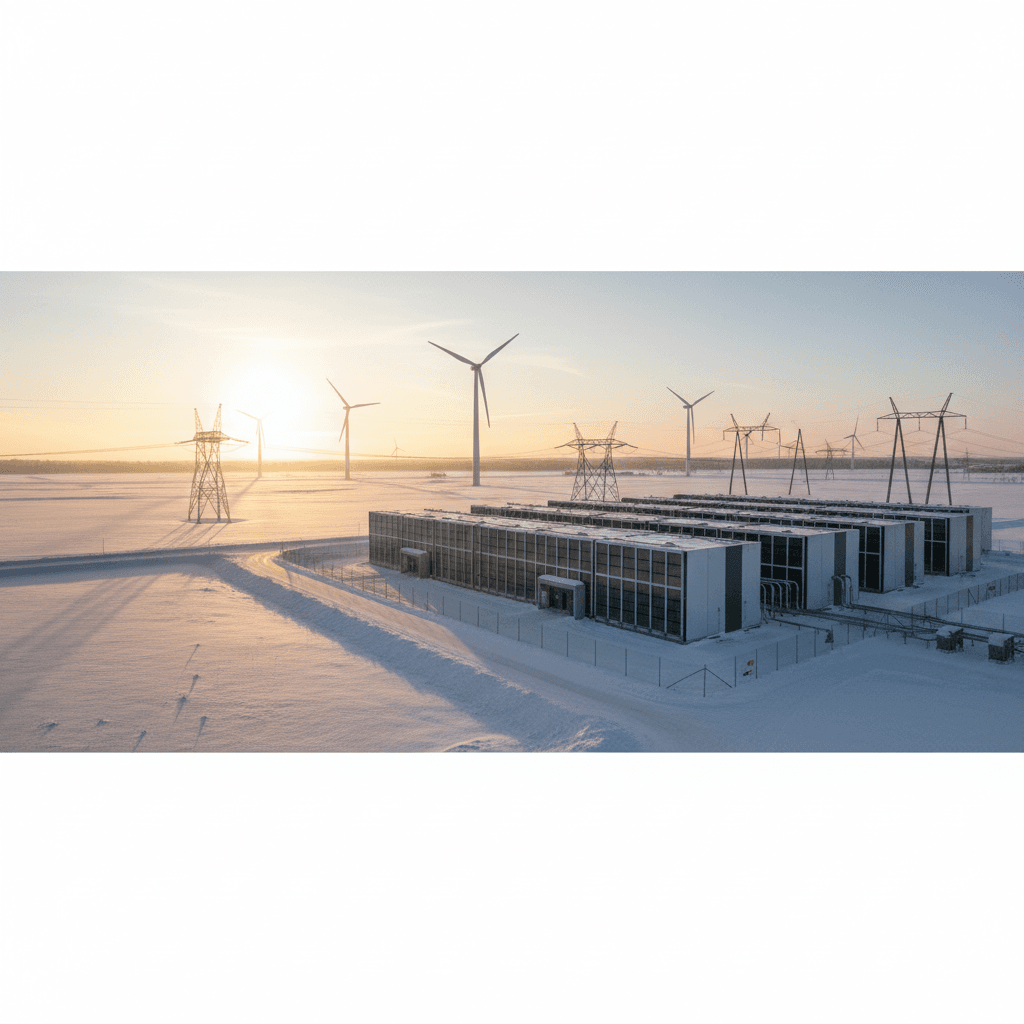
Most investors chasing battery projects in Europe are still fixated on fast frequency response. Finland is already moving on.
Over just a few months, Finnish projects have quietly shifted from 1‑hour to 2‑hour battery energy storage systems (BESS). Behind that shift is a mix of market saturation, new revenue streams, and smarter grid-support technology like grid‑forming inverters.
This matters because the same pattern will spread across Europe. If you’re an IPP, infrastructure fund, or corporate buyer planning green technology investments for 2026 and beyond, understanding why Finland is pivoting now will save you from backing the wrong system design later.
In this article, I’ll break down what Exilion, Nala Renewables, Merus Power and Sungrow are doing in Finland, what 2‑hour systems actually change in the business case, and how grid‑forming tech and AI‑driven optimisation are quietly reshaping the storage market.
From 1‑Hour to 2‑Hour BESS: What Changed in Finland?
The core shift in Finland is simple: new large-scale projects are being built as 2‑hour systems, not 1‑hour. Exilion’s 30MW/66MWh BESS with Merus Power and Nala Renewables’ 50MW/100MWh project with Sungrow are clear proof.
Why does that matter?
- A 1‑hour system (e.g. 50MW/50MWh) is optimised for short, fast services like frequency containment.
- A 2‑hour system (50MW/100MWh) can do that and support longer-duration services such as capacity markets and energy arbitrage.
Markus Ovaskainen from Merus summed up the trend: their order book in Finland is now “pretty much 2‑hour projects”. That’s not just a technical decision; it’s a signal that developers no longer trust a single revenue stream.
What triggered the change?
- Frequency markets are maturing – Ancillary service prices in Finland haven’t crashed yet, but everyone can see what happens when BESS capacity overshoots system needs. Public data from TSO Fingrid already suggests installed and contracted capacity will exceed required reserves.
- Capacity markets have strengthened – Capacity market prices have risen over the last two years, rewarding assets that can stay online for longer.
- Volatility is rising with renewables – Nordic grids are seeing more wind, more solar, and more cross-border flows. That’s perfect territory for multi‑hour storage that can arbitrage price spreads, not just chase frequency spikes.
The reality? One‑trick batteries are becoming a bad bet. 2‑hour systems are the new baseline for bankable, multi‑service BESS in markets like Finland.
Inside the New Finnish BESS Builds: Exilion and Nala Renewables
Two flagship projects show how this new model works in practice.
Exilion & Merus Power: 30MW/66MWh with grid‑forming tech
Exilion, an infrastructure investor, has ordered a 30MW/66MWh BESS in Kuortti, Eastern Finland, with Merus Power acting as both system integrator and project developer. The order value is around €17 million, with completion targeted for 2026.
Key features:
- Duration: ~2.2 hours – firmly in the new Finnish trend
- Technology: Grid‑forming BESS using Merus’ in‑house power conversion system (PCS)
- Role: System integrator (Merus) buying containerised BESS from OEMs and combining them with its own PCS and controls
Merus is not new to grid‑forming in Finland. Recent projects include:
- 30MW/36MWh grid‑forming BESS with Alpiq
- 38MW/43MWh grid‑forming BESS for another customer earlier in 2025
The Kuortti project matters for three reasons:
- Proof that 2‑hour is now investable – An institutional investor is willing to back longer-duration, higher‑capex systems because the revenue stack looks stronger.
- Grid support, not just trading – With grid‑forming capabilities, the asset can maintain voltage and frequency and potentially help restart the grid after a blackout.
- Template for future Nordic assets – This pairing of grid‑forming + 2‑hour duration is likely to become the default spec for serious grid-scale projects in the region.
Nala Renewables & Sungrow: 50MW/100MWh built for trading
Nala Renewables is building a 50MW/100MWh BESS in Kauhava, supplied by Sungrow and financed long‑term by Société Générale, with construction carried out by KSBR. It’s due online by the end of 2026.
Core elements:
- Duration: 2 hours (50MW/100MWh)
- Technology: 22 units of Sungrow’s PowerTitan 2.0 BESS
- Commercial model: Commodities firm Trafigura will trade the asset across relevant markets
This is a textbook example of what modern green technology investment looks like:
- A specialist IPP (Nala) develops and owns the asset
- A tier‑one OEM (Sungrow) supplies integrated hardware and PCS
- A major bank (Société Générale) provides project finance
- A sophisticated trader (Trafigura) optimises revenues across energy, reserves, and capacity
Nala highlights two angles that align with the broader green technology story:
- Supporting a more resilient and flexible Finnish grid
- Using grid‑forming capabilities and “market leading technology” to accelerate the clean energy transition
In plain terms: this isn’t just about storing electrons; it’s about turning flexibility into a financial product.
Why 2‑Hour Systems Make More Sense for Investors Now
For IPPs and funds, the pivot to 2‑hour BESS in Finland isn’t ideological. It’s financial. Longer duration changes the risk profile.
1. More revenue streams, less dependency
A 1‑hour battery in Finland has traditionally leaned heavily on frequency regulation. As that market saturates, returns look more volatile.
A 2‑hour battery can, in principle, tap into:
- Frequency containment and other ancillary services
- Capacity markets
- Day‑ahead and intraday arbitrage
- Congestion management and local flexibility contracts
You don’t have to rely on all of these from day one, but having the optionality is what makes the project bankable.
2. Better fit for a renewables‑heavy system
As wind and solar grow, so does the number of 2–4 hour price spreads: cheap power when it’s windy or sunny, more expensive when it’s not. A 1‑hour asset can clip the peaks; a 2‑hour asset can meaningfully reshape the load profile.
In Nordic countries that regularly see negative prices and steep ramps, being able to sit on energy for a bit longer is simply more valuable.
3. Stronger alignment with capacity and resilience
Capacity markets care less about speed and more about reliable availability over a defined duration. A 2‑hour system can meet stricter requirements and win longer-term contracts.
On the resilience front, policymakers and TSOs want storage that can:
- Support the grid during faults
- Ride through disturbances, not trip offline
- Help restore power after blackouts
That’s exactly where grid‑forming, multi‑hour systems shine.
Grid‑Forming BESS: The Backbone of a Smarter Green Grid
Here’s the thing about grid‑forming technology: once you see what it does, traditional “grid‑following” batteries start to look limited.
Grid‑forming BESS can set and maintain voltage and frequency, not just follow what’s already there. In practice, this means:
- They can support synthetic inertia, reducing the need for conventional spinning reserves.
- They help stabilise the system when a big generator or transmission line trips.
- They can participate in black start – bringing sections of the grid back online after a full or partial collapse.
In a green technology context, grid‑forming batteries solve two big headaches:
- How do we replace the stabilising role of fossil‑fuel power plants?
- How do we keep a grid stable when most generation is inverter‑based (wind, solar, storage)?
Finland is emerging as a live test bed for this transition. With multiple grid‑forming projects deployed or under construction, the country is proving that large-scale, inverter‑dominated systems can be stable, reliable, and commercially viable.
For developers and utilities outside Finland, the lesson is straightforward: if you’re planning storage that will be on the system into the 2030s, grid‑forming capability shouldn’t be optional. You want the asset to be useful to the grid operator, not just to your trading desk.
Where AI Fits In: Smarter Dispatch, Lower Emissions
AI doesn’t appear in the project press releases, but it’s quietly essential to making 2‑hour storage pay off.
A multi‑service, multi‑market BESS has to make decisions every few minutes:
- Do we reserve headroom for frequency services?
- Do we charge now for a likely evening peak?
- Do we discharge to capture a day‑ahead spread, or wait for intraday volatility?
Humans can set strategies and constraints, but algorithmic optimisation and AI forecasting handle the real-time execution.
Here’s how AI ties directly into green technology outcomes:
- Higher utilisation with lower wear: Advanced algorithms optimise cycling to maximise revenue while respecting battery degradation limits.
- More efficient use of renewables: Better wind and solar forecasting allows batteries to soak up excess clean power and push it into higher‑value hours, displacing fossil generation.
- Improved grid stability: AI‑driven control systems can coordinate multiple storage sites and flexible loads to behave like a virtual power plant.
In a market like Finland’s, where traders like Trafigura are involved, you can be confident these BESS projects won’t be operated with simple rule‑based logic. They’ll use advanced optimisation, often AI‑enhanced, to squeeze value from every MWh while supporting a lower‑carbon grid.
What This Means for Your Next Green Tech Investment
The Finnish pivot to 2‑hour, grid‑forming BESS is more than a local story. It’s a preview of where advanced power systems in Europe are heading.
If you’re planning storage or broader green technology investments, here are practical points to apply now:
- Assume ancillary markets will saturate. Model downside scenarios where frequency revenue is halved and check if your project still works with arbitrage and capacity income.
- Design for at least 2 hours where the market allows. You’re buying optionality. If your grid is adding lots of renewables, 2 hours often hits the best balance between capex and flexibility.
- Insist on grid‑forming capability for grid‑scale projects. It makes your asset more valuable to TSOs and DSOs and future‑proofs it for system services that don’t exist yet.
- Plan your AI and optimisation stack early. Whether you use an in‑house desk or a route‑to‑market provider, treat software and forecasting as core infrastructure, not an afterthought.
- Think in portfolios, not single assets. The smartest players in Finland (and Europe generally) are building storage fleets that can be coordinated, hedged, and financed as a platform.
Finland is showing that batteries aren’t just a green accessory to wind and solar – they’re becoming core grid assets with their own investment logic, performance requirements, and technology roadmap.
As 2026 approaches, the projects that stand out won’t just be the biggest. They’ll be the ones that combine 2‑hour duration, grid‑forming capability, and intelligent optimisation into a single, resilient package.
If you’re planning your next move in green technology, this is the template worth copying.