New York’s congestion pricing shows how cities can cut traffic, fund transit and boost local economies at the same time—if they build the right coalition.
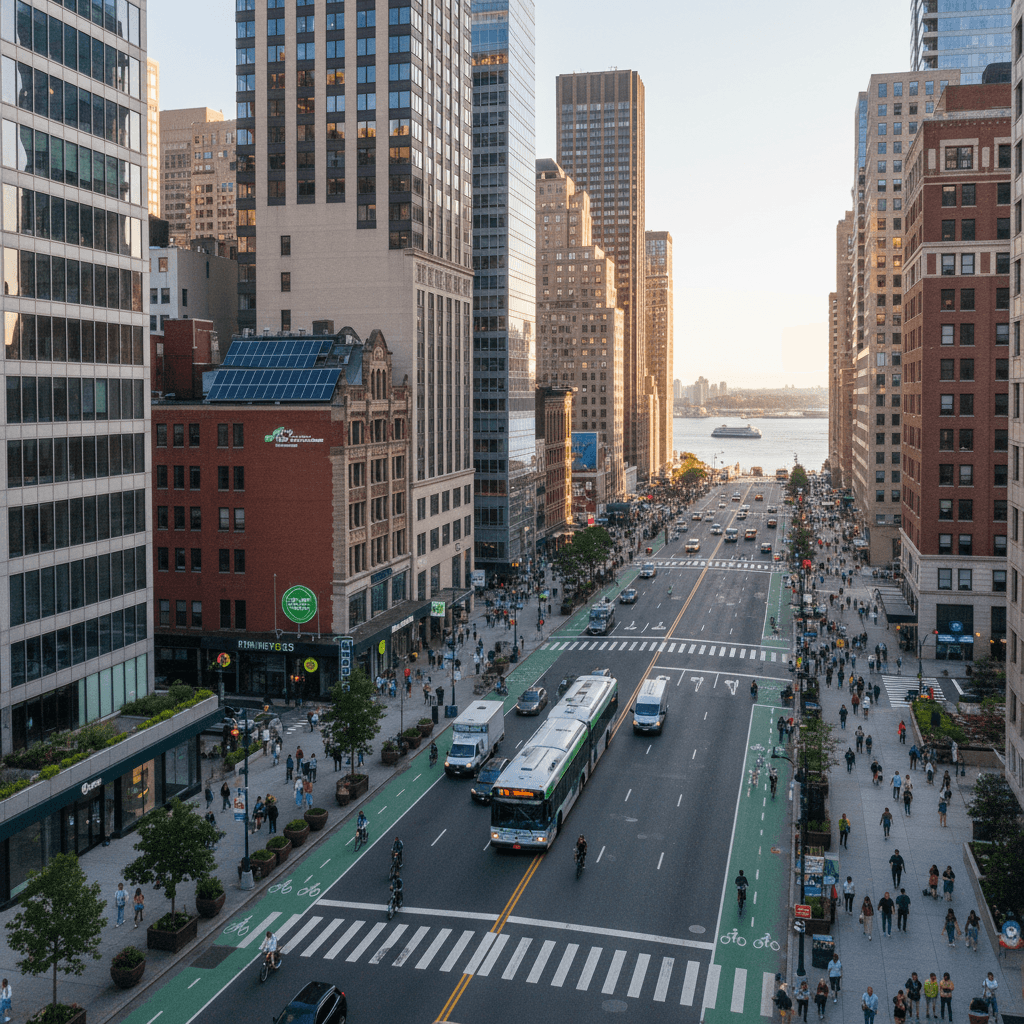
How Congestion Pricing Is Rewiring Cities — And What Smart Leaders Can Learn
Traffic in U.S. cities climbed again this year. New York City was the exception: congestion didn’t grow — even as more people poured into its core business districts. That’s not an accident. It’s the result of a controversial idea, unlikely alliances, and a clear bet on green technology and public transit.
New York’s congestion pricing program, launched less than a year ago, is quietly changing how a major global city moves, breathes and does business. Behind it is a story most cities get wrong: they treat drivers, transit riders, businesses and environmental advocates as if they’re locked in a zero‑sum fight.
Here’s the thing about congestion pricing and green technology: when it’s done well, everyone actually wins. Streets move faster, transit improves, emissions drop and local economies get more predictable. The real challenge isn’t the technology — it’s the politics and the coalitions.
This post looks at how New York pulled it off, why the early data matters for any city thinking about congestion relief, and how smart city leaders, sustainability teams and businesses can prepare their own version of this shift.
What New York Proves About Congestion Pricing
New York’s experience shows that congestion pricing isn’t just a tolling scheme. It’s a strategic green technology tool wrapped in funding, data and politics.
Within the first 11 months of implementation:
- Business districts inside the pricing zone saw 1.5 million more visitors in the first month than the same period a year earlier.
- Vehicle entries dropped by about 2.2 million per month, on average.
- Traffic speeds, including for buses, improved by nearly 5%.
- Crashes causing injuries fell by roughly 14%.
- The region is on track to raise $15 billion for transit and infrastructure upgrades.
This matters because it destroys one of the biggest myths: that congestion pricing kills city centers. In New York, fewer cars didn’t mean fewer people; it meant more people arriving in cleaner, more efficient ways.
From a green technology perspective, congestion pricing is a forcing function. It pushes people and companies toward:
- High-capacity transit systems instead of private cars
- Cleaner vehicle fleets for deliveries and taxis
- Data‑driven traffic management, using sensors, cameras and analytics
- Smarter infrastructure investment, funded by a dedicated, predictable revenue stream
The reality? The toll gantries and plate readers are the easy part. The hard part is building a coalition that sees congestion relief not as punishment, but as a shared upgrade to how the city works.
The Unlikely Coalition That Made It Possible
Most cities stall on congestion pricing because every stakeholder sees only the downside. New York started to move when groups with very different priorities stopped fighting long enough to notice their overlapping interests.
Who Came Together — And Why
Three types of players were pivotal:
-
Transit riders and advocacy groups
Organizations representing subway, bus and commuter rail riders backed congestion relief as a reliable funding source for long‑delayed upgrades: modern signals, accessible stations, more frequent service. For them, pricing wasn’t about punishing drivers; it was about finally stabilizing the backbone of the region’s mobility. -
Business and construction interests
The New York Building Congress and other business coalitions realized that faster streets and strong transit mean more predictable logistics, better worker access and more construction projects. Congestion pricing promised:- Shorter delivery times
- Higher downtown foot traffic
- Billions in capital projects for the regional economy
-
Industry and green tech manufacturers
Companies like railcar builders and signaling suppliers saw congestion pricing as long‑term demand for green transport technology. If the city locked in dedicated transit funding, it would commit to:- New rolling stock and electric trains
- Advanced control and signaling systems
- Station modernization and resiliency upgrades
Add in environmental groups, planners, equity advocates and “good government” organizations, and you get the Congestion Pricing Now Coalition — a mix that would usually be arguing about zoning, budgets or labor, not marching in the same direction.
The lesson for other cities is blunt: if your coalition is just planners and climate activists, you won’t get very far. You need people who care about jobs, freight, real estate, accessibility and tax revenues sitting at the same table.
How They Aligned on a Single Story
The coalition didn’t pretend everyone had the same goal. Instead, they anchored around one shared narrative:
Less traffic + better transit = stronger regional economy and better quality of life.
Each group could plug its own priorities into that equation:
- Environmentalists: fewer vehicles and lower emissions
- Businesses: faster trips and more customers on foot
- Riders: more reliable, better funded transit
- Construction and tech sectors: a pipeline of long‑term projects
If you’re building a similar coalition in your city, don’t chase agreement on every detail. Focus on a simple, evidence‑backed story everyone can repeat — and defend — when criticism shows up.
Why Congestion Pricing Is a Green Technology Tool
Congestion charging is sometimes framed as pure policy, but under the hood it’s a technology stack that can accelerate a city’s sustainability strategy.
The Tech Behind the Tolls
Modern congestion pricing typically relies on:
- Automatic number plate recognition (ANPR) cameras
- RFID / transponder systems for registered vehicles
- Real‑time traffic and emissions analytics
- Dynamic pricing engines that can adjust rates
- Open payment systems integrated with transit cards and mobile apps
Layer AI on top of this, and you start to get:
- Predictive models for peak‑hour congestion
- Optimization of signal timing and bus priority lanes
- Better planning for electric bus and EV charging deployment
- Scenario testing for equity impacts and pricing tiers
In the context of green technology, congestion pricing functions as both a data generator and a policy actuator. It gives cities a live data feed about how people move, then uses prices to steer behavior toward lower‑carbon options.
Emissions, Air Quality and Transit Ridership
New York’s early data shows how quickly behavior can shift:
- With 2.2 million fewer vehicles per month entering the zone, tailpipe emissions dropped immediately.
- Faster buses and trains — plus funding certainty — encouraged rebounding transit ridership, which then reduced car dependence further.
That feedback loop is powerful:
- Price signals nudge trips away from private cars.
- Transit becomes faster and more reliable.
- People shift more trips to transit, cycling and walking.
- Streets get safer and cleaner, which attracts more people.
- Political support for continued investment grows.
If your sustainability plan talks about net‑zero goals, climate resilience or smart city initiatives, congestion pricing is one of the few tools that hits emissions, safety, productivity and funding all at once.
Managing Backlash: From 32% Support to Majority Buy‑In
Any honest conversation about congestion relief has to acknowledge this: it will be unpopular at first.
In New York, only about 32% of residents supported the policy before it launched. Within three months of operation, support rose to around 42%. Other cities with congestion pricing — London, Stockholm and others — saw nearly identical patterns: noisy opposition before launch, then steady support once people felt the benefits.
Why People Change Their Minds
Most residents react to what they think will happen:
- “It’ll kill downtown businesses.”
- “Traffic will just get worse in my neighborhood.”
- “This is just another tax.”
But once the system is live and the data comes in, those fears are tested against reality:
- More visitors show up in core districts, not fewer.
- Commutes get faster, especially for express buses.
- Funding starts flowing into visible, tangible upgrades.
I’ve found that the best way to communicate about congestion pricing is to avoid abstract climate arguments and talk about time, safety and reliability:
- How much time will someone save on a typical trip?
- How many fewer crashes or injuries are happening each month?
- Which specific stations, bus routes or bridges will be upgraded with the new money?
People may not care about parts per million of CO₂, but they do care if their kid’s bus gets home 10 minutes faster and the crash at that dangerous intersection no longer happens every few weeks.
Practical Steps for City Leaders
If you’re in a position to shape policy, a few moves are non‑negotiable:
- Start coalition‑building early. You’ll need transit riders, freight, small business, disability advocates, health experts and tech providers aligned before the first public hearing.
- Publish clear, regular data. Commit to monthly updates on traffic speeds, crashes, ridership and revenue use.
- Earmark funds visibly. Make it obvious which projects the money is paying for, and where.
- Design equity protections. Low‑income drivers, people with disabilities and workers with no viable transit options need thoughtful exemptions or discounts.
Cities like Toronto, San Francisco, Los Angeles, Chicago and Boston are already studying variations of this. The ones that move first and handle communication well will set the standard — and likely attract more green tech investment.
What This Means for Businesses and Green Tech Teams
For companies working in clean mobility, data, or infrastructure, congestion pricing opens a long runway of opportunity.
Where Businesses Can Lean In
Here are a few areas I’d be watching — or investing in — right now:
- Smart mobility platforms that integrate congestion charges, parking, and transit into a single user experience.
- Electric fleet solutions (vans, cargo bikes, last‑mile robots) that thrive in zones where car trips are discouraged and curb access is at a premium.
- Advanced analytics and AI tools that help cities model pricing scenarios, equity outcomes and climate impacts.
- Construction and engineering services tied to the wave of transit and street redesign projects paid for by congestion revenues.
For sustainability and ESG teams, congestion pricing is also a planning signal. If your HQ or logistics hubs sit near a likely future pricing zone, now’s the time to:
- Shift commuting incentives toward transit, cycling and car‑sharing.
- Electrify fleets and optimize delivery windows.
- Partner with local transit agencies on corporate passes or mobility benefits.
Cities that move first on congestion pricing will become testbeds for green technology, from AI‑driven traffic management to modular EV charging infrastructure. Being part of that ecosystem early is a competitive advantage, not just a climate gesture.
Where Cities Go From Here
New York’s congestion pricing program isn’t perfect, and it still faces political threats. But the early numbers are hard to ignore: fewer vehicles, faster streets, more visitors and billions unlocked for cleaner, smarter transit.
For the broader Green Technology story, this is a turning point. It shows that climate‑friendly choices don’t have to sit on the sidelines as “nice to have” projects. They can sit at the center of how a region funds its infrastructure, manages its data and organizes daily life.
If your city is wrestling with gridlock, crumbling transit and climate commitments it’s not on track to meet, congestion pricing is no longer a theoretical idea from Europe. It’s a live, North American case study with real numbers and a clear coalition strategy behind it.
The next question is simple: will your city wait until congestion, emissions and costs get even worse, or start building the alliances and technology it needs now? The cities that answer early will define what sustainable urban life actually looks like over the next decade.