BYD plans to double its European EV network by 2026. Here’s what that means for green technology, AI-powered energy systems, and businesses planning their next move.
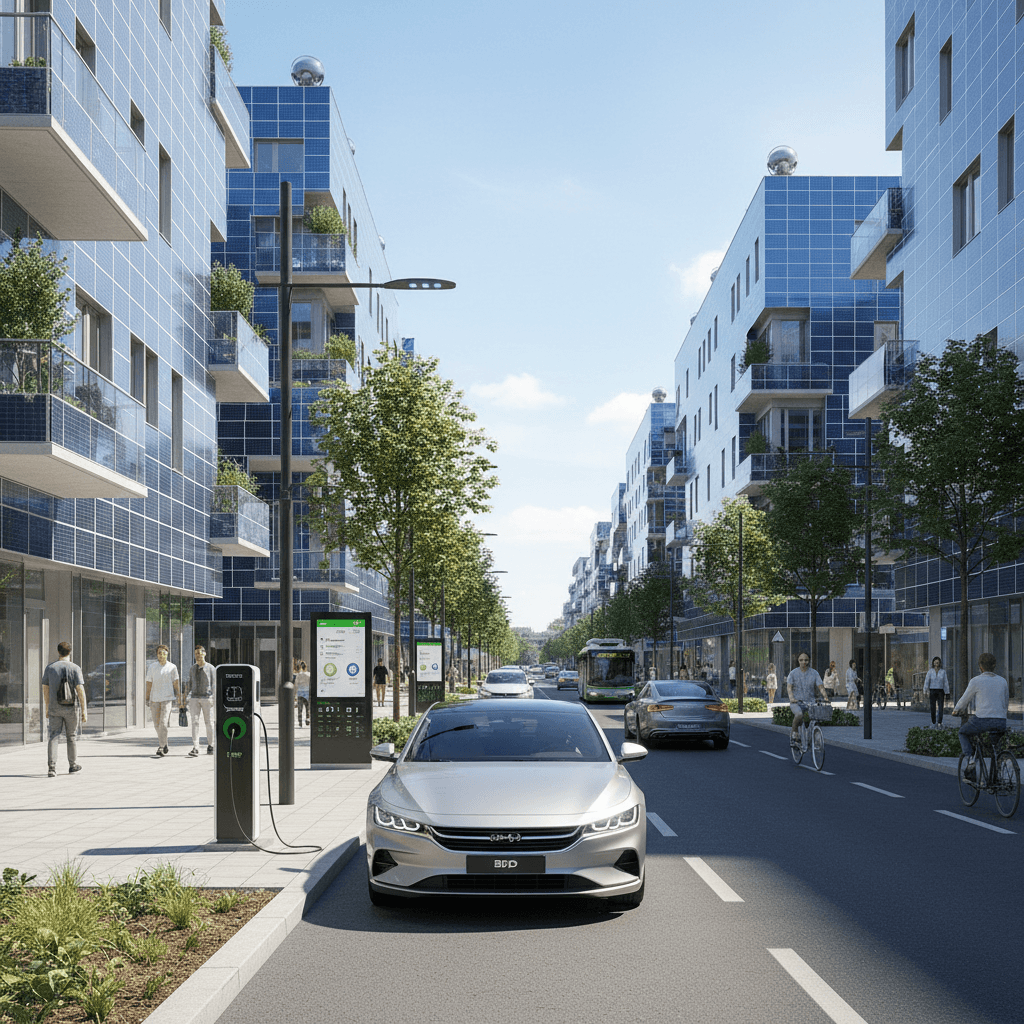
BYD’s European Bet Is Bigger Than You Think
BYD wants to double its European sales network by 2026. For a region where legacy automakers have dominated for a century, that’s not a minor expansion. It’s a clear signal that the next phase of the EV transition in Europe will be shaped not just by Volkswagen, Stellantis, and Renault, but by Chinese electric vehicle makers too.
This matters because transport emissions are still one of Europe’s biggest climate headaches, and 2025–2030 is the crunch period for meeting climate targets. Green technology isn’t just about solar panels and smart grids; it’s also about who builds the cars plugged into those grids and how intelligently those vehicles interact with energy systems.
In this post, I’ll unpack what BYD’s strategy in Europe tells us about the future of electric mobility, green technology, and AI-powered energy systems, and what businesses should be doing now to position themselves in this new landscape.
Why BYD Is Pushing Hard Into Europe Now
BYD is targeting Europe because the region is entering its most aggressive phase of transport electrification.
- EVs and plug-in hybrids reached roughly 20–25% of new car sales across many European markets in 2024.
- Multiple countries—like Germany, France, the Netherlands, and the Nordics—are tightening emissions rules and planning phase-out dates for new combustion cars.
BYD sees a gap the traditional automakers are still struggling with: affordable yet high-tech electric vehicles that are optimized for real-world efficiency, not just spec-sheet bragging rights.
Europe’s EV Market Is Ripe, But Not Easy
Most companies get this wrong. They assume that if EV adoption is rising, the market is easy. It’s not.
Europe is:
- Politically complex – EU-wide rules meet national incentives, local zoning, and city-level clean-air policies.
- Brand-loyal – German drivers trust German brands; French drivers lean toward French manufacturers, and so on.
- Highly regulated – from safety to data privacy (including vehicle telematics and AI systems).
BYD still wants to double its dealer footprint and service network in this environment. That tells you how confident it is in both the demand and its ability to undercut or outperform incumbents on price, tech, or both.
The reality? Europe’s EV ecosystem has matured enough that new entrants with the right product, price, and software intelligence can move fast—especially when they’re vertically integrated like BYD (batteries, electronics, vehicles, even energy storage).
How BYD Fits into the Green Technology & AI Story
BYD isn’t just an automaker; it’s part of a broader green technology ecosystem where vehicles, grids, and data are increasingly connected.
Vertical Integration Meets Clean Energy
Here’s the thing about BYD: it started in batteries, expanded into consumer electronics, and then into vehicles and energy solutions. That’s a complete clean tech stack:
- EVs and PHEVs – from compact city cars to buses and trucks.
- Battery technology – including its Blade Battery design aimed at safety and longevity.
- Energy storage – home and grid-scale storage that pairs with renewables.
For Europe’s green transition, this creates some powerful combinations:
- An EV that can charge intelligently when wind or solar output is high.
- Home batteries that coordinate with EV charging to reduce peak demand.
- Fleet vehicles that integrate with smart city systems and AI-driven route planning.
Where AI Comes In
AI is quietly becoming the glue between vehicles and energy systems in Europe. BYD’s push into the region accelerates that trend, because its vehicles and energy products are designed to be software-defined and data-rich.
Practical AI-enabled use cases that are emerging or already here:
- Smart charging optimization – algorithms that schedule charging when electricity is cheapest and cleanest.
- Vehicle-to-grid (V2G) coordination – EVs acting as mobile storage to help balance local grids.
- Predictive maintenance – using sensor data to prevent failures, especially for EV fleets.
As BYD scales across Europe, it contributes more connected EVs and batteries into the system. For energy companies, grid operators, and smart city projects, that’s a larger data and storage layer to work with.
If you’re building green technology solutions, this is a huge opportunity: services that orchestrate, optimize, and secure this growing mesh of EVs, chargers, and batteries will be in high demand.
What Doubling the BYD Network Changes on the Ground
Doubling the sales and service network isn’t just a numbers headline; it reshapes how quickly EV adoption can grow in certain markets.
1. More EV Access in Underserved Regions
Many European EV hot spots today are big cities and wealthy suburbs. BYD expanding its footprint means more mid-size cities and rural areas get:
- Local test drives and showrooms.
- Easier access to financing and leasing.
- Shorter travel distances for maintenance and repairs.
That sounds mundane, but the lack of nearby dealers and service centers is still a real barrier for first-time EV buyers. When that friction drops, adoption rises.
For businesses operating fleets—logistics, field services, retail distribution—that expanded network reduces the perceived risk of switching to electric: they can get reliable uptime and local support.
2. Price Pressure on Legacy Automakers
BYD is known for aggressive pricing. Not “cheap for the sake of cheap,” but good-enough specs at a price point legacy brands struggle to match, thanks to its control over batteries and components.
As its presence grows, expect:
- More competitive EV pricing from European incumbents.
- Faster updates to software and in-car digital experiences.
- More focus on real efficiency (kWh per 100 km) rather than just headline range.
From a green technology perspective, this is healthy. Lower upfront costs plus better efficiency equals higher emissions reduction per euro spent.
3. Stronger Push for Charging and Grid Upgrades
An expanded EV fleet doesn’t work without infrastructure. When a major manufacturer like BYD scales up, it forces the rest of the ecosystem to respond:
- Charge point operators need to ensure compatibility and smart-charging integrations.
- Utilities and DSOs have to plan for concentrated charging loads in new areas.
- Property owners (commercial and residential) are pushed to install more chargers and consider on-site solar plus storage.
This is where AI-powered energy management tools become essential. You can’t manually coordinate thousands of EVs, chargers, and buildings across a city. Software has to do the heavy lifting.
Risks, Politics, and the “China Question” in Europe
The BYD expansion doesn’t happen in a vacuum. There’s a geopolitical angle that businesses can’t ignore.
Trade Tensions and Tariffs
European institutions and national governments are already scrutinizing Chinese EV imports, exploring tariffs and investigating potential subsidies. That scrutiny is only likely to intensify as companies like BYD gain market share.
This creates some real-world questions:
- Will higher tariffs slow down BYD’s price advantage?
- Do local assembly plants or partnerships become necessary to stay competitive and politically acceptable?
- How do corporate fleet buyers balance cost savings with reputational and regulatory risk?
If you’re planning around BYD vehicles in your sustainability strategy, build flexibility into your roadmap. Don’t assume today’s pricing or import rules will hold for the next five years.
Data, Cyber, and Regulatory Compliance
Modern EVs are connected devices. They collect data, update over-the-air, and interact with cloud services and, increasingly, local energy systems.
European regulators take this extremely seriously:
- Data protection (GDPR) applies to connected vehicle data.
- Cybersecurity regulations cover critical infrastructure, including energy and charging networks.
BYD and other Chinese EV makers will have to prove they can comply with Europe’s strict standards on privacy, security, and data residency.
For green technology providers building on top of these platforms—charging software, fleet management, energy orchestration—this is both a risk and a differentiator. Strong compliance, transparent data handling, and robust security can become selling points.
What Smart Businesses Should Do Now
If you work in energy, mobility, real estate, or sustainability, BYD doubling its European network isn’t just an industry headline. It’s a planning signal.
1. Treat Chinese EVs as a Core Scenario, Not a Side Case
Whether you love or hate the idea, Chinese EV manufacturers are going to be part of Europe’s transport mix. Ignoring that is bad strategy.
- Fleet planners should run TCO models that include BYD and similar brands.
- Charging operators should ensure technical compatibility and optimized charging profiles.
- Cities and regions should assume mixed fleets when designing smart mobility policies.
2. Build Services Around the EV + Grid Interface
The interesting value isn’t just in selling more chargers or cars. It’s at the intersection of vehicles, buildings, and the grid, especially when you add AI:
- Smart charging platforms that minimize cost and emissions.
- V2G pilots that use EVs as flexible storage assets.
- Building management systems that coordinate rooftop solar, batteries, and EV fleets.
BYD’s expansion makes these plays more viable across more regions because the underlying hardware (vehicles and batteries) becomes more available.
3. Use EV Adoption to Accelerate Sustainability Targets
For companies chasing net-zero or science-based climate targets, accessible EVs plus stronger networks remove common excuses:
- “There’s no service coverage in our region.”
- “EVs are too expensive to run at scale.”
As more competitive EV options appear, investors and regulators will expect real progress on Scope 1 and 3 emissions from transport. BYD’s growth in Europe is indirectly tightening that timeline.
Where This Fits in the Bigger Green Technology Story
Transport decarbonization isn’t just about replacing diesel with lithium-ion. It’s about rewiring how energy flows through cities, buildings, and vehicles—and who controls the technology stack.
BYD’s plan to double its European sales network by 2026 is one more sign that:
- EVs are moving from niche to normal across Europe.
- Batteries and AI-driven energy systems are converging.
- Competition in green technology is global, intense, and increasingly software-defined.
If your business touches mobility, energy, or sustainability, treat this as a nudge, not background noise. Review your roadmap. Ask where smart, connected EVs fit into your green technology strategy, and where you can use data and AI to turn that shift into lower emissions and real competitive advantage.
The companies that win this decade won’t just drive electric. They’ll know exactly how those electrons move, when they’re cheapest and cleanest, and how to orchestrate vehicles, buildings, and grids as one intelligent system.