AI-driven weather balloons like WindBorne’s Atlas and WeatherMesh are reshaping forecasting—and giving green technology, clean energy, and climate resilience a powerful new edge.
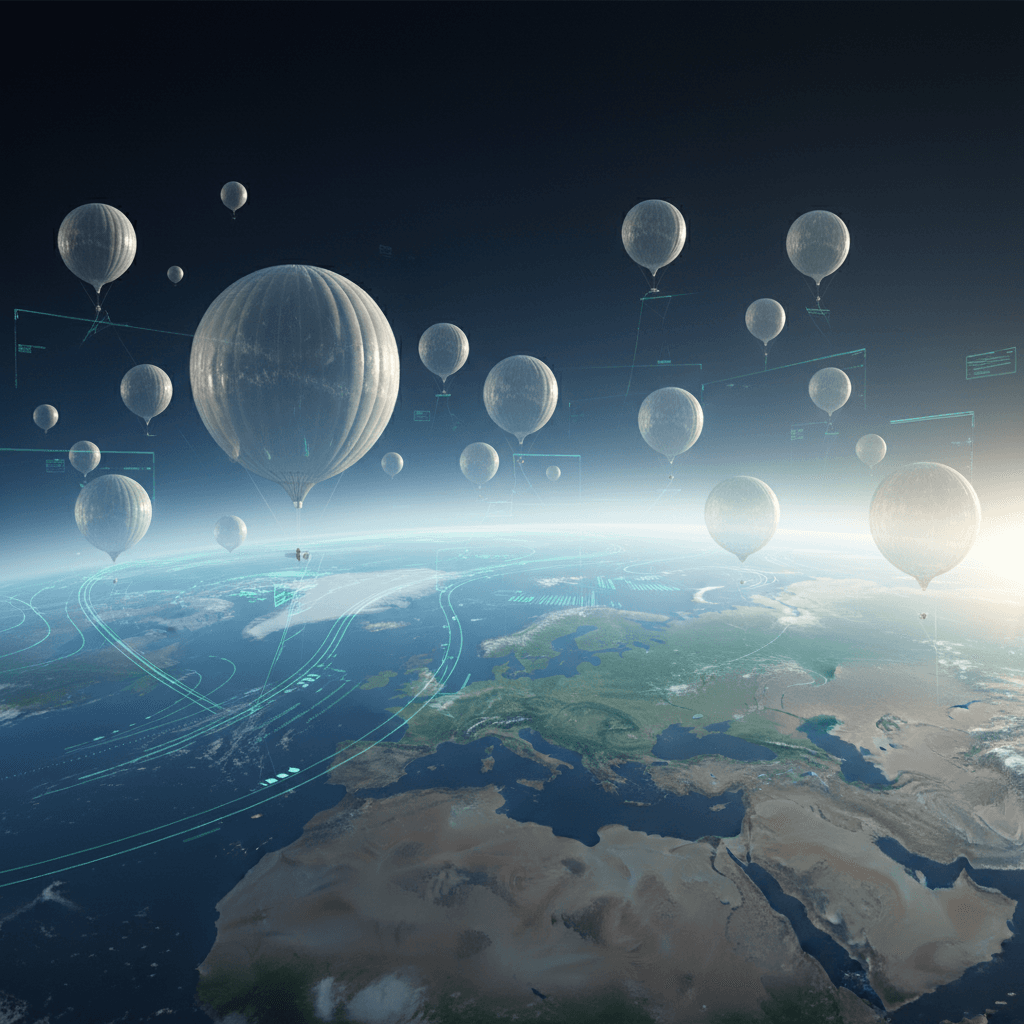
How AI Weather Balloons Power a Greener Future
Hurricane Milton intensified so quickly in October 2024 that forecasters missed the window to warn people properly. Fifteen lives lost and US $34 billion in damage came down, in large part, to one thing: we didn’t have enough good data in the right place at the right time.
Here’s the thing about extreme weather and climate risk: if you can’t measure it, you can’t manage it. And if you can’t forecast it accurately, every decision in energy, agriculture, and infrastructure gets riskier, more expensive, and usually more carbon-intensive.
This is where a new class of AI-driven, long-duration weather balloons—like WindBorne Systems’ Global Sounding Balloons (GSBs) and its WeatherMesh AI model—changes the game for green technology, not just for meteorologists.
In this post, I’ll break down how this “planetary nervous system” works, why it’s beating supercomputer-based forecasts, and how better weather prediction directly supports clean energy, resilient cities, and climate-smart business decisions.
The Core Problem: Massive Blind Spots in Our Atmosphere
Modern weather forecasting is built on physics-based numerical models. They run on supercomputers, crunching global data from satellites, radar, ground stations, and short-lived weather balloons.
The catch: conventional weather balloons only cover about 15% of the planet with direct in-atmosphere measurements. They go up, burst within a few hours, and fall—not great if the storm you care about is forming over the mid-Atlantic, the Southern Ocean, or the Arctic.
Those blind spots matter because:
- Most intense storms start over oceans and remote regions.
- Forecast “cones” for hurricanes shift dramatically from day to day when the input data is sparse.
- Traditional models are computationally expensive, limiting how often and how finely they can update.
So we’ve ended up with a paradox: we have more satellite data than ever, yet the most dangerous, climate-fueled events still surprise us. That uncertainty forces governments, utilities, and businesses to overbuild, overtighten safety margins, and waste resources—none of which helps a low‑carbon transition.
WindBorne’s Planetary Nervous System: Balloons + AI
The WindBorne approach is simple to describe and hard to execute: blanket the atmosphere with smart, long-lived balloons and feed that data into an efficient AI forecast model.
Long-Duration, Self-Navigating Weather Balloons
WindBorne’s Global Sounding Balloons are built very differently from the single-use balloons we’re used to:
- Ultra-light envelope: a 20-micrometer film (less than half a human hair), with the whole balloon weighing under 2 kg.
- Altitude control: sand ballast is released to climb; gas is vented to descend and catch different wind layers.
- Autonomous navigation: onboard systems “surf” the winds to move toward target locations.
- Longevity: instead of a couple of hours, GSBs can stay aloft for 50+ days; one balloon recently reached 104 days.
These balloons form Atlas, a global constellation with hundreds of balloons in the air at any time, already collecting 30–50x more data per balloon than conventional sondes. WindBorne’s team plans to scale that to around 10,000 balloons by 2028, launched from about 30 global sites—enough to keep most of the planet under near-continuous observation.
From a green technology lens, this matters because Atlas offers:
- High-density, high-frequency in situ data above oceans, deserts, and polar regions.
- Lower operational emissions than repeated aircraft-based hurricane flights.
- A path to global coverage without building new heavy infrastructure.
WeatherMesh: The AI Forecast Brain
Collecting data is only half the story. The other half is turning that flood of observations into useful forecasts, fast and cheaply.
WindBorne built WeatherMesh, an AI weather-forecasting system using a transformer-based architecture—the same family of models behind large language models. In practice, it:
- Encodes raw weather data (temperature, pressure, humidity, winds) into a compressed internal representation.
- Processes that representation forward in time, step by step, to simulate future atmospheric states.
- Decodes the result back into real-world weather variables.
Because the heavy math runs in this compact “latent space,” the model can produce forecasts with far less computing power than traditional physics-based models. During training, WeatherMesh used roughly:
- ~1/15 of the compute used by Google DeepMind’s GraphCast
- ~1/10 of the compute used by Huawei’s Pangu‑Weather
Yet in 2024, WeatherMesh became the most accurate AI weather model in the world, surpassing both Pangu‑Weather and GraphCast, and outperforming leading physics-based systems from global forecast centers.
For businesses chasing sustainability goals, that efficiency matters. Lower compute means:
- Less energy consumption for forecasting itself
- Lower cost per forecast, making high-quality prediction accessible beyond big governments and tech giants
- Higher update frequency (WeatherMesh can refresh every 10 minutes, vs. 6-hour cycles in many traditional systems)
From Storm Hunting to Climate Resilience: Real-World Impacts
The Hurricane Milton experiment is more than a cool engineering story; it’s a preview of how AI weather systems can support a greener, safer economy.
Case Study: Flying Balloons into a Rapidly Growing Hurricane
Ahead of Hurricane Milton, WindBorne launched six GSBs from Mobile, Alabama. Within 24 hours, they:
- Navigated into the developing hurricane from a safe distance.
- Deployed dropsondes to measure temperature, pressure, humidity, and wind at multiple levels.
- Streamed that data back to run through WeatherMesh.
The result: WeatherMesh predicted Milton’s path more accurately than the U.S. National Hurricane Center’s operational models at the time.
Because this was a tech trial, the forecasts weren’t broadcast for public use. But the proof of concept is clear: you can
get better hurricane forecasts without sending human pilots into dangerous storms and without burning jet fuel on every mission.
That’s human risk reduction and emissions reduction in the same stroke.
Why This Matters for Green Technology
Better weather forecasts sound like a nice-to-have until you map them to climate and sustainability decisions. The link is direct:
- Renewable Energy Optimization
Wind and solar output depends heavily on short-term weather. High-accuracy, high-resolution (down to ~1 km) forecasts allow:- Grid operators to balance supply and demand with fewer fossil backups.
- Wind farms to schedule maintenance around low-wind periods.
- Solar operators to forecast cloud cover and ramp schedules more precisely.
-
Smarter Grid Planning and Storage
With more reliable forecasts, utilities can:- Size battery storage and demand-response capacity based on real risk instead of worst-case guesswork.
- Reduce curtailment (wasted renewable energy) by anticipating surplus periods.
-
Climate-Smart Agriculture
Farmers and ag-tech platforms can use high-resolution weather prediction to:- Fine-tune irrigation, cutting water and energy use.
- Time fertilizer and pesticide applications to avoid runoff during heavy rains.
- Reduce crop loss from frost, heat waves, or unseasonal storms.
-
Disaster Preparedness and Resilient Cities
City planners, insurers, and emergency managers can:- Improve flood mapping and evacuation planning using more accurate precipitation and river-level forecasts.
- Design climate-resilient infrastructure (drainage, coastal defenses, transportation) based on realistic risk profiles.
In short: every unit of improved forecast accuracy can translate into lower emissions, lower waste, and lower climate damage.
Under the Hood: How AI and Physics Work Together
There’s a myth going around that AI models will simply replace physics-based weather prediction. That’s not how the best systems work—and frankly, it’s not what we should want.
AI Doesn’t Throw Physics Away
WeatherMesh and other AI models still depend on traditional systems in key ways:
- Training data: Historical reanalysis datasets (like ERA5) are produced using physics-based models that blend decades of observations into a coherent global record.
- Physical sanity checks: AI models don’t “understand” conservation laws out of the box. Traditional models help ensure predictions stay physically plausible, especially during rare extremes.
WindBorne’s twist was to make AI work well on messy, real-time data, not just the clean historical records it was trained on. To do that, they built:
- U-Net–based adapters that ingest fresh data from balloons and global agencies and translate it into the same internal format WeatherMesh learned during training.
That step is crucial. Many AI models look brilliant in retrospective tests and then stumble in real operations. WeatherMesh was explicitly engineered to avoid that drop‑off.
Why Efficiency Matters for Climate
Traditional global models need enormous supercomputers and can take hours to run. AI models like WeatherMesh:
- Run on far smaller GPU clusters (WindBorne trained its model on a few dozen RTX 4090s instead of renting massive cloud clusters).
- Deliver near-real-time global forecasts every 10 minutes.
Less hardware and shorter runtimes translate to lower energy usage and lower operational carbon, especially as forecasting scales. For a planet facing both a climate crisis and a data explosion, that efficiency isn’t a side benefit—it’s the only sustainable path.
What This Means for Climate-Focused Businesses
If you’re working on green technology, AI weather forecasting isn’t just an interesting background story. It can be a strategic asset.
Here’s how different sectors can practically use this kind of capability:
Renewable Energy Developers
- Use high-resolution wind and solar forecasts to improve project bankability with more accurate yield assessments.
- Negotiate better power purchase agreements with reduced uncertainty margins.
- Integrate AI forecasts directly into plant control systems for smarter ramping and curtailment decisions.
Utilities and Grid Operators
- Combine AI weather forecasts with demand models to optimize dispatch and minimize fossil peaker plant use.
- Plan transmission expansion based on realistic patterns of wind, solar, and extreme events.
- Use 10‑minute update cycles to support dynamic line rating and higher utilization of existing grid assets.
Agriculture and Food Supply Chains
- Help growers adopt precision agriculture practices that cut inputs and emissions.
- Use better forecasts to protect supply chains from climate shocks—floods, droughts, and storms that disrupt harvests and logistics.
Insurers, Investors, and Public Agencies
- Build more accurate catastrophe models, pricing climate risk without blunt overestimates.
- Prioritize resilience investments (flood defenses, relocation, retrofits) where risk is genuinely rising.
The pattern is consistent: more accurate, granular, and affordable weather intelligence reduces wasted capital, wasted energy, and wasted materials—all core to a credible net‑zero strategy.
The Road Ahead: A Planet Under Constant Observation
WindBorne’s plan to scale Atlas to 10,000 active balloons by 2028 paints a striking picture: near-continuous measurement from the lower atmosphere up to ~24 km, from the remote Pacific to polar ice caps.
We’re heading toward a world where:
- AI and physics-based models run side by side, cross-checking and improving each other.
- Forecasts are not just more accurate but hyper-local and always-on.
- Clean energy systems, smart cities, and climate adaptation strategies all run on the same trusted, global “weather operating system.”
Most companies get weather wrong—not because they can’t see the forecast, but because they treat it as a background variable instead of a strategic input. The smarter play is to treat advanced AI forecasting as infrastructure for your climate strategy.
If your business depends on the sky—which, frankly, is almost every business—then the question isn’t whether you’ll use this kind of technology. It’s whether you’ll use it early enough to shape how you grow in a warmer, riskier world.
Where to Go from Here
If you’re working in renewable energy, smart cities, agriculture, or climate resilience, start mapping out:
- Where weather uncertainty costs you money or emissions today.
- Which decisions would materially improve with a 10–30% jump in forecast accuracy.
- How AI-driven, high-resolution forecasts could plug into your planning tools, control systems, or risk models.
There’s a better way to approach climate risk than building higher walls and larger buffers. A planetary nervous system for the atmosphere—powered by AI weather balloons—points toward a future where we anticipate more, waste less, and design a cleaner economy around what the sky is actually going to do, not what we hope it might.