Instant licence checks strengthen KYC workflows by validating IDs in real time. Learn how AI-driven verification reduces fraud, cost, and onboarding friction.
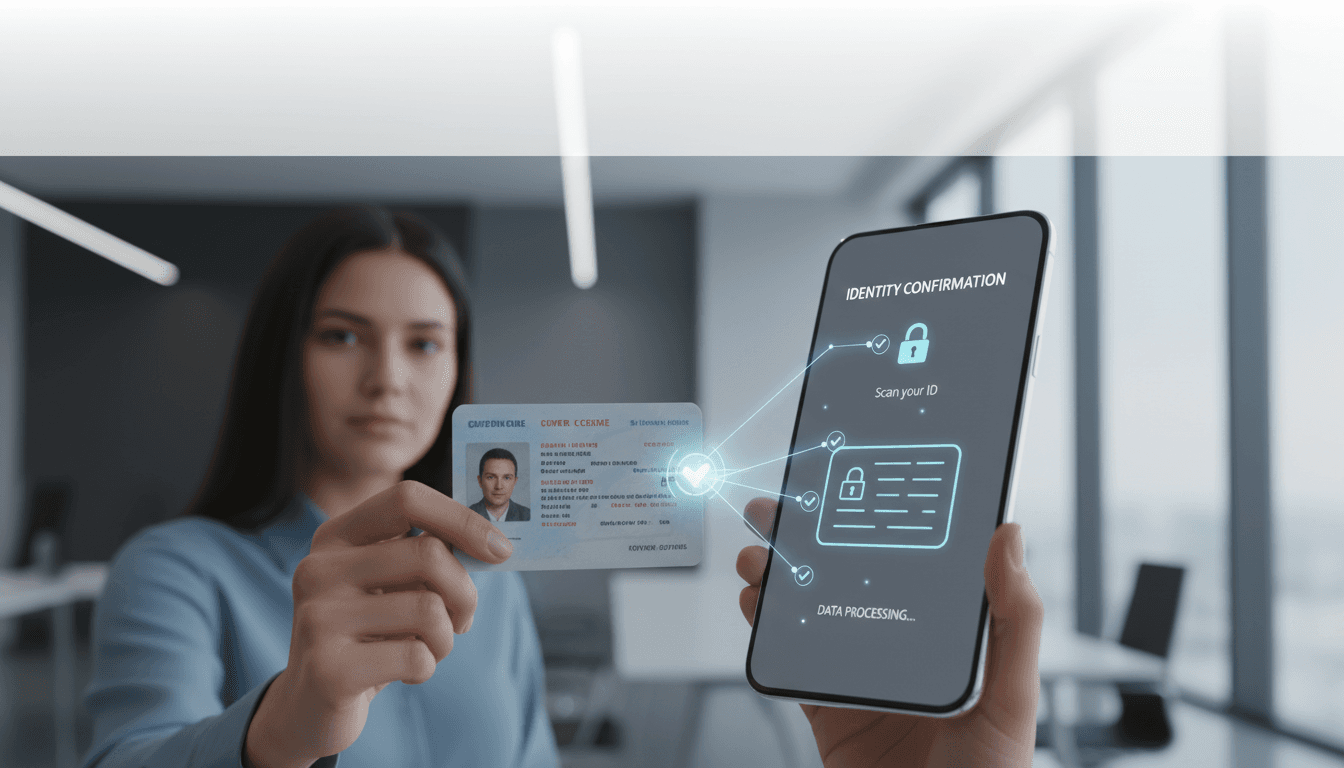
Instant Licence Checks: Faster KYC, Lower Risk
A surprising number of KYC failures start with something boring: a licence number that looks plausible, but isn’t. Maybe it’s expired. Maybe it belongs to someone else. Maybe it’s valid—but the name doesn’t match because the customer used a middle name, a married name, or an old address. Multiply that by thousands of onboarding journeys a week and you get the real problem: manual verification doesn’t scale, and “good enough” checks create avoidable risk.
That’s why the industry keeps circling back to one capability that sounds small but has outsized impact: instant driver licence checks inside KYC workflows. iDenfy’s newly announced solution (reported via a press release) is another signal that the market is moving toward real-time, automated verification rather than uploading documents and hoping your rules catch what fraudsters are doing this month.
This post sits in our AI in Finance and FinTech series, where we track practical AI adoption in fraud detection, credit risk, trading, and compliance. Here’s my stance: if you’re serious about AI in finance, your KYC foundation has to be fast, verifiable, and auditable—otherwise you’re training smart models on messy identity data.
Instant licence checks: what they actually solve in KYC
Instant licence checks reduce three KYC pain points at once: speed, certainty, and operational cost. You’re not just confirming a document “looks real.” You’re validating it against authoritative or trusted data sources in near real time.
In a typical KYC process, document verification often includes:
- Uploading an image of a driver licence
- Checking security features (holograms, layout, MRZ/fields where relevant)
- OCR to extract name, DOB, licence number
- Matching selfie to photo (liveness + face match)
- Sanctions/PEP screening and adverse media checks
What’s missing in many setups is the simplest question: Does this licence number exist, and is it still valid? That’s what instant licence checks aim to answer.
Fraud patterns instant checks help catch
Instant licence checks are especially effective against common, repeatable tactics:
- Synthetic identity onboarding: A fraudster combines real and fake attributes. A “reasonable-looking” licence number can slip through visual checks.
- Stolen document reuse: Images circulate fast. A licence check can flag that the licence is cancelled, expired, or mismatched.
- Tampered fields: OCR may extract “valid” fields from an edited image. Source validation exposes inconsistencies.
Snippet-worthy truth: Visual document verification stops amateur fraud. Licence validation is what catches scaled fraud.
Where AI fits: document verification is fraud detection in disguise
AI-driven document verification is a branch of fraud detection, not just compliance. The same pattern-recognition strengths used in transaction monitoring show up earlier in the funnel during onboarding.
Modern AI KYC stacks typically combine:
- Computer vision to detect document tampering, screen replays, and print/scan artifacts
- OCR + NLP to extract structured identity attributes and handle variations (middle names, diacritics, address formats)
- Liveness detection to reduce selfie spoofing (video replays, deepfake risk, mask attacks)
- Risk scoring models that weigh signals (device fingerprint, velocity, geolocation mismatch, failed checks)
Instant licence checks add an important signal: source-of-truth validation. From an AI perspective, this matters because it:
- Improves training data quality (fewer bad labels like “verified” for fraud accounts)
- Reduces false positives later (fewer suspicious accounts passing onboarding)
- Enables better decisioning (model features become more predictive)
Why “instant” matters more than it sounds
Speed isn’t just about customer experience. Latency changes fraud economics.
- If onboarding takes 10 minutes and needs human review, fraudsters can try 50 attempts across institutions before lunch.
- If onboarding takes 30–60 seconds with automated checks, the same fraudster hits more hard stops and burns more time per attempt.
That’s why banks and fintechs obsess over lowering “time to yes” without weakening controls.
Compliance realities in 2025: regulators want proof, not promises
Regulators care about consistent controls, evidence, and auditability. AI doesn’t get you off the hook; it raises the bar.
Across major regimes (AUSTRAC expectations in Australia, AML/CTF obligations, and similar global standards), the themes are consistent:
- Show your customer identification procedure is repeatable and risk-based
- Keep records that explain decisions
- Manage third-party risk (vendors, data sources, model updates)
- Monitor effectiveness, not just completion (did it reduce fraud and errors?)
Instant licence checks support these requirements because they produce structured outcomes (pass/fail/status codes) that can be logged, reviewed, and trended over time.
Audit trail: the part teams forget until it hurts
If you’re implementing licence validation, insist on answers to:
- What exactly is returned (valid/invalid/expired/suspended)?
- What metadata comes back (name, DOB match, address match, issuance date)?
- How is the check timestamped and stored?
- Can you reproduce the decision later if a regulator asks?
My opinion: a fast KYC flow that can’t explain itself is a liability.
Practical workflow design: how to add instant licence checks without breaking conversion
The best KYC workflow is the one that blocks real risk while keeping legitimate customers moving. Licence checks should be placed where they create clarity, not friction.
A proven “progressive verification” pattern
Many high-performing fintech onboarding flows use a staged approach:
- Collect minimal details (name, DOB, address)
- Verify document + selfie (automated)
- Run instant licence validation (in the same step or immediately after)
- Only then trigger deeper checks if needed (manual review, extra doc, enhanced due diligence)
The goal is simple: don’t ask everyone for everything. Reserve the heavy steps for high-risk cases.
Decisioning rules that work in real life
Here are practical pass/review/fail rules you can implement quickly:
- Pass: Document authentic + selfie match + licence status valid + key fields match within tolerance (e.g., nickname rules)
- Review: Licence valid but minor mismatch (address formatting, middle name), or confidence score below threshold
- Fail: Licence invalid/expired/suspended (depending on product policy), document tampering detected, liveness failed
Tolerance matters. If your matching is too strict, you’ll annoy real customers. Too loose, and you’ll onboard problems.
How this connects to credit scoring and smarter risk decisions
KYC is upstream of credit scoring and account risk. If identity data is wrong, credit decisions get noisy, and your fraud losses rise.
Instant licence checks improve:
- Identity reliability: fewer duplicate or mismatched profiles in your CRM
- Portfolio hygiene: fewer accounts opened under stolen identities
- Model performance: better “ground truth” for credit and fraud models
If you’re using AI for credit scoring (especially thin-file or alternative data approaches), you need strong confidence that “this person is this person.” Licence validation is one of the cleaner, higher-signal inputs you can add.
A simple example: why bad identity hurts revenue
Consider a lender onboarding 10,000 applicants/month.
- If 1% are fraudulent identities that slip through, that’s 100 accounts.
- If the average loss per fraud account is $1,500 (chargebacks, first-party fraud, collections overhead), that’s $150,000/month.
Even modest improvements in identity accuracy can pay for verification tooling quickly—especially when you factor in reduced manual review.
Vendor evaluation checklist: what to ask before you buy
Instant licence checks are only as good as their coverage, reliability, and integration. Don’t evaluate it like a shiny feature; evaluate it like a control.
Here’s a shortlist I’d use:
Coverage and data quality
- Which countries/states are supported today?
- What’s the match rate for legitimate licences in your target market?
- How are edge cases handled (newly issued licences, renewals, temporary licences)?
Technical performance
- Typical response time under load (p50/p95 latency)
- Uptime/SLA commitments
- Fallback behaviour when the data source is unavailable
Security, privacy, and governance
- Data retention options (how long do they keep images and results?)
- Encryption in transit/at rest
- Role-based access controls for your team
- Evidence you can export for audits
Model risk management (if AI is involved)
- How are document and liveness models updated?
- Do you get release notes and change logs?
- Can you tune thresholds per segment (e.g., higher risk geos)?
Memorable line: If your verification vendor can’t explain failures, they’ll become your support team’s new full-time job.
People also ask: instant licence checks in KYC
Do instant licence checks replace manual review?
No—and they shouldn’t. They reduce manual review by making most cases cleanly pass/fail, but you’ll still need humans for exceptions, disputes, and higher-risk customers.
Will instant checks increase abandonment?
Usually the opposite, if implemented well. Faster decisions reduce abandonment. The risk is when checks are too strict or error handling is poor (no clear next step when a check fails).
Are licence checks enough for AML compliance?
No. They’re one part of a wider AML program that includes ongoing monitoring, sanctions screening, suspicious matter reporting processes, and periodic reviews.
What to do next if you’re modernising KYC in 2026
Teams planning budgets for early 2026 should treat identity verification as a risk program, not a one-off integration. If you’re considering instant licence checks (from iDenfy or any provider), the next steps are straightforward:
- Baseline your current funnel: time-to-yes, manual review rate, fraud rate by segment, and cost per verification.
- Pilot with clear thresholds: pick 1–2 products or regions, set pass/review/fail rules, and measure outcomes for 4–6 weeks.
- Tie results to business KPIs: approval rate, chargeback loss, onboarding time, compliance exceptions.
The bigger narrative in our AI in Finance and FinTech series is that AI adoption works when it’s tied to measurable controls. Instant licence checks are exactly that: a practical, auditable control that improves conversion while tightening risk.
If your KYC still relies mainly on image checks and a hope that fraud won’t scale, there’s a better approach. Validate identity claims instantly, log the evidence, and let your AI risk models work with cleaner inputs.
Where do you see the biggest bottleneck right now—document checks, manual review capacity, or downstream fraud losses after onboarding?