Deepfakes and downtime collide during incidents. Learn how AI fraud detection and crisis-ready playbooks help banks and fintechs reduce losses fast.
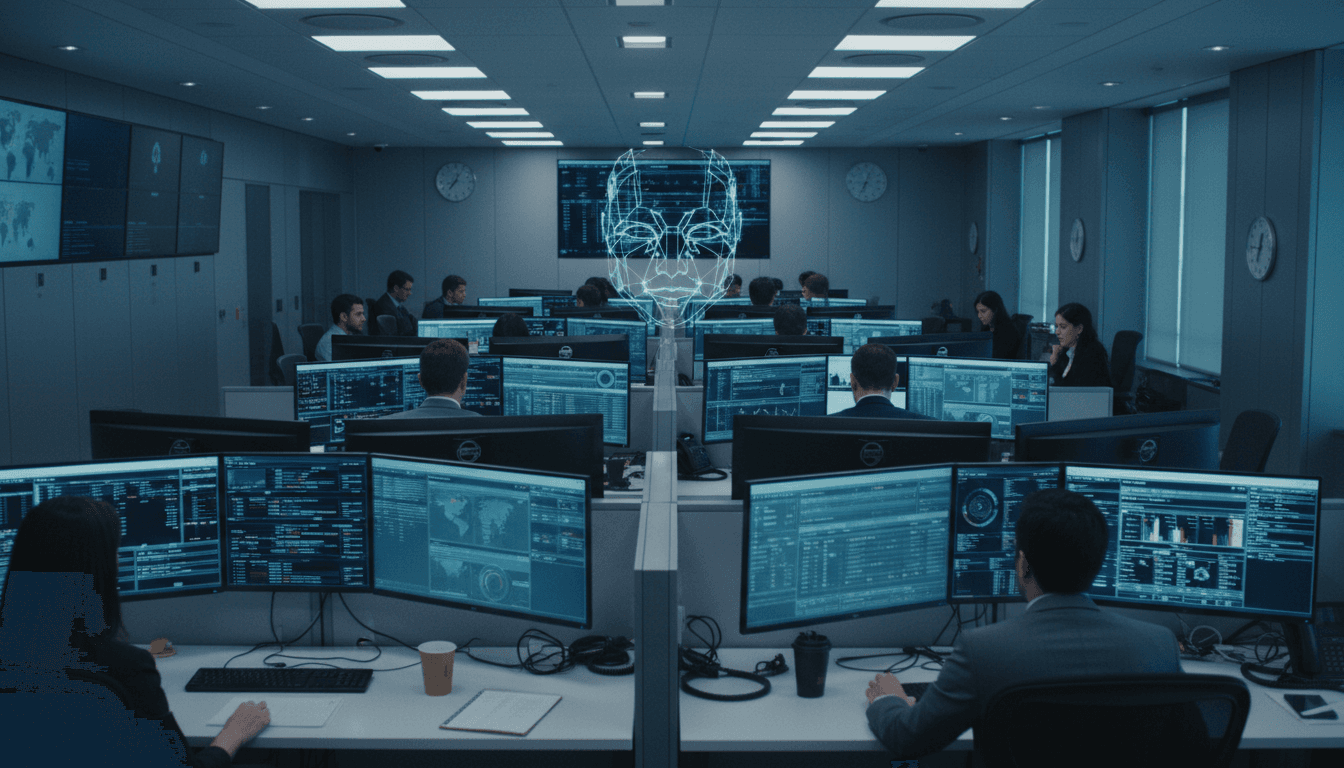
Deepfakes & Downtime: Crisis-Ready Finance Teams
Deepfake fraud isn’t “future risk.” It’s an operational reality, sitting in the same queue as payments exceptions, account takeovers, and the ugly 2 a.m. incident where your authentication service starts returning errors and the contact centre gets flooded.
That’s why I like the framing coming out of recent industry conversations involving large banks and fintechs (including leaders like BMO and Affirm): deepfakes, downtime, and demand shocks are not separate problems. They’re different faces of the same challenge—building a crisis-ready culture where AI supports security, resilience, and decision-making when humans are under pressure.
If you work in banking, payments, lending, or fintech operations, this matters because deepfakes don’t just target customers. They target your staff, your vendors, and your processes—right where the controls are most brittle. And downtime doesn’t just cost revenue. It creates the perfect fog for fraud.
Deepfakes are a fraud problem—and a process problem
Deepfakes succeed less because the media is convincing and more because the workflow is vulnerable. Attackers don’t need Hollywood-grade video; they need just enough realism to push a tired employee over the line.
Where deepfakes hit financial institutions first
In finance, deepfakes tend to show up in three practical scenarios:
- Social engineering of staff: A “CFO” voice note approving an urgent vendor payment. A “head of ops” video call asking for a temporary access exception.
- Customer account takeover (ATO) support: Fake voice used to bypass contact-centre knowledge checks or convince staff to reset credentials.
- Synthetic identity and loan fraud: AI-generated documents, selfies, and even live video that pass weak liveness tests.
The common thread: deepfakes don’t replace traditional fraud—they accelerate it. They shorten the time from “contact” to “cash-out,” which means your detection and response loops have to be faster.
AI in fraud detection: what actually works
A lot of teams hear “AI fraud detection” and think they need one magic model. They don’t. What works is layered, measurable controls:
- Behavioural analytics: Detect unusual sequences (new device + new payee + limit change + high-value transfer).
- Risk-based authentication: Step up verification only when signals stack, instead of punishing every customer.
- Voice and video biometrics with liveness: Useful, but only if paired with anti-spoofing and continuous tuning.
- Graph-based fraud detection: Connect mule accounts, device fingerprints, payee networks, and repeated patterns across channels.
One stance I’ll take: deepfake detection alone is not a strategy. The winning approach is decisioning: combining identity signals, behavioural signals, and transaction context to decide what happens next.
“If your control depends on a human spotting a fake, you’ve already lost.”
Downtime is when fraud teams get blindsided
Operational outages create perfect conditions for fraud. Customers can’t self-serve, agents improvise, backlogs form, and risk exceptions get approved to “keep things moving.” Attackers know this.
The hidden chain reaction of an outage
When a core service fails (authentication, card processing, KYC vendor, notification service), you get a predictable cascade:
- Channel switching: Customers move from app to phone; fraudsters do too.
- Control degradation: Step-up checks are disabled or bypassed to reduce friction.
- Alert overload: Monitoring tools throw noise; analysts miss the real signals.
- Manual processing spikes: And manual processing is where social engineering thrives.
A crisis-ready culture treats resilience and fraud as one operating model. That means your incident playbooks can’t stop at “restore service.” They must include “restore controls” and “watch for exploitation.”
AI’s role in resilience (beyond dashboards)
AI in fintech risk management isn’t just about predicting issues. It’s about shrinking the time between anomaly and action:
- Anomaly detection for infrastructure and application telemetry: Spot abnormal error rates, latency patterns, or failed logins early.
- Automated runbooks: Triage, route, and execute safe remediation steps (with approvals) so humans aren’t bottlenecks.
- Fraud-aware incident modes: When certain systems degrade, automatically tighten high-risk transaction paths.
Here’s what works in practice: define “degraded mode policies” ahead of time. For example, if your identity vendor is down, you don’t guess. You switch to a predefined policy: lower limits, delay new payee activation, add cooling-off periods, and prioritize high-risk review queues.
“Crisis-ready culture” is measurable (and trainable)
Culture sounds soft until you attach it to metrics and drills. Banks and fintechs that handle modern threats well tend to share a few operational habits:
1) They run real drills, not slide decks
Deepfake-enabled fraud is perfect for simulation because it’s scenario-based. Run quarterly exercises like:
- A fake executive request hits the treasury team
- A contact-centre spike coincides with an MFA outage
- A vendor emails new bank details plus an “approval” voice note
Make the drill cross-functional: security, fraud, ops, comms, and product. Time-box it. Score it.
2) They reduce “hero moments” in approvals
Most companies get this wrong: they celebrate employees who “push payments through” during chaos. That’s how you create fraud.
Instead, build controls that make the right action the easy action:
- Verified approval channels only (no approvals via voicemail, chat DMs, or forwarded emails)
- Two-person integrity for high-risk actions (payee changes, limit raises, credential resets)
- Out-of-band confirmation using known-good contact data
3) They instrument decision latency
You can’t improve what you don’t measure. Track:
- Time from suspicious signal → case creation
- Time from case creation → action (hold, step-up, block)
- False positive rate by channel
- Fraud loss rate during incident windows vs baseline
If fraud losses spike during outages, that’s not “bad luck.” It’s a design flaw.
Bank–fintech collaboration: where it helps (and where it hurts)
Bank–fintech collaboration is a force multiplier when it’s built around shared risk signals and clear accountability. It’s also a risk amplifier when integrations are brittle and vendor responsibilities are vague.
The collaboration model that holds up under pressure
The strongest setups I’ve seen share three traits:
- Shared telemetry: fraud signals, device fingerprints, and authentication outcomes flow both ways.
- Contractual incident requirements: defined SLAs for outages, breach notification timelines, and rollback procedures.
- Joint playbooks: if the fintech’s onboarding system fails, the bank knows what controls tighten automatically—and vice versa.
A practical checklist for AI vendors and partners
If you’re buying AI-driven security solutions (fraud scoring, biometrics, KYC), ask direct questions:
- What happens in degraded mode? If your model API slows down, do we fail open or fail closed?
- How do you handle model drift? What’s the monitoring cadence and retraining trigger?
- Can we audit decisions? Do you provide reason codes and case-level explainability?
- What’s your spoof testing program? For voice/video, how often do you test against new attack methods?
This is how AI in finance becomes operationally safe: not by trusting vendors blindly, but by engineering for failure.
A crisis-ready playbook for deepfakes, downtime, and demand spikes
The goal isn’t to predict every crisis. It’s to reduce the blast radius. Here’s a practical playbook you can adapt across banking and fintech.
Step 1: Treat “identity” as a continuous signal
Stop thinking of identity as a one-time gate at login.
- Use continuous signals: device reputation, session behaviour, transaction context
- Apply step-up friction only when risk rises
- Store high-confidence “known-good” approval paths for staff and vendors
Step 2: Build fraud controls that tighten automatically during incidents
Define policies you can flip without debate:
- Cooling-off periods for first-time payees
- Lower transfer limits for accounts with recent profile changes
- Mandatory out-of-band verification for high-value requests
- Increased sampling for manual review in certain corridors
Step 3: Train the humans where deepfakes actually land
Most deepfake training is too generic. Make it role-specific:
- Treasury and AP: vendor bank detail changes, urgent approvals
- Contact centre: voice spoofing cues, escalation paths, verification scripts
- IT and IAM: access exception requests, impersonation attempts
Step 4: Make post-incident reviews about controls, not blame
After an incident or near miss, focus on:
- Which control failed first?
- Where did humans improvise?
- What signal should have triggered an automated step-up?
- Which queue got overloaded and why?
If the answer is “we need people to be more careful,” you didn’t learn anything.
People also ask: deepfakes and AI risk management
Can deepfakes bypass biometric authentication?
Yes—especially if the biometric system relies on static images or weak liveness checks. Strong setups combine liveness, anti-spoofing, device signals, and behavioural analytics.
Is AI the solution to AI-driven fraud?
Partly. AI is essential for speed and pattern recognition, but the real solution is AI + strong process design: verified channels, dual approvals, and incident-mode policies.
What’s the fastest win for crisis readiness?
Run a cross-functional drill that includes both an outage and an impersonation attempt. You’ll quickly find where teams bypass controls under pressure.
Where this fits in the “AI in Finance and FinTech” series
This post sits at the intersection of AI fraud detection, fintech risk management, and operational resilience—the same set of capabilities Australian banks and fintechs are investing in to protect payments, lending, and digital identity as attacks get cheaper to run.
If you’re building or buying AI in finance, here’s the line I’d keep on a sticky note: crisis-ready beats crisis-reactive. Deepfakes and downtime won’t wait for your next roadmap cycle.
If you want to pressure-test your readiness, start with one question: Which high-risk decision in your business still depends on someone “just noticing something feels off”?