ASX runners in 2025 show why AI trend analysis matters: detect momentum early, score tradability, and avoid hot-air spikes. Build smarter insights for 2026.
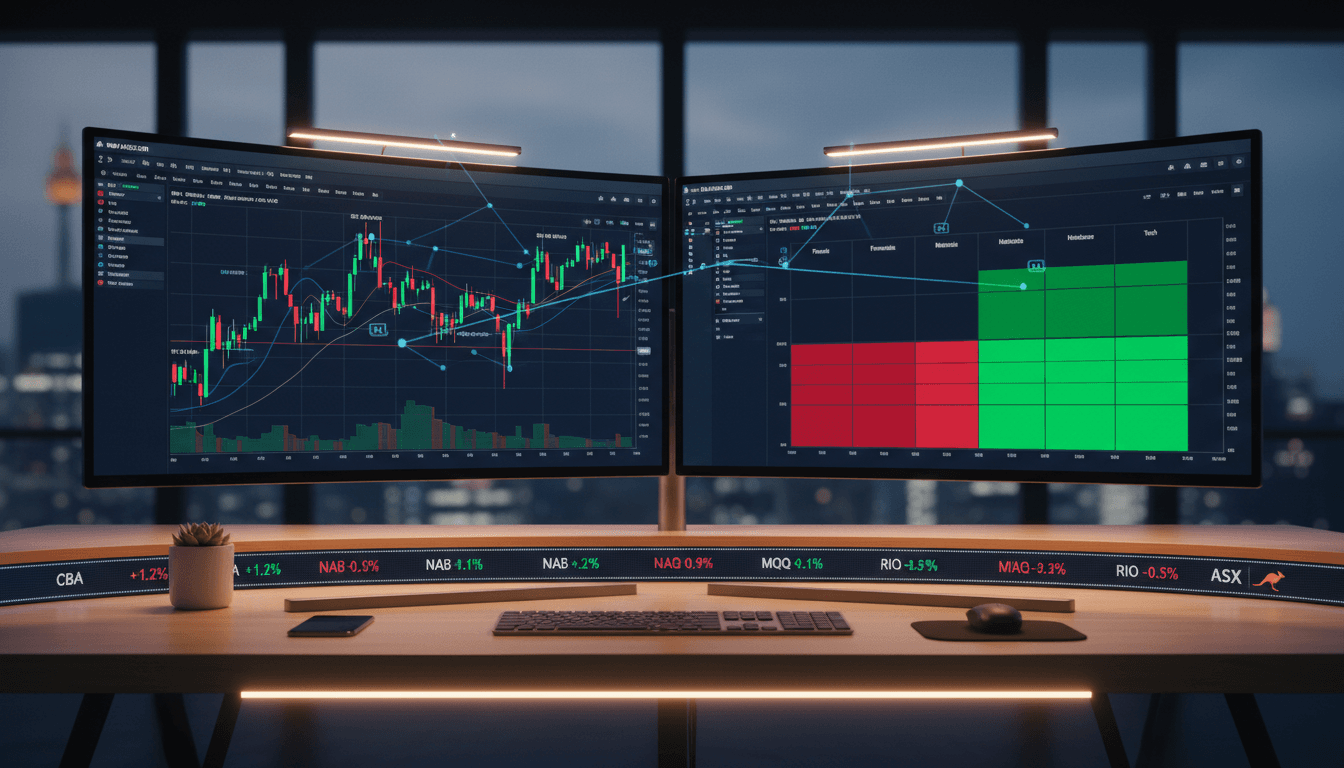
ASX Runners 2025: What AI Can Spot Before the Spike
A single ASX microcap rose 39,650% to its peak this year. Another surged 19,186% after a US political shout-out and a well-timed “critical minerals” narrative. If your reaction is “no model can predict that,” you’re half right—and that’s exactly the point.
The 2025 ASX “runners” story is less about picking the next 400-bagger and more about building repeatable systems that detect when a stock is entering a high-probability momentum regime—and when it’s drifting into hot-air territory. In the AI in Finance and FinTech context, these extremes are a perfect case study: AI doesn’t need to be clairvoyant to be useful. It needs to be faster, more consistent, and better at separating signal from noise than a human can manage at scale.
Australia’s market this year offered both: genuine tailwinds (gold, critical minerals, AI infrastructure demand) and pure market microstructure chaos (tight registers, bot-driven spikes, low liquidity). If you advise clients, run a trading desk, build wealth tech, or manage risk at a bank, this matters because your users are already being exposed to these moves—through social feeds, watchlists, and “top movers” screens.
What the 2025 ASX runners reveal about modern market behaviour
The clearest lesson from 2025 is that big runs now come from a mix of macro narrative + market plumbing.
On the narrative side, the strongest themes called out in the ASX runners list were:
- Gold’s powerful year (prices rising roughly 65% into October, after starting below A$4,000/oz and pushing beyond A$6,700/oz at one point)
- Critical minerals and supply chain politics, particularly assets perceived as “non‑China” aligned
- AI-related infrastructure demand, where the beneficiaries aren’t always “AI software” companies but the inputs—energy, metals, and manufacturing capacity
On the plumbing side, several runs reflected:
- Low liquidity and tight share registers (price moves amplified because very few shares are actually trading)
- Algorithmic behaviour (bots reacting to price, volume, announcements, and each other)
- Reflexivity (rising prices create attention, attention creates order flow, order flow pushes prices higher)
Here’s my stance: most organisations still treat “market analysis” as a research function and “execution” as a separate function. That split is outdated. In volatile regimes, research that can’t operationalise quickly is mostly theatre.
Case studies: runners, themes, and what AI can measure
The source article spotlights extreme performers across gold, critical minerals, and microcap mania. Rather than replaying the leaderboard, let’s translate them into AI-detectable patterns that banks and fintechs can actually use.
1) The microcap frenzy pattern (Kaili Resources)
A move like Kaili Resources’ ~39,650% peak gain was tied to a perfect storm: a tight register (many shares locked up), tiny dollar value traded early, then explosive momentum. The underlying fundamentals (cash, readiness to drill) weren’t driving the first phase.
What AI can do here (and humans struggle with):
- Detect structure risk: unusually high top‑20 concentration combined with thin depth
- Flag fragility: large price gaps and widening spreads alongside rising social/market attention
- Separate “announcement effect” from “flow effect”: whether price is responding to news content or simply to order imbalance
A practical fintech feature: a “Move Quality Score” that weighs liquidity, register tightness proxies, spread behaviour, and announcement sentiment—so users see whether a spike is tradable momentum or structural tinder.
2) The geopolitics + address premium pattern (Dateline, Locksley, Mt Ridley)
Several runners rode a very 2025 reality: supply chains are political. The article highlights US-based or US-adjacent critical minerals stories receiving disproportionate attention.
AI can help because geopolitics produces non-linear market reactions:
- A single mention by a high-profile figure can trigger a re-rate, regardless of near-term cash flow.
- Jurisdiction and permitting narratives can move faster than drilling results.
What AI can measure effectively:
- Event detection across news, speeches, regulatory updates, and market announcements
- “Narrative velocity”: rate of increase in mentions + sentiment + relevance to current policy priorities
- Cross-asset confirmation: are related ETFs, commodity proxies, or peer names moving too?
Why it matters for banks: if you’re providing client advice or portfolio analytics, AI can highlight when a move is being driven by policy narrative rather than company execution—so risk conversations are grounded.
3) The fundamentals + macro tailwind pattern (gold producers and developers)
Gold was the cleanest example of a macro tailwind boosting a broad set of equities. The article notes major gold producers posting 150%+ gains in some cases, and multiple junior gold names delivering huge percentage runs.
This is where AI is at its most defensible: not “predict the exact top,” but map exposure and sensitivity.
What AI-driven trend analysis can do well:
- Estimate commodity beta: how strongly a stock historically responds to gold price moves
- Track margin sensitivity: when input costs vs realised price likely expand or compress margins
- Identify “operational inflection” signals in announcements (restart, plant ramp-up, resource upgrade)
A practical institutional workflow: use machine learning to rank ASX gold names by (1) commodity sensitivity, (2) balance sheet stress, (3) dilution risk, and (4) operational milestone cadence. That’s a portfolio construction advantage, not a prediction stunt.
Building AI that doesn’t chase hype: a checklist that works on the ASX
AI in algorithmic trading gets hyped as if the model alone prints money. Reality check: bad data + thin liquidity + no guardrails = fast losses. The ASX microcap end is unforgiving.
Here’s a framework I’ve found more useful than “try a fancier model.”
Use a three-layer signal stack
-
Regime filter (macro + sector):
- Is the sector in a tailwind regime (e.g., gold uptrend, policy-driven critical minerals)?
- Are correlations rising (risk-on) or fragmenting (risk-off)?
-
Catalyst engine (events + narrative):
- Market announcements, permits, cap raises, partnerships
- Narrative velocity from public sources and investor channels
-
Microstructure monitor (tradability + fragility):
- Spreads, depth, gap frequency, order imbalance
- Liquidity-adjusted momentum (so you don’t “discover” a runner after it’s untradeable)
If you only do layer 2 (“news sentiment”) you’ll get whipsawed. If you ignore layer 3, you’ll recommend trades users can’t enter or exit without paying a brutal spread.
Bake risk controls into the model, not the disclaimer
For Australian financial institutions building AI-driven insights, these guardrails are non-negotiable:
- Liquidity gates: block or down-rank names below minimum median daily dollar volume
- Concentration flags: highlight when ownership concentration implies price fragility
- Insider selling alerts: the article’s examples reinforce a harsh truth—when major insiders sell aggressively, sentiment shifts fast
- Drawdown-aware recommendations: users don’t experience returns; they experience drawdowns
A sentence worth keeping on your whiteboard: “If it can go up 40,000%, it can go down 80% with no warning.”
“People also ask” (and what actually helps)
Can AI predict the next ASX runner?
AI can increase your odds of catching strong trends early, but it won’t reliably name the next 400-bagger in advance. The winning approach is probabilistic: detect when conditions match prior runner regimes (tailwinds + catalysts + tradable momentum), then manage risk.
What data should fintechs use for ASX trend analysis?
At minimum:
- Price, volume, order book / spread data (where available)
- ASX announcements + entity actions (cap raises, trading halts)
- Commodity prices and relevant macro indicators
- News and narrative signals (tagged by sector and jurisdiction)
How can banks use AI-driven market insights without creating compliance risk?
Focus on explainable ranking and risk flagging, not “buy/sell certainty.” Users and advisers need to see why something is being surfaced: catalyst type, liquidity score, and volatility profile.
Turning 2025’s chaos into a better 2026 product
The year’s ASX runners underline a simple product truth for wealth and trading platforms: users don’t just want “top movers.” They want context that answers, quickly, “Is this move real, and can I trade it safely?”
If you’re building in the AI in Finance and FinTech space, there’s a better way to approach these markets:
- Use AI to surface early momentum with tradability checks
- Use machine learning to separate macro-tailwind winners from one‑day wonders
- Use event models to translate announcements into measurable catalyst strength
If you want to pressure-test your current analytics, start with your own 2025 replay. Take the biggest ASX runners (and the biggest collapses) and ask: Would our system have flagged this early? Would it have warned users when the move became structurally fragile?
The teams that answer “yes” more often won’t just look smart—they’ll earn trust. What would your platform show a client the next time a stock is up 500% on $6,000 traded?