Track ASX volatility with AI: model sector swings, event risk, and correlation shifts. Practical steps for banks and fintech teams to act faster.
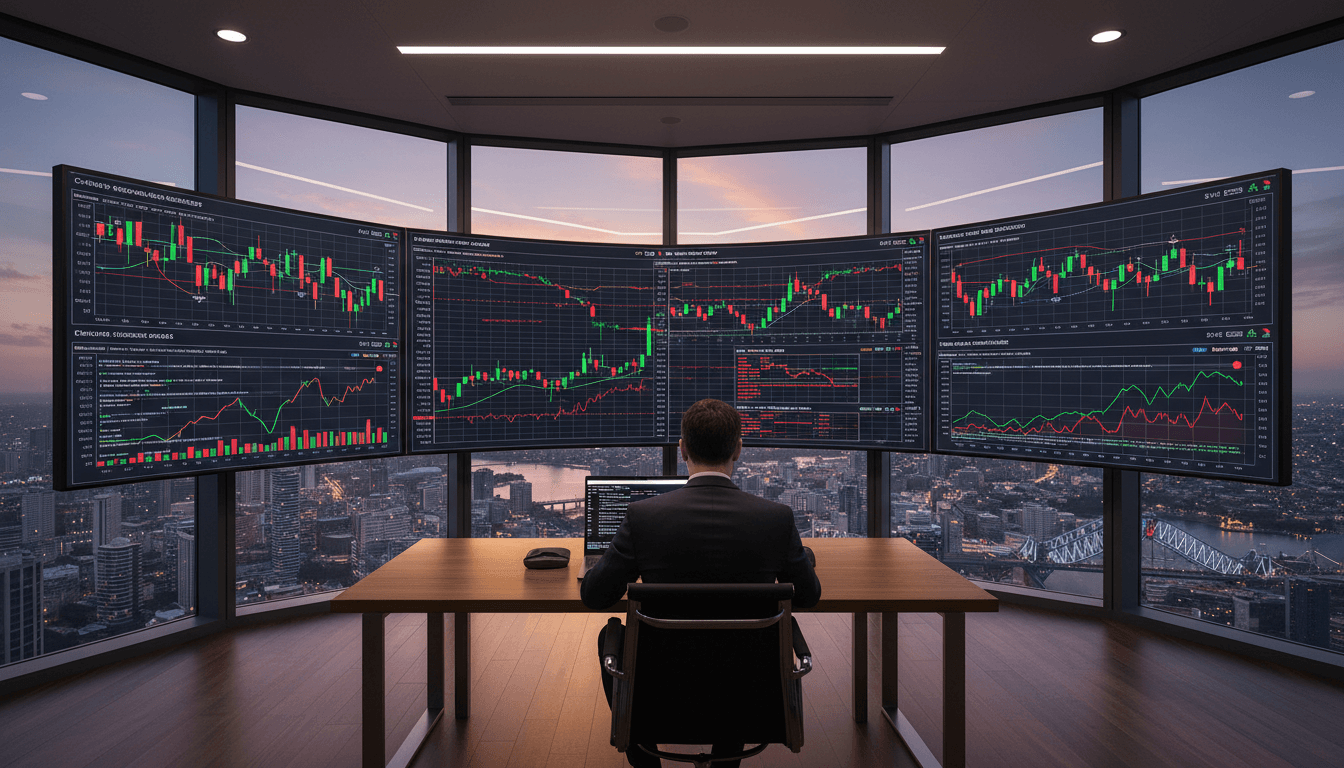
AI Signals for ASX Volatility: Energy Down, Tech Up
The S&P/ASX 200 barely moved this week—up 3 points to 8588.20—yet the market felt anything but calm. Energy slid hard after a 2.7% drop in Woodside on a CEO resignation, while local tech names bounced even as US AI stocks sold off. That’s the reality of modern markets: the index can look flat while the story underneath is loud.
If you work in banking, wealth, or fintech, this “flat-but-fractured” tape is the tricky one. Directional bets are less reliable. Sector rotations happen quickly. News risk (executives, regulators, lawsuits) hits prices before human teams can react.
Here’s the stance I’ll take: most institutions still treat market volatility as a periodic event. In late 2025, volatility is a permanent feature—and AI in finance is the most practical way to track it, quantify it, and respond without overtrading or overcorrecting.
What the ASX session really tells fintech teams
Answer first: The ASX session is a textbook example of sector divergence and event-driven risk, and those are exactly the regimes where AI-driven risk analytics beats manual monitoring.
The headlines were simple:
- The ASX finished basically flat after several down days.
- Energy was the biggest drag (Woodside down on leadership change).
- Tech rebounded locally (WiseTech, Xero, Technology One up), but NextDC fell 4.4%.
- Banks were mixed (CBA up, others down modestly).
- Compliance and governance news mattered: Austrac investigating Bendigo and Adelaide Bank, and ANZ received a second strike on executive pay.
For product and risk teams, the message is clearer than the market close: “beta” (the index) is less informative than “drivers” (sectors + events + macro).
The hidden problem: the index masks risk concentration
When a market closes flat, it’s tempting to assume portfolios are stable. But if gains are concentrated in a few software names while losses cluster in energy and parts of financials, your exposures can drift fast.
AI helps here because it can:
- break portfolio risk into factor exposures (rates, commodities, FX, momentum, quality)
- detect sector crowding (too many positions sharing the same drivers)
- flag when “diversification” is actually a set of correlated bets
A blunt but useful one-liner for investment committees: If your index view is calm but your factor view is stressed, you’re flying instruments with the screen turned off.
Energy down on Woodside: why event risk is now systematic
Answer first: Woodside’s drop wasn’t just an energy story—it’s a signal that single-name events (leadership moves, legal outcomes, policy shocks) are a repeatable risk class that can be modeled.
Woodside fell after announcing CEO Meg O’Neill’s resignation to lead BP. Santos rose after a $1 billion settlement tied to a legal ruling. Same sector. Opposite reactions. That’s not “macro.” That’s idiosyncratic catalysts.
How AI models event risk without pretending to predict the news
No model can know the next resignation. But AI can still help because it can quantify how sensitive you are to different kinds of shocks.
Practical approaches fintech and bank desks use:
- News classification models
- Tag headlines into types (leadership, litigation, regulation, earnings pre-announcement).
- Measure historical post-event moves by sector and by name.
- Event impact templates
- Estimate expected price move and volatility spike for each event type.
- Adjust risk limits automatically for the next 24–72 hours.
- Liquidity stress scoring
- When an event hits, the real risk is often exits.
- AI can estimate slippage under stressed volumes using order book features.
If you’re building for wealth platforms, there’s a consumer-friendly version of this: “What happened, what it usually means, and what it does to your portfolio risk.” People don’t need a prediction. They need context and guardrails.
Commodity + policy crosswinds: model the chain reaction
The same market wrap highlighted policy-driven oil dynamics (US action affecting sanctioned oil flows) and crude moving from multi-year lows. This is where humans often miss second-order effects.
A good AI risk engine doesn’t just track oil price direction; it tracks the transmission:
- Oil price → energy earnings expectations → credit spreads for energy issuers
- Oil price + AUD/USD → revenue translation → dividend expectations
- Policy shock → volatility regime shift → margin requirements → forced selling risk
That chain reaction is the difference between a calm rebalance and a bad day.
Tech rebounded locally while US AI sold off: the correlation trap
Answer first: When US AI stocks slump but parts of local tech rise, the right question isn’t “who’s right?”—it’s “what correlation assumptions just broke?”
The US session saw sharp drops in AI-linked giants (including chips and data infrastructure), with investors questioning valuation, profitability timelines, and debt used to fund AI build-outs. Meanwhile, in Australia, several software names rose, while a data-centre operator dropped.
That split matters for fintech because many models quietly assume:
- US tech leads AU tech
- AI infrastructure and AI software move together
- risk-on/risk-off is consistent within a week
Those assumptions fail—often around year-end—because flows, tax positioning, and portfolio window-dressing distort signals.
What “AI for investing” should do in this regime
A useful AI investing stack (for banks, brokers, robo-advice, or research) should be able to say:
- Which drivers explain today’s move? (rates, FX, momentum, sector rotation)
- Is this move typical? (percentile of historical volatility)
- Did correlations shift? (rolling correlation breakdown alerts)
- What’s the risk of mean reversion vs trend continuation? (regime classification)
Here’s what works in practice:
- Use regime models (e.g., volatility + correlation clustering) to switch between playbooks.
- Put correlation change on the dashboard, not buried in a quant report.
- Treat “AI hype drawdowns” as a recurring pattern and backtest it explicitly.
Snippet-worthy rule: If you can’t explain a tech move without mentioning rates, FX, and positioning, your model is too simple for 2025.
Banks and compliance headlines: AI’s most bankable use case
Answer first: The biggest near-term ROI for AI in banking isn’t trading—it’s financial crime, compliance monitoring, and conduct risk, because the downside is existential.
This ASX session included two governance/compliance reminders:
- ANZ’s second strike on executive pay (a conduct and trust signal even when the spill vote fails)
- Austrac investigating Bendigo and Adelaide Bank over AML compliance issues
This isn’t just PR risk. It affects:
- funding costs (through perceived risk)
- regulator intensity (time and remediation burden)
- customer trust (retention and acquisition)
Where AI improves AML and conduct outcomes (without magical thinking)
Banks don’t need AI that “catches all criminals.” They need AI that reduces false positives and shortens investigation cycles.
High-impact patterns:
- Entity resolution: linking customers, accounts, devices, and counterparties reliably
- Network analytics: detecting mule networks and layering patterns
- Behavioural baselining: spotting deviations at the customer level, not generic rules
- Case summarisation: producing investigator-ready narratives with citations to transactions and KYC fields
A practical KPI set I like:
- alert-to-SAR conversion rate
- median time-to-close a case
- investigator touches per case
- false positive rate by scenario
If your AI program can’t move at least two of those, it’s theatre.
A simple blueprint: building an AI volatility playbook for fintech
Answer first: Start with three components—data, models, and decisions—then hardwire governance so outputs change actions, not just dashboards.
1) Data: combine market, news, and internal exposures
Minimum viable inputs:
- live and historical prices (equities, sectors, futures)
- rates, FX (AUD/USD matters for Australian books)
- commodity benchmarks relevant to local sectors
- structured news/event tags
- portfolio holdings + constraints (for wealth and treasury)
2) Models: focus on explainable risk first
Recommended model set:
- factor model for exposure decomposition
- volatility forecasting (short horizon, e.g., 1–5 days)
- regime classification (risk-on/risk-off is not enough)
- correlation shift detector (alerts, not reports)
- event impact scoring for news categories
3) Decisions: automate guardrails, not hero trades
The best first automations are conservative:
- dynamic position limits by volatility regime
- automatic hedging proposals (human approval)
- liquidity-aware rebalancing schedules
- client-facing risk explanations (especially for wealth platforms)
A strong principle for regulated teams: automate the “when to pay attention,” not “what to buy.”
What to do next (if you’re a bank, broker, or fintech)
The ASX can close flat and still deliver five different risk stories in a single day: leadership shocks, commodity sensitivity, AI valuation jitters, governance pressure, and AML scrutiny. Treating those as separate streams is how teams get surprised.
If you’re running markets, treasury, or product analytics, pick one starting point:
- Build a sector rotation + correlation shift monitor for ASX exposures.
- Add event-type tagging to your news feed and backtest post-event moves.
- Upgrade AML with network analytics + case summarisation and measure investigator time saved.
For this AI in Finance and FinTech series, I keep coming back to the same idea: AI is most valuable when it turns messy market noise into decision-ready signals—fast, explainable, and auditable.
Where do you see the bigger pain right now: sector swings in portfolios, or compliance and investigation workloads that keep growing every quarter?