Most campaigns don’t fail from bad ideas—they fail from messy stories. Here’s how digital mind mapping helps you design clearer, more emotional brand narratives.
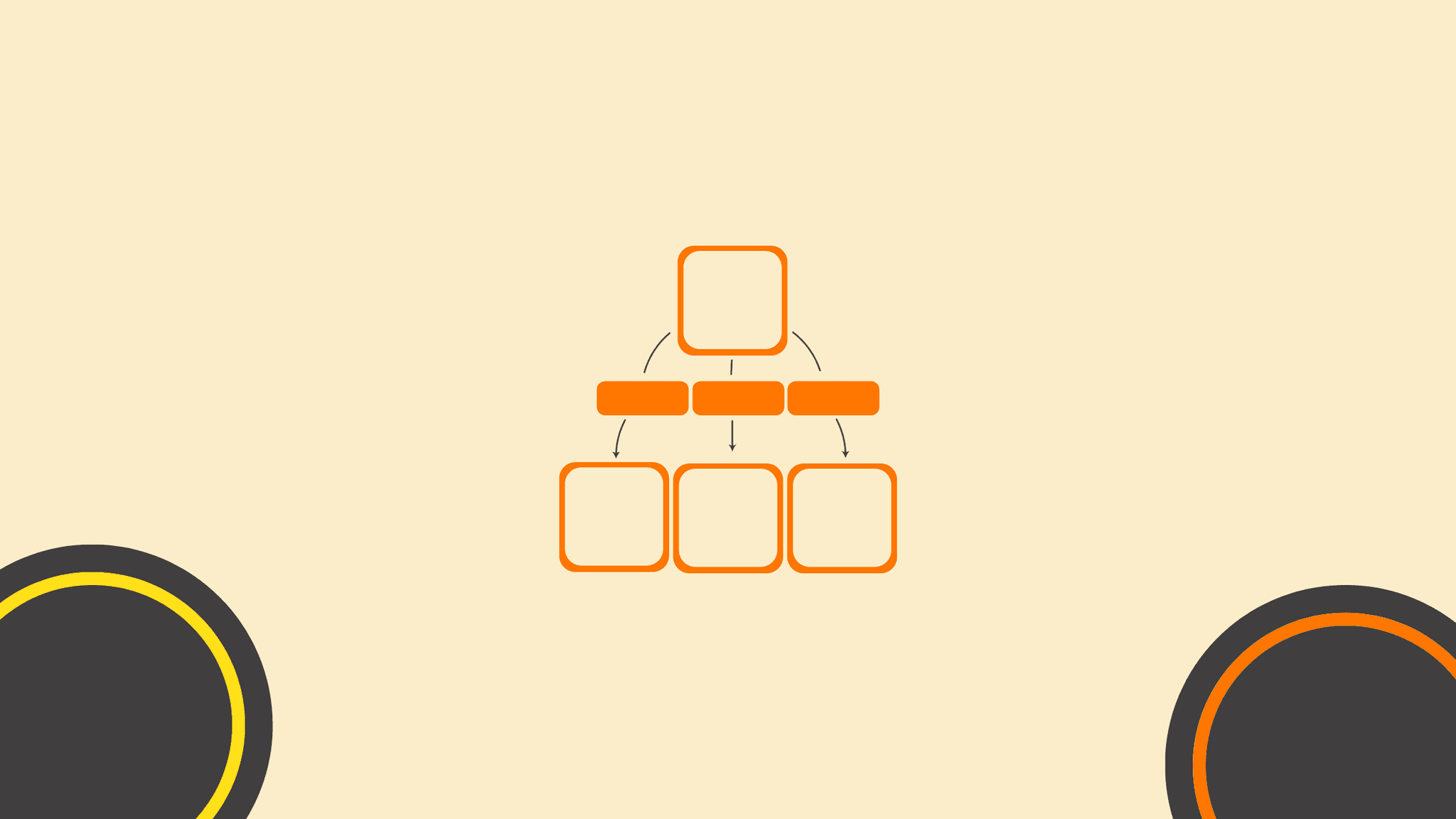
Most brand campaigns don’t fail because of bad ideas. They fail because the story is a mess.
You’ve got product benefits in one doc, audience insights in another, a half-written script in a deck somewhere, and a “content calendar” that’s basically a spreadsheet of random posts. The vibe is chaos, not connection.
Digital mind mapping fixes that. It gives you one visual canvas where your brand story, content strategy, and campaign ideas all live together. For Vibe Marketing—where emotion meets intelligence—this is exactly the kind of tool that turns scattered ideas into stories that move people and drive results.
This guide breaks down how to use digital mind mapping for storytelling so your brand can design narratives visually, collaborate smarter, and turn strategy into content that actually converts.
Why Digital Mind Mapping Belongs In Your Marketing Stack
Digital mind mapping is one of the simplest ways to bring structure to creative chaos. You start with a central idea in the middle of a digital canvas, then branch out into characters, moments, channels, and messages.
For storytellers and marketers, that central node might be:
- A campaign theme
- A product launch
- A brand origin story
- A seasonal narrative (like a holiday push or New Year “reset” campaign)
From there, you branch into:
- Audience segments
- Emotional hooks
- Content formats
- Channels and touchpoints
- Measurable outcomes (sign‑ups, demos, sales)
Here’s why this matters for Vibe Marketing:
Digital mind mapping turns your brand story into a system—where emotion, data, and creativity show up on the same screen.
Rather than forcing ideas into rigid documents, you see connections: how one storyline feeds email, social, video, and sales enablement. That’s where campaigns start to feel coherent and intentional to your audience.
How Digital Mind Mapping Supercharges Storytelling
Digital mind maps aren’t just pretty diagrams. Used properly, they directly improve how you build and execute story-driven marketing.
1. Clearer narratives, fewer dropped threads
In most campaigns, subplots get lost: the customer case study doesn’t connect to the product narrative, the social posts don’t match the landing page tone, and the email sequence goes off on a tangent.
In a story mind map you can:
- Map the main arc: problem → tension → solution → transformation
- Add sub-branches for each content series or channel
- Visually check where each piece connects back to the core promise
You’ll quickly see:
- Where you’re repeating the same message too often
- Where there’s a gap in the journey (e.g., no story between “curious” and “ready to buy”)
- Where pacing feels off (too much education, not enough invitation)
The result: campaigns that feel like one story told in multiple formats, not random content on multiple platforms.
2. Stronger, more human brand characters
Every good brand story has characters—your customer, your team, sometimes even the product itself.
With a digital mind map, you can create a branch for each key character:
- Customer: goals, fears, status quo, objections
- Guide (your brand): voice, values, point of view, unique advantage
- Antagonist: friction, old way of doing things, competitors, or internal barriers
Under each, you add:
- Key emotional beats (the “I’m stuck” moment, the “maybe this could work” moment)
- Proof points and stories
- Language they actually use (from reviews, interviews, or sales calls)
This keeps your storytelling grounded in real people, not generic personas on a slide.
3. Faster idea generation—and better ideas
Digital mind maps encourage divergent thinking. You’re not forced to write a “perfect” outline from top to bottom. You just keep branching:
- What if we told this story from the customer’s POV?
- What’s the “dark side” of not changing?
- How does this play out in short video vs long-form article?
Studies on digital mind mapping in writing and learning consistently show higher idea volume and originality compared with linear planning. That translates directly into stronger hooks, fresher angles, and more engaging campaigns.
4. Built-in collaboration for remote teams
Most marketing teams are hybrid or fully remote by now. A static doc emailed around isn’t collaboration; it’s version chaos.
A digital mind mapping tool lets you:
- Invite your team into the same live canvas
- Comment on branches instead of arguing in long threads
- Vote on angles, prioritize stories, and park ideas for later
Suddenly, strategy sessions stop being opinion wars and become structured, visual conversations.
How To Build A Story Mind Map For Your Brand

Here’s a practical, repeatable process you can use for any campaign or storyline.
Step 1: Start with the core vibe
Drop a single phrase in the center of your map. Not a product feature list, but the emotional center of the story.
Examples:
- “From overwhelmed marketer to confident strategist”
- “Our brand’s 10-year journey to overnight success”
- “How small teams launch big products without burning out”
This central node becomes the emotional throughline of your Vibe Marketing campaign.
Step 2: Add your main branches
For brand storytelling, useful first-level branches are:
- Audience – segments, needs, emotional states
- Conflict & stakes – what happens if nothing changes?
- Transformation – what “after” state are you promising?
- Proof – case studies, quotes, stats, social proof
- Channels – email, social, video, events, website
- Content formats – stories, guides, ads, webinars, shorts
Now your story isn’t stuck in one format—it’s architected across the whole ecosystem.
Step 3: Break branches into specific beats
Drill down one level at a time. For example:
Audience → Segment: Marketing managers
- Pain: fragmented tools, pressure to show ROI
- Desire: clarity, a reliable system, time back
- Objections: “We tried content before, it didn’t work”
- Language: phrases from customer calls, reviews, chats
Conflict & stakes → Internal friction
- No shared view of the customer journey
- Sales and marketing telling different stories
- Content that feels random, not strategic
Transformation → New reality
- One shared campaign map
- Every asset tied to a story beat and KPI
- Clear, story-driven reports that show impact
You’re not guessing anymore. You’re architecting emotion and logic in parallel.
Step 4: Draw cross-story connections
This is where digital mind mapping shines compared to linear docs.
Connect nodes to show:
- Which channels support which stage of the story
- Where a case study supports a specific objection
- How a live event ties into an email sequence and post-event nurture
Your map starts looking like a transportation system: clear routes, clear transfers, no dead ends.
Step 5: Prioritize and prune
Once you’ve got a rich map, you’ll probably have too many ideas. That’s a good problem.
Now:
- Tag must-have vs nice-to-have content
- Remove branches that don’t support the core vibe
- Sequence content so the emotional journey makes sense
By the time you open your doc, you’ve already solved 80% of the structural problems marketers usually wrestle with mid-draft.
Story Structures You Can Map For Marketing
You can use classic storytelling frameworks directly inside your digital mind map.
Three-act structure for campaigns
- Act I – Setup: introduce the problem, the audience, and your brand’s POV
- Act II – Confrontation: show failed attempts, new insights, and your approach
- Act III – Resolution: reveal the transformation and invite people into it
Under each act, map:
- Signature stories or examples
- Content types (e.g., educational blog → case study → webinar → offer)
- Emotional beats (frustration, hope, clarity, confidence)
Hero’s Journey for brand origin or customer stories
- Ordinary world
- Call to adventure
- Trials and allies
- Ordeal
- Reward and return
You can map both:
- Your brand going through this journey, and
- Your customer, with your product as the guide
Suddenly your “About” page, brand film, and sales deck are all pulled from the same structured narrative.
Multi-channel content series
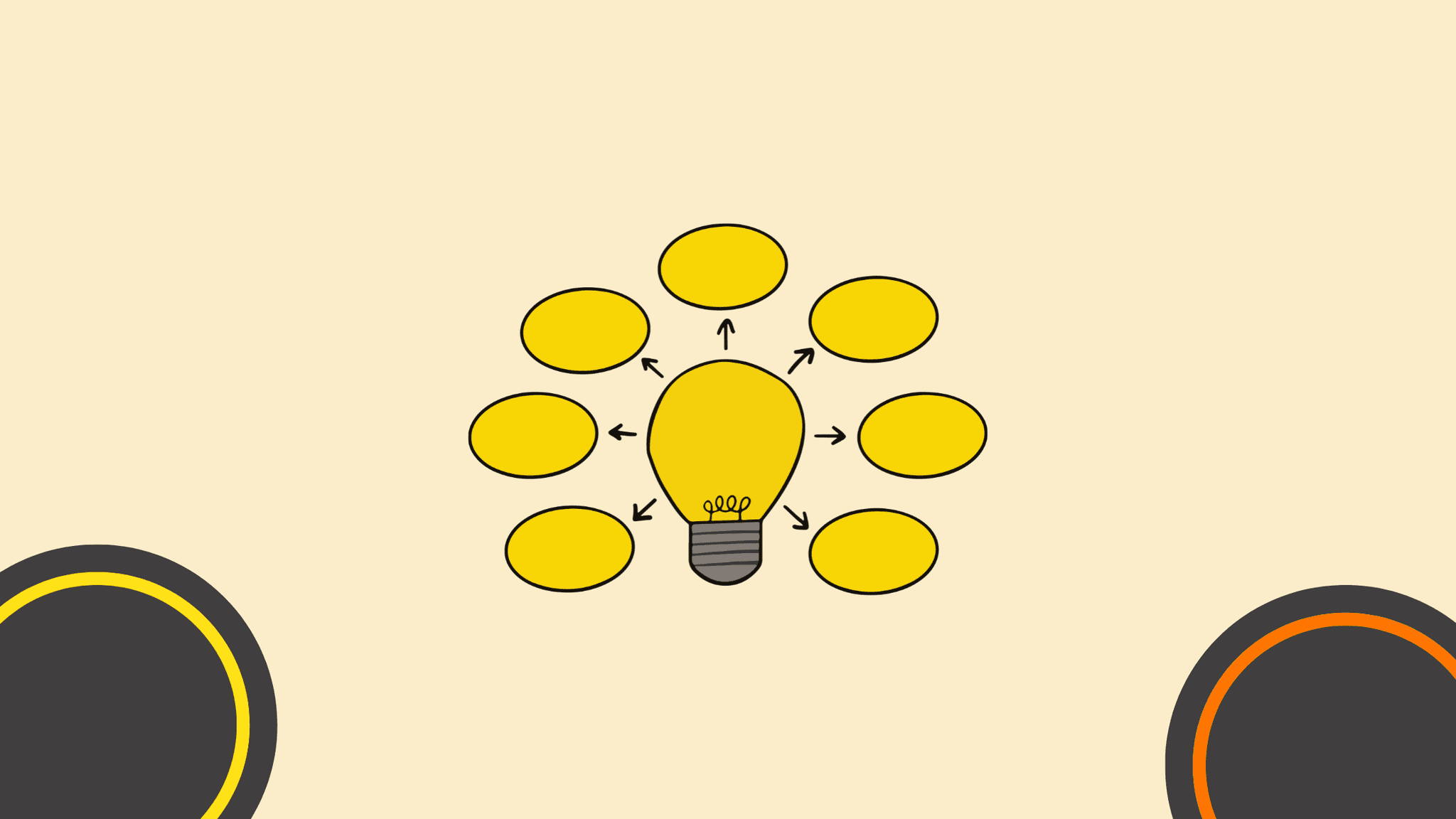
For content marketing:
- Central node: campaign theme
- Branches: blog series, email sequence, social pillars, video series
- Sub-branches: topics, hooks, CTAs, distribution, repurposing paths
This is Vibe Marketing in action: a single emotional theme woven intelligently through multiple touchpoints.
Paper vs Digital: Why Go Digital For Vibe Marketing
Both paper and digital mind maps have their place, but for marketing teams, digital usually wins.
Paper mind maps are great for:
- Quick solo brainstorming
- Early doodles when you’re not ready to share
But they fall apart when:
- The campaign gets complex
- You need to collaborate
- You want to link research, assets, and briefs
Digital mind maps give you:
- Infinite canvas and easy rearranging
- Real-time collaboration and comments
- Color-coding for segments, journeys, or channels
- The ability to attach notes, links, screenshots, and drafts
Most teams I’ve worked with end up adopting a hybrid approach: sketch on paper in the first 10 minutes, then rebuild in digital where the campaign will actually live.
From Mind Map To Content Machine
A map is only useful if it turns into content that ships. Here’s a simple workflow you can reuse.
1. Export branches into an outline
Take your main branches—Acts, stages of the funnel, or content series—and turn them into headings.
Under each, list:
- Specific assets (e.g., “Case study: Retail brand increasing conversion 47%”)
- Key points or beats
- Desired CTA or next step
Now you’ve got a linear plan derived from a non-linear, creative process.
2. Use AI as your accelerator, not your author
Once your outline is clear, AI tools come into play.
You can use AI to:
- Clean up your outline into a readable narrative
- Draft first-pass copy for emails, scripts, or posts
- Suggest variations on hooks, angles, and CTAs
What you shouldn’t outsource:
- Your brand voice
- Your point of view
- Your emotional nuance
Treat AI as scaffolding; you still own the architecture and the final polish.
3. Keep the mind map as your control center
As you draft, things will change.
Instead of “fixing it in copy,” adjust the story at the map level:
- Remove scenes or content that don’t serve the journey
- Add new branches when you uncover better ideas
- Keep a visual log of what’s live vs planned
This loop—map → outline → draft → refine the map—is what keeps campaigns coherent over months, not just weeks.
Where Digital Mind Mapping Fits In The Vibe Marketing Era
Vibe Marketing is about matching emotional resonance with strategic clarity. Digital mind mapping sits right at that intersection.
Used well, it helps your team:
- See the whole brand story on one canvas
- Design journeys that feel human, not mechanical
- Keep content, data, and creativity connected
If your 2026 roadmap includes smarter storytelling, better collaboration, and campaigns that feel like experiences rather than noise, start with a map.
Open a blank digital canvas.
Put your core brand story—or your next big campaign—in the center.
Then ask: What needs to exist around this for someone to really feel it, understand it, and say yes?
Build those branches. That’s where your next high-performing, high-vibe campaign is hiding.