A practical Product Hunt launch playbook for bootstrapped SaaS founders—community tactics, social media strategy, and post-launch steps that drive signups.
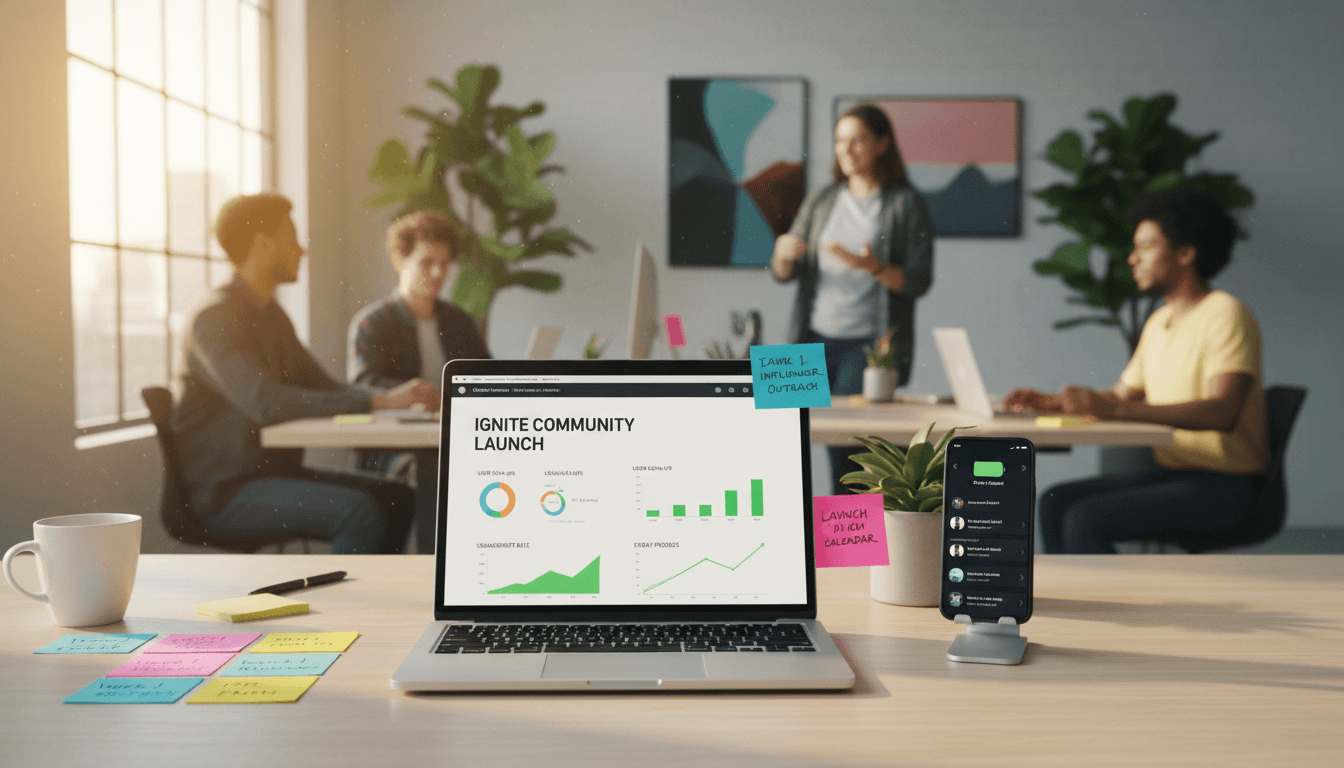
Product Hunt Launch Playbook for Bootstrapped SaaS
Product Hunt is one of the few places where a tiny team can get in front of thousands of early adopters without paying for ads—and that’s exactly why it matters for US startups and small businesses trying to grow without VC.
But there’s a catch. Many founders treat Product Hunt like a single-day traffic spike and then wonder why nothing sticks. Most companies get this wrong. A Product Hunt launch is a community marketing campaign that starts weeks before launch day and keeps going after the leaderboard resets.
This post is part of the Small Business Social Media USA series, where we break down practical social media strategies for American small businesses. Here we’ll use the (attempted) Product Hunt listing for Meet-Ting (a meeting scheduling tool) as a timely case study—less about the product details (the page is currently blocked by Product Hunt’s “verify you are human” gate) and more about the bootstrap-friendly launch system behind tools like this.
A Product Hunt launch isn’t a post. It’s a month-long conversation that peaks on one day.
What Meet-Ting’s “blocked page” teaches you about distribution
A surprising lesson from this RSS source: we can’t even access the full Product Hunt page because of a 403/CAPTCHA challenge. That’s annoying, but it’s also a useful reminder: you never fully control your distribution channels.
If your entire go-to-market plan depends on a single platform, you’re exposed—whether it’s Product Hunt rate limits, an Instagram algorithm swing, or a LinkedIn reach drop.
Here’s the better approach for a bootstrapped SaaS launch:
- Use Product Hunt as the attention spike
- Use your owned channels (email list, waitlist, in-app prompts) as the conversion engine
- Use social media (LinkedIn, X, TikTok/IG Reels depending on audience) as the relationship layer
For a meeting scheduling tool like Meet-Ting, this matters even more because the buyer journey often includes teams, not just individuals. One person tries it, then invites colleagues. Your job is to make sharing natural and to keep the story alive long enough for that loop to happen.
The bootstrapped Product Hunt launch strategy that actually works
A strong Product Hunt launch for a bootstrap startup is built on three assets: credibility, community, and a clear offer. You don’t need a giant ad budget. You need coordinated marketing.
1) Pre-launch: build a small “commitment list,” not a big follower count
Answer first: Your Product Hunt outcome is mostly decided before launch day.
Two weeks before launch, aim for a list of 50–200 people who want to support you. Not “maybe they’ll upvote.” People who have already said yes.
How to build that list using small business social media (USA):
- Post 5–7 short updates on LinkedIn over two weeks:
- the problem you’re solving (“Scheduling shouldn’t take 12 emails”)
- a behind-the-scenes build note
- a quick demo clip (20–40 seconds)
- a specific callout for beta users
- DM your warm network with a real ask:
- “We’re launching a meeting scheduling tool on Product Hunt next Friday. Want a reminder link?”
- Create a simple “launch reminders” email capture form.
If you’re bootstrapped, you’re trading money for time and coordination. This is one of the best trades you can make.
2) Your launch page needs one job: make the product obvious in 8 seconds
Answer first: On Product Hunt, clarity beats cleverness.
For a meeting scheduling tool, the visitor is thinking:
- What’s different from Calendly?
- Who is it for (solo consultants, sales teams, agencies, clinics)?
- What does it integrate with (Google Calendar, Outlook)?
- Is it free, freemium, or paid?
Even if we can’t see Meet-Ting’s current listing details from the RSS scrape, the category itself is crowded. So your positioning must be sharp.
A practical copy formula:
- Tagline: Outcome + audience
- “Schedule client meetings in one link (for small teams)”
- First line: Differentiator
- “Round-robin scheduling + branded booking pages without the enterprise price.”
- Offer: Launch-week incentive
- “50% off the first 3 months for Product Hunt users” (keep it simple)
3) Launch day: treat comments like your #1 growth channel
Answer first: The comment section is where trust is built.
Upvotes help visibility, but comments drive conversions because they handle objections in public.
Run launch day like a support shift:
- Block 3–5 hours where you do nothing but respond
- Reply fast (within minutes early on)
- Use screenshots/GIFs in replies when useful
- Turn feedback into a roadmap comment (“We’re adding Outlook next—ETA Feb”)
A lot of founders over-post on social media and under-invest in Product Hunt comments. That’s backwards. Product Hunt is already a high-intent environment; your job is to reduce uncertainty.
4) Post-launch: follow up like a B2B salesperson (without being annoying)
Answer first: Most Product Hunt launches fail after day one because nobody follows up.
Your real win is capturing demand while it’s warm.
A simple 7-day post-launch sequence:
- Day 0 (launch day): “Thanks + here’s the deal” email to new signups
- Day 1: “Top questions we got on Product Hunt” (FAQ format)
- Day 3: Case-style story: “How a consultant booked 12 calls with one link”
- Day 5: Objection handler: “Switching from Calendly in 10 minutes”
- Day 7: Offer ends + ask for referrals (“Know someone who schedules a lot?”)
This is where Small Business Social Media USA tactics become compounding assets: turn those emails into posts, clips, and carousels.
Four community-driven marketing tactics a bootstrap startup can copy
If you’re building without VC, community platforms are your unfair advantage—because you can out-care bigger competitors.
1) Build in public, but only around the buyer’s pain
Answer first: “Build in public” works when it’s customer research in disguise.
Don’t post technical logs. Post moments the buyer recognizes:
- “I missed a lead because scheduling took 3 days.”
- “Clients keep booking outside my working hours.”
- “Two teammates double-booked the same slot.”
Those are shareable and they attract the right users.
2) Ship a “Product Hunt friendly” feature that demos well
Answer first: If it can’t be shown in a 10-second clip, it won’t spread.
For meeting scheduling tools, good “demo candy” includes:
- branded booking page previews
- instant timezone detection
- round-robin scheduling animation
- automatic buffer times (show the calendar adjusting)
Make one feature ridiculously easy to show on social.
3) Partner with adjacent micro-communities
Answer first: Your first 100 customers often come from “nearby” audiences.
A scheduling tool can partner with:
- US-based solopreneur newsletters
- agency owner communities
- CRM consultants (HubSpot, Pipedrive)
- virtual assistant groups
You don’t need big affiliates. You need 5–10 small partners who trust you.
4) Repurpose launch assets into a 30-day social content plan
Answer first: Launch assets aren’t one-day assets. They’re a month of posts.
Turn your Product Hunt work into:
- 3 founder story posts (problem → build → lesson)
- 4 short demo videos
- 2 customer quotes (even beta users)
- 1 “competitor comparison” post (be fair, be specific)
- 1 behind-the-scenes “what we’d do differently” post
This keeps your social media strategy for small business consistent and reduces the “what do I post?” problem.
Metrics that matter (and the ones that don’t)
Answer first: Leaderboard rank is a vanity metric if you don’t track activation.
Track these instead:
- Signup conversion rate from Product Hunt traffic (visits → signups)
- Activation rate within 24 hours (did they create a booking link?)
- Invite rate (did they add teammates or invite a client?)
- Week-1 retention (did they schedule at least one meeting?)
If you’re bootstrapped, you’re optimizing for cash flow and retention, not applause.
A quick benchmark mindset:
- If you can’t get at least 5–10% of visitors to sign up, your page isn’t clear.
- If signups don’t activate, onboarding is the bottleneck.
- If activation happens but retention doesn’t, the product isn’t sticky or the audience is wrong.
People also ask: Product Hunt launch questions founders get stuck on
Do I need a big following to launch on Product Hunt?
No. You need a small group of committed supporters and a clear story. A following helps, but coordination matters more.
Should I pay for upvotes or services?
Don’t. It risks your reputation and can backfire. Put that money into a better demo video or a launch-week offer.
What social media platform works best for Product Hunt promotion?
For US small businesses and B2B SaaS, LinkedIn usually drives the most supportive engagement. X can work well for maker audiences. The winning move is posting where you already have real relationships.
How long should I prepare for a Product Hunt launch?
Two weeks is the minimum. Three to four weeks is ideal if you’re also building the product.
A practical next step for your own bootstrapped launch
If you’re building a SaaS tool like Meet-Ting—a meeting scheduling tool competing in a noisy category—the only sustainable advantage is trust plus distribution. Product Hunt can give you the spark, but your social media strategy (and your email list) is what keeps the fire going.
I’d do this this week:
- Draft your Product Hunt tagline and first three screenshots
- Write 10 DMs to warm contacts asking for a launch reminder opt-in
- Publish one short “problem post” on LinkedIn aimed at the exact buyer
Then commit to treating launch day like a live event, not a post.
Where would a Product Hunt spike help you most right now—more signups, more conversations with prospects, or more feedback to tighten positioning?