Sodium-ion batteries are moving from labs into forklifts, farms, and factories. Here’s how they cut costs, reduce emissions, and fit into smarter green tech systems.
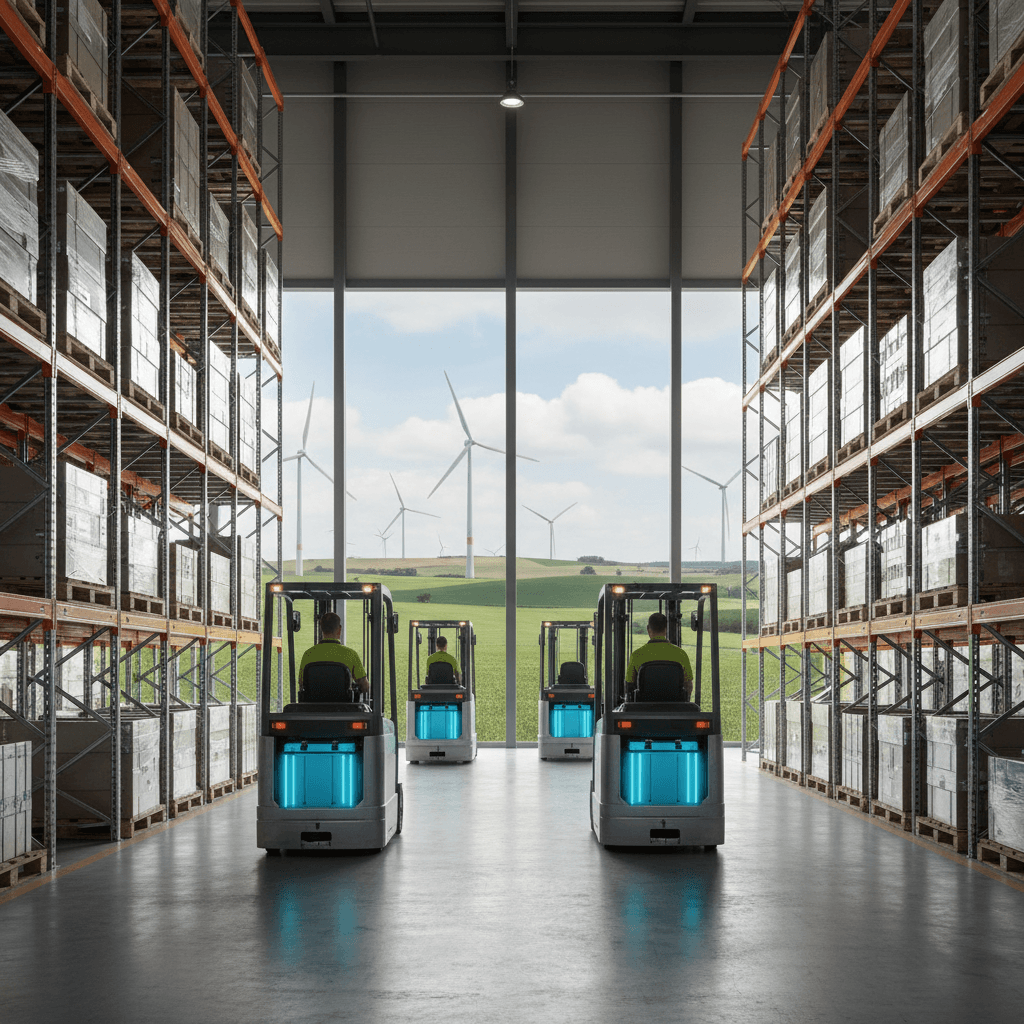
Most companies obsess over electric cars, but the real battery revolution is happening in places most people never see: warehouses, farms, ports, and factories.
That’s why Komatsu Japan partnering with Pret Composites in Neijiang, China, to build 1.5‑ton forklifts powered by sodium‑ion batteries is a bigger deal than it looks on the surface. It signals something important for green technology: sodium‑ion batteries are finally moving from the lab and pilot projects into real industrial work.
This matters because heavy equipment is a massive, often ignored source of emissions. Forklifts, yard trucks, mining gear, farm machinery, and port equipment burn diesel all day, every day. If you care about practical climate solutions and profitable sustainability, sodium‑ion batteries deserve your attention.
In this post, I’ll walk through why sodium‑ion is gaining traction, where it beats lithium‑ion, and how smart companies can use it—together with AI and data—to lower costs, cut emissions, and future‑proof operations.
Why Sodium-Ion Batteries Are Suddenly Getting Real
Sodium‑ion batteries (SIBs) are starting to scale because they solve three hard problems at once: cost, material security, and robustness.
Sodium is cheap and abundant. Unlike lithium, which is concentrated in a handful of regions, sodium is everywhere—derived from common salt. That means:
- Lower and more stable long‑term material costs
- Less exposure to geopolitical supply shocks
- Easier localization of supply chains
For industrial and commercial users planning 10–15 year asset lifecycles, that stability matters more than chasing the highest energy density.
SIBs trade range for reliability and cost. Today’s sodium‑ion cells typically offer about 100–160 Wh/kg, compared with 180–260 Wh/kg for mainstream lithium‑ion chemistries. For passenger EVs, that’s a big deal. For a forklift that operates in a warehouse all day with planned charging breaks? Much less of an issue.
Forklifts, port tractors, and many farm vehicles have:
- Predictable routes
- Limited daily range
- Frequent idle windows for opportunity charging
So the slightly lower energy density is an acceptable trade to gain lower cost, better cold‑weather performance, and improved safety.
The Komatsu–Pret deal is a signal. Pret Composites planning to invest CNY 800 million into sodium‑ion production shows manufacturers aren’t treating this as a fringe experiment. They see a commercially viable market across logistics, agriculture, and light industry.
The reality? Sodium‑ion isn’t "the new lithium." It’s a second tool in the electrification toolbox—and for heavy equipment, it’s often the better fit.
Where Sodium-Ion Shines: Forklifts, Farms, and Harsh Environments
Sodium‑ion batteries perform best in rugged, controlled‑route applications where total cost of ownership matters more than maximum range.
Industrial and Warehouse Equipment
Forklifts are the perfect early adopter for sodium‑ion batteries:
- They follow fixed, short routes
- They operate in confined or indoor spaces where diesel fumes are a problem
- They have frequent breaks for scheduled or opportunity charging
Compared with lead‑acid or diesel forklifts, SIB‑powered forklifts can offer:
- Lower operating costs through better energy efficiency and reduced maintenance
- Zero local emissions, which improves air quality and worker safety
- Improved uptime, thanks to faster charging and fewer moving parts than combustion engines
For global manufacturers like Komatsu, sodium‑ion offers an additional edge: they can price electric forklifts more competitively in cost‑sensitive markets without relying on volatile lithium supply chains.
Agriculture and Remote Operations
The RSS snippet calls out farms and rugged environments, and that’s a smart focus. Farm machinery and remote equipment often need:
- Reliable operation in dust, mud, and temperature extremes
- Energy storage that tolerates rough handling and irregular charging
- Lower upfront and lifetime costs, not premium performance at any price
Sodium‑ion is particularly strong in cold‑weather performance compared with some lithium‑ion chemistries. For winter farm work or remote off‑grid installations, that’s a real advantage.
I’ve seen this pattern with clients working on rural electrification: once they stop trying to spec everything like a Tesla and instead optimize for simplicity and robustness, sodium‑ion suddenly makes sense.
Commercial and Light Industrial Fleets
Beyond forklifts and farms, sodium‑ion fits well in:
- Airport ground support equipment (baggage tugs, belt loaders)
- Factory material‑handling vehicles (AGVs, pallet movers)
- Warehouse robots where weight is less critical than cost and cycle life
These use cases share three traits:
- Well‑known duty cycles
- Centralized depots or charging hubs
- Strong pressure to cut fuel and maintenance costs
For fleet operators, sodium‑ion can simplify the business case for electrification. You get clean transport and energy storage with less exposure to lithium price spikes or complex thermal management systems.
Sodium-Ion vs Lithium-Ion: What Businesses Actually Need to Know
The sodium‑ion vs lithium‑ion comparison is often framed like a winner‑takes‑all contest. That’s the wrong lens. In practice, most green technology strategies will use both.
Strengths and Tradeoffs
Here’s the practical breakdown for decision‑makers:
Where lithium‑ion still wins:
- Long‑range passenger EVs
- Weight‑sensitive applications (aviation, performance vehicles)
- Ultrafast‑charging markets where every kWh and kilogram matters
Where sodium‑ion is increasingly competitive or superior:
- Stationary energy storage (behind‑the‑meter, microgrids, solar+storage)
- Material‑handling equipment and warehouse fleets
- Low‑speed commercial vehicles and light trucks
- Harsh‑environment applications that value robustness over density
If you’re specifying batteries for industrial projects, a useful rule of thumb is:
If your asset rarely uses more than 40–60% of its potential range in a shift, sodium‑ion is probably worth a serious look.
Safety and Sustainability
Sodium‑ion chemistry is generally less flammable and operates at lower risk of thermal runaway compared with many high‑energy lithium‑ion chemistries. That doesn’t mean it’s immune to abuse, but it reduces fire‑risk complexity—valuable in dense warehouses, ships, or underground environments.
From a sustainability point of view:
- Sodium requires no lithium, cobalt, or nickel, easing ethical and environmental concerns around mining
- Wider geographic availability supports regional manufacturing, cutting transport emissions and improving supply resilience
- Lower material criticality reduces regulatory and ESG risk over time
For companies reporting on Scope 3 emissions and supply‑chain sustainability, that’s not a side benefit—it can be central to meeting 2030 and 2040 targets.
How AI Supercharges Sodium-Ion in Green Technology Systems
This blog series looks at how AI powers clean energy and sustainable industry, and sodium‑ion batteries fit that story better than you might think.
AI doesn’t care whether electrons are stored in lithium or sodium. What matters is predictable behavior and good data. Sodium‑ion, used in the right applications, offers both.
Smarter Charging and Fleet Optimization
For a fleet of electric forklifts or yard trucks, AI can:
- Predict daily energy demand from historical patterns
- Schedule charging to avoid peak‑price periods
- Balance charging across vehicles to extend battery life
Because sodium‑ion batteries are often used in fixed‑route, high‑data environments, it’s easier to feed AI models with clean, consistent datasets. That translates directly into lower energy bills and longer asset lifetimes.
Grid-Interactive Storage and Microgrids
Sodium‑ion is also a strong candidate for stationary energy storage in smart buildings and microgrids:
- Pair SIB packs with rooftop solar or small wind
- Use AI to forecast local generation and demand
- Store excess energy and discharge during peak prices or grid stress
Here, the lower cost and material security of sodium‑ion matter more than raw energy density. You’re not moving the battery; you’re trying to get the best return per installed kWh.
Predictive Maintenance and Lifecycle Management
AI‑driven analytics can monitor sodium‑ion packs for:
- Capacity fade
- Anomalous temperature behavior
- Charge/discharge inefficiencies
Industrial users can then shift from reactive to predictive maintenance, planning replacements and refurbishments years ahead. That’s where you start to see double‑digit percentage reductions in lifecycle cost per kWh delivered.
For green technology projects where investors demand clear ROI and risk visibility, that combination—robust chemistry plus AI‑enhanced operations—is hard to beat.
How to Decide if Sodium-Ion Fits Your Next Project
If you’re responsible for energy strategy, fleet transition, or industrial decarbonization, sodium‑ion deserves a structured evaluation. Here’s a simple framework I’ve found useful with clients.
1. Map the Duty Cycle, Not Just the Specs
Start with real‑world behavior:
- Daily operating hours
- Typical distance or work done per shift
- Available charging windows
- Environmental conditions (temperature, dust, moisture)
If your assets operate within a limited, predictable window with clear breaks, that pushes you toward sodium‑ion as a strong candidate.
2. Run a Total Cost of Ownership (TCO) Comparison
Don’t compare sticker prices alone. Build a TCO model across 8–15 years:
- Upfront battery and equipment cost
- Energy cost per kWh delivered
- Maintenance and downtime
- Replacement intervals and residual value
In many warehouse and industrial scenarios, sodium‑ion will show a more stable and often lower long‑term cost, especially when you factor in lithium price volatility.
3. Consider Supply-Chain and ESG Constraints
Ask yourself:
- Do we have exposure to lithium, cobalt, or nickel supply risk?
- Are we under pressure to reduce Scope 3 emissions or improve material traceability?
- Would regionalized sodium‑ion production reduce political or logistics risk?
If the answer to any of these is yes, sodium‑ion is strategically attractive—not just technically viable.
4. Layer in AI and Data from Day One
Whatever battery chemistry you choose, design the system as data‑first:
- Instrument vehicles and storage systems for detailed telemetry
- Plan for AI‑based optimization of charging and maintenance
- Treat the battery fleet as an energy asset, not just equipment
That’s how sodium‑ion becomes part of a broader green technology strategy, not just a line item on a spec sheet.
Where Sodium-Ion Fits in the Bigger Green Technology Story
Sodium‑ion batteries aren’t hype; they’re the quiet workhorses enabling cleaner logistics, smarter factories, and more resilient energy systems.
In the context of this Green Technology series, they check three important boxes:
- Practical decarbonization for sectors that rarely make headlines but emit heavily
- Supply‑chain resilience that supports long‑term climate and business goals
- AI‑ready infrastructure, where data and software amplify every kWh you install
If you’re planning 2026–2030 sustainability investments, start asking blunt questions:
- Which of our vehicles and energy systems genuinely need lithium’s range and density?
- Where are we overpaying for performance we never use?
- How could sodium‑ion plus AI help us electrify faster and at lower risk?
Companies that get those answers right won’t just hit climate targets. They’ll run cheaper, cleaner, and more resilient operations while their competitors are still arguing about battery chemistries in PowerPoint.