Prescriptive codes were built for yesterday’s climate. Performance-based codes, powered by green technology and AI, are how cities build resilience now.
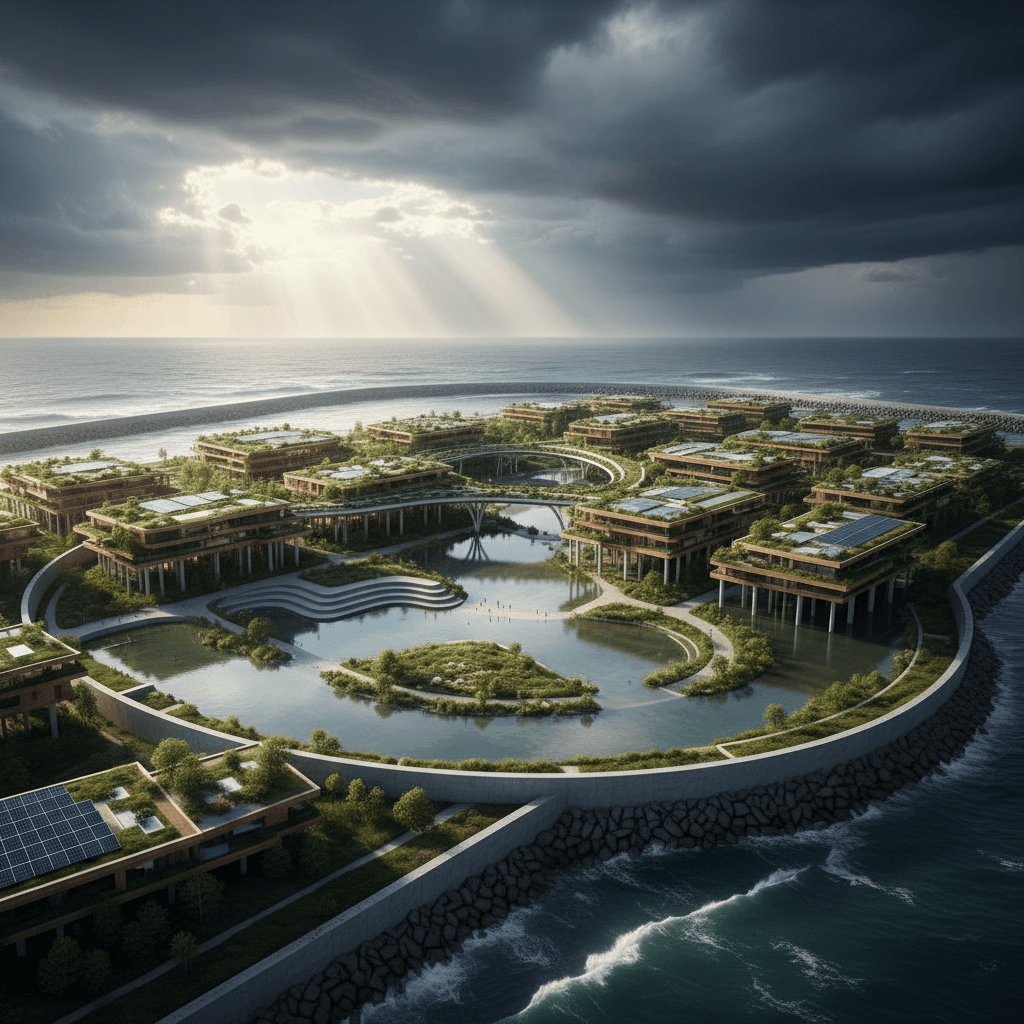
Why performance-based codes are now a climate issue
The U.S. has already crossed 20 separate billion-dollar weather disasters for 2025, with insurers warning that many regions are becoming “uninsurable.” That’s not a future problem for someone else; it’s a planning and capital problem for every city, campus, REIT, and utility that needs resilient, low-carbon infrastructure today.
Most communities are still trying to manage 21st-century climate risk with 20th-century building rules. Prescriptive codes were written for a world with relatively stable weather, slower technology cycles, and an assumption that yesterday’s hazards were a decent proxy for tomorrow’s. That world is gone.
Here’s the thing about climate-resilient, green buildings: you don’t get them just by adding solar panels and thicker insulation. You get them by setting clear performance outcomes — for safety, energy, emissions, and recovery time — and then letting engineering, materials science, and AI-powered green technology do their work. That’s exactly what performance-based building codes are designed to do.
This post looks at why performance-based codes matter for climate resilience, how they intersect with green technology and AI, and what practical steps cities and asset owners can take right now.
Prescriptive vs. performance-based codes: what actually changes?
Performance-based codes flip the question from “What must I build with?” to “How must this building perform?”
Traditional prescriptive codes specify:
- Exact materials and assemblies (e.g., type of fasteners, thickness of sheathing)
- Approved methods of construction
- Predefined solutions to known hazards
They’re predictable and easy to inspect, but they struggle with:
- New climate realities (higher flood levels, compound heat and smoke, back-to-back events)
- New materials (mass timber, advanced composites, low-carbon concrete)
- New tools (AI-based design optimization, digital twins, parametric modeling)
- Hyperlocal differences (a hilltop parcel vs. one in a flood basin only 500 meters away)
Performance-based building codes, by contrast, define outcomes like:
- Withstand X mph winds without structural failure
- Maintain life safety during a 500-year flood
- Limit downtime to less than Y days after an event
- Keep indoor temperatures below Z °F during a 3-day grid outage
Then they say: if your design proves it meets or exceeds those outcomes — via modeling, testing, and certification — it’s compliant.
The result is a framework that’s stricter on results, but more flexible on methods. That’s exactly what a fast-moving green technology landscape needs.
Why performance-based codes are a climate resilience tool
If you care about climate resilience, you should care about performance-based codes. They do three things prescriptive codes struggle with.
1. They keep pace with changing hazards
Climate hazards aren’t just more frequent; they’re different in pattern and intensity. We’re seeing:
- 10–13 inch overnight rain events that overwhelm “100-year storm” assumptions
- Longer wildfire seasons, with embers traveling miles ahead of flame fronts
- Heat waves colliding with grid stress and air quality alerts
Performance-based codes allow communities to:
- Set design criteria using updated climate projections, not just historical averages
- Tailor standards by microclimate and parcel, rather than applying a blunt regional rule
- Continuously revise performance thresholds as new risk data and science emerge
The reality? It’s simpler than it sounds: you’re just updating inputs and targets, not rewriting every construction detail in your codebook.
2. They align safety, carbon, and operating cost
Most cities treat resilience, emissions, and operating cost as three separate work streams. That’s a mistake. When you write performance requirements around:
- Maximum annual energy use per square foot
- Peak demand limits during extreme weather
- Safe indoor conditions during outages (temperature, air quality)
…you create a natural pull for:
- High-performance envelopes and windows
- Onsite renewables and storage
- Smart building management systems
- Low-carbon materials with verified durability
That’s where green technology and AI show up: simulating thousands of design options to meet multiple targets — safety, carbon, and lifecycle cost — at once.
3. They protect community balance sheets
Updated, performance-based codes are not just about saving lives; they’re about:
- Lower catastrophe losses
- More stable insurance markets
- Better ratings and access in the bond market
Communities that can demonstrate strong, enforced resilience standards are already seeing:
- Preferential insurance terms where underwriters trust the risk profile
- More appetite from infrastructure investors who need long-term stability
If your city is staring at shrinking federal disaster support, higher reinsurance costs, and aging infrastructure, strong performance-based codes are one of the few levers you fully control.
How AI and green tech make performance-based codes practical
Performance-based codes used to be seen as “only for mega-projects” because proving performance required expensive modeling and unique engineering. That’s changed.
AI, automation, and digital tools are what make performance-based resilience scalable.
AI-driven risk modeling and design
Today, cities, developers, and utilities can use:
- AI-enhanced climate risk models to generate parcel-level flood, wind, and heat projections
- Parametric design tools to iterate thousands of structural and envelope configurations against those hazards
- AI-assisted energy models that optimize for both resilience and carbon reduction
For example, a coastal multifamily project can:
- Pull updated flood depth projections and storm surge modeling
- Design elevated podiums, floodable ground floors, and water-resistant materials
- Pair that with a high-performance envelope, heat pumps, and battery storage
- Use AI optimization to hit targets for downtime, energy use, and emissions simultaneously
Under a prescriptive code, much of that innovation would be forced into one-off variances. Under a performance-based code, it’s the expected path.
Digital twins for ongoing performance
Resilience isn’t a one-time design exercise. Buildings age, usage patterns shift, and weather baselines keep moving.
Digital twins — data-rich virtual models of real assets — are a natural partner for performance-based codes:
- They monitor real-time performance against code targets (energy, structural health, indoor climate)
- They simulate future events (multi-day blackout, 500-year storm) to test readiness
- They help owners prioritize retrofits that close the gap between design intent and reality
This approach turns code compliance from a box checked at occupancy into a living contract between the asset, the community, and the climate system around it.
What cities and asset owners can do right now
Most communities won’t flip a switch from prescriptive to fully performance-based codes overnight. But there’s a practical, staged path forward.
Step 1: Identify the highest-risk, highest-impact categories
Start with asset classes where climate risk and social impact are both high:
- Hospitals, schools, and emergency shelters
- Water and wastewater facilities
- Data centers and critical telecom hubs
- Large multifamily and senior housing
For these, define clear, measurable outcomes like:
- Maximum downtime allowed after a defined hazard event
- Minimum passive survivability (how long safe indoor conditions can be maintained without power)
- Energy and emissions intensity thresholds
Step 2: Write performance targets that invite innovation
When you frame requirements, write them so they encourage technology-neutral solutions. For example:
- Instead of: “Install backup diesel generators sized to X kW”
- Use: “Maintain critical loads for 72 hours during grid outage without exceeding Y kg CO₂ per hour.”
That simple change opens the door for:
- Solar + storage microgrids
- Vehicle-to-building backup from electric fleets
- Advanced load management and efficiency measures
This is where green technology and AI-backed planning teams can bring creative, bankable options to the table.
Step 3: Support code officials and practitioners
Performance-based systems demand more from everyone involved:
- Code officials need training, tools, and access to climate risk expertise
- Designers and builders need streamlined approval pathways for alternative solutions
- Communities and small owners need technical assistance and financing to meet higher standards
Practical support mechanisms include:
- Standardized performance templates and checklists
- Regional pools of independent reviewers to validate complex modeling and testing
- Incentives or fast-track permitting for projects that exceed baseline resilience and energy targets
Step 4: Tie performance to finance and insurance
Resilience standards become real when money is on the line. Cities and owners can:
- Work with insurers to recognize performance-based code adoption in pricing
- Embed resilience performance criteria in green bonds and sustainability-linked loans
- Require post-occupancy performance reporting for subsidized or publicly supported projects
Done well, the message to the market is clear: if you build to higher, verified performance, your capital and operating costs will reflect that reduced risk.
Common objections — and why they don’t hold up
You’ll hear pushback on performance-based codes. Some concerns are valid, but most are solvable.
“They’re less safe because they’re flexible.”
Reality: performance-based codes can be safer, because they:
- Use current hazard data instead of outdated return periods
- Require explicit proof that performance targets are met
- Allow adaptation as conditions change
Flexibility doesn’t mean lower standards; it means smarter standards.
“They’re too complex for smaller jurisdictions.”
This is where regional collaboration and standardized toolkits matter. Smaller cities can:
- Adopt model performance criteria developed at state or regional levels
- Share third-party reviewers or technical support
- Start with a hybrid approach (prescriptive base + performance path for key assets)
Technology helps here, too. Cloud-based modeling tools and AI assistants are far cheaper than adding a full-time in-house resilience engineer in every town hall.
“They’ll slow down development.”
If codes are badly designed and processes are unclear, yes, they can cause friction. But many developers already run energy, structural, and risk models to satisfy lenders, insurers, and ESG reporting.
Aligning code requirements with that work reduces duplication. Add carrots — like expedited permitting or density bonuses for higher performance — and the net effect can actually be faster, cleaner, more resilient development.
Where performance-based codes fit in the green technology story
Most companies get this wrong. They treat green technology as a menu of cool products — solar, batteries, smart thermostats, EV chargers — and then wonder why their climate risk and insurance costs keep climbing.
Performance-based codes force a better question:
“What does this building, campus, or district need to survive and function in the climate of 2035, while cutting emissions today?”
From there, green technology and AI become means to meet quantified targets, not ends in themselves.
For city leaders, utilities, and real estate owners trying to reduce emissions, manage climate risk, and still make the spreadsheets work, performance-based codes are a structural ally:
- They create a stable, predictable demand signal for high-performance, low-carbon solutions
- They legitimize innovation by baking it into the rules of the game
- They provide a language investors, engineers, and policymakers can share
This matters because the next decade of climate adaptation in the built environment won’t be driven mainly by new subsidies or one-off pilot projects. It’ll be driven by rules, standards, and contracts that reward real performance.
If you’re responsible for climate strategy, ESG, planning, or asset management, start asking now:
- Where are we still relying on outdated prescriptive assumptions about hazards?
- Which assets absolutely must perform under stress, and what targets do we have for them?
- How can we use AI, digital twins, and green technology to document and deliver that performance?
There’s a better way to build climate-resilient communities — and it starts with rewriting not just our building details, but our expectations.