OX2’s 1.2GW wind farm and 400MWh battery in Western Australia show how co-located, AI-optimised green energy assets can stabilise grids and unlock new value.
Why a 1.6GWh Wind-Plus-Battery Hub in WA Is a Big Deal
Western Australia’s South West Interconnected System (SWIS) is racing toward higher shares of wind and solar, but the physics of the grid haven’t changed: supply and demand still need to match every second. That’s exactly where OX2’s new Dinner Hill Wind Farm and Harvest Battery Energy Storage System (BESS) come in.
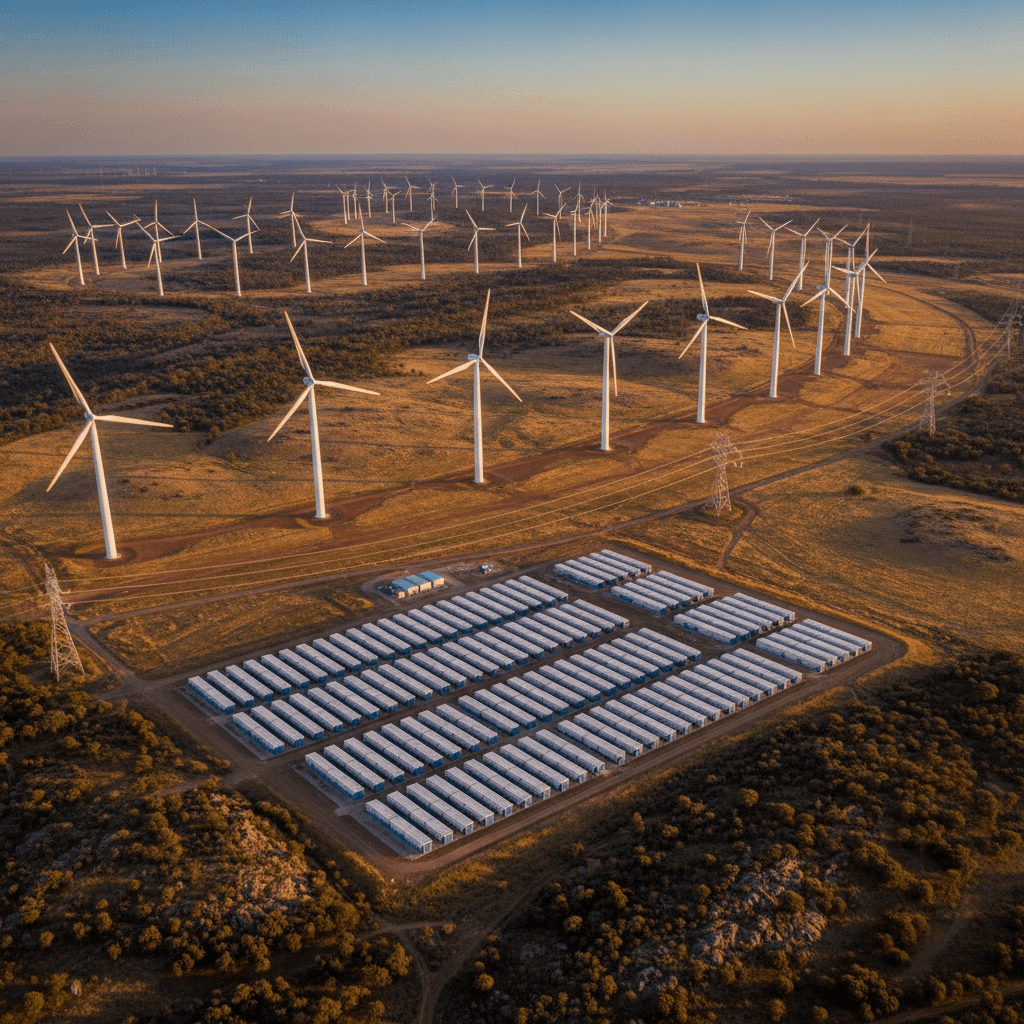
OX2 has acquired a 1.2GW wind farm co-located with a 100MW / 400MWh battery, plugged into one of the most important transmission corridors in the state. For anyone serious about green technology, this isn’t just another project announcement. It’s a live example of how large-scale renewables, storage and intelligent control are starting to reshape power systems — and business models.
This matters because the next wave of clean energy growth won’t be driven by solar panels alone. It’ll be driven by smart, integrated assets that can respond to grid conditions in real time, guided by algorithms and data.
In this article, I’ll unpack what OX2 is actually building in Western Australia, why co-locating wind and storage is such a strong move, where AI and digital optimisation fit in, and what this means for businesses looking to ride the green technology wave.
Inside the OX2 Western Australia Project
The core of the story is simple: OX2 has bought into a massive renewable hub in Western Australia and is turning it into a flexible, grid-supporting asset.
The Dinner Hill Wind Farm
Dinner Hill is designed as a 1.2GW onshore wind farm, with about 160 turbines spread over 32,500 hectares near Hill River in the Shire of Dandaragan.
Key technical points:
- Capacity: up to 1.2GW of wind
- Turbine count: ~160 utility-scale turbines
- Location: Hill River, northeast of Badgingarra, WA
- Grid connection: direct tie-in to the 330kV Neerabup–Eneabba transmission line via a terminal station inside the project area
Connecting directly into a 330kV backbone line is a big advantage. It means the wind farm isn’t just a remote asset; it’s embedded into the main SWIS trunk, with better access to high‑demand zones like Perth.
Subject to environmental, heritage and grid approvals, OX2 expects:
- Harvest BESS operations: targeted for 2029
- Dinner Hill Wind Farm operations: targeted for 2032
That might sound far off, but for multi‑gigawatt infrastructure on a constrained grid, that’s a realistic timeline.
The Harvest Battery Energy Storage System
Right next to the wind farm sits the Harvest BESS:
- Power rating: 100MW
- Energy capacity: 400MWh
- Duration: 4 hours
- Project area: ~1,630 hectares overall
- Battery footprint: ~4.2 hectares of that area
- Grid: connected into the SWIS alongside the wind farm
Four-hour storage is a deliberate choice. It’s long enough to:
- Shift wind energy from low-value to high-value hours
- Support evening peaks
- Provide firmed capacity into the grid
And while 400MWh is small relative to 1.2GW of wind, that’s fine. The battery isn’t there to store everything; it’s there to smooth volatility, provide frequency services, and turn intermittent output into dispatchable, tradable energy.
OX2’s Australian VP, Stephen Symons, calls out two main goals:
supporting the state’s energy transition and regional economic development through local investment and jobs.
That might sound like standard corporate language, but it’s directionally right. Large projects like this typically mean hundreds of construction jobs, new local supply chains and long-term operations roles.
Why Co-Locating Wind and Battery Storage Works So Well
Co-locating wind and battery storage on the same grid connection is one of the smartest ways to build large-scale renewables right now.
Shared infrastructure, lower costs
When you combine wind and storage behind a single connection point, you:
- Share grid connection costs (studies, substations, protection equipment)
- Reduce land and permitting costs per MW
- Streamline project approvals and stakeholder engagement
That’s exactly what’s happening here: Dinner Hill and Harvest BESS are both plugging into the same 330kV corridor feeding the SWIS. One terminal station, two complementary assets.
Smoothing a variable resource
Wind is powerful but spiky. Short gusts, sudden lulls, and fast ramps give grid operators a headache. A co-located BESS can respond in milliseconds to:
- Smooth rapid changes in output
- Hold back or release energy to avoid network congestion
- Maintain a fixed export profile when required
For a system like the SWIS, which is seeing rising shares of variable renewables, that’s not a nice-to-have; it’s core grid stability.
New revenue streams and smarter trading
From a commercial perspective, this pairing opens up more flexible options:
- Arbitrage: charge during low-price, high-wind hours; discharge when prices spike
- Frequency regulation & ancillary services: respond instantly to grid frequency deviations
- Firmed offtake: offer retailers or large users a more predictable supply profile
This is where green technology blends straight into finance and risk management. Paired assets can be optimised as a single portfolio, using software that continuously balances grid needs, price signals and technical constraints.
The Role of AI and Digital Control in Projects Like This
Here’s the thing about big wind-plus-storage projects: hardware alone doesn’t deliver full value. The real performance edge comes from software and AI-driven optimisation.
How AI improves wind-plus-BESS operations
For a co-located project like Dinner Hill and Harvest BESS, AI and advanced analytics can:
- Forecast wind output using weather models and turbine data with high temporal resolution
- Predict market prices on the SWIS based on demand, weather, outages and trends
- Optimise dispatch: decide when to charge, discharge or curtail to maximise revenue while staying within grid and contract limits
- Manage asset health, spotting early signs of battery degradation or turbine issues before they become expensive failures
In practice, that looks like a control system constantly running “what if” scenarios:
- If the wind ramp at 5pm looks strong and prices are forecast to spike at 7pm, hold some energy in the battery.
- If the grid frequency sags, inject power instantly for frequency control and get paid for those services.
That’s green technology in its purest form: clean hardware, guided by smarter software.
Why this matters for businesses and investors
If you’re an energy user, investor or developer, AI-optimised assets offer:
- Higher revenue per MW installed
- Lower operational risk through predictive maintenance
- Better bankability, because lenders increasingly like projects with strong digital control and clear dispatch strategies
OX2 already runs a global portfolio north of 25GW across 11 European markets. Bringing that experience and data into Australia, combined with EQT’s capital backing since 2024, means these assets aren’t being run on guesswork.
What This Means for Western Australia and the SWIS
The SWIS is a fascinating testbed for green technology: it’s relatively isolated, heavily dependent on a limited set of generators, and rapidly adding renewables.
Strengthening a constrained grid
By 2029–2032, when Harvest BESS and Dinner Hill are expected online, the SWIS will need:
- More firm capacity to back up solar and wind
- More fast-acting response to manage disturbances
- Better voltage and frequency control as synchronous generation retires
A 100MW / 400MWh battery with 4-hour duration can:
- Support evening demand peaks
- Stabilise frequency during large disturbances
- Reduce renewable curtailment by shifting energy in time
The wind farm’s scale — 1.2GW — is large enough to materially change the supply mix in WA. With co-located storage, this doesn’t just mean “more renewables”; it means more controllable renewables.
Local communities and long-term value
OX2 plans to begin community engagement in late 2025, working with:
- Local communities
- Dandaragan Shire Council
- Traditional Custodians
Done properly, that’s where projects like this move from “industrial facility” to “regional anchor”. Strong projects usually include:
- Community benefit funds
- Education and training initiatives
- Local procurement commitments
From a green technology perspective, that local integration matters. It helps build the social license needed for the next wave of storage, EV charging, and behind‑the‑meter solutions we’ll cover elsewhere in this series.
How This Fits the Bigger Green Technology Story
OX2’s Dinner Hill and Harvest BESS aren’t happening in isolation. They’re part of a broader Australian energy storage surge and a global trend toward hybrid clean energy assets.
Across Australia right now you can see the pattern:
- Multi‑hundred‑MWh batteries attached to solar farms
- Hybrid projects at mines combining renewables and storage
- State-owned and private developers planning multi‑GWh hubs
For our Green Technology series, this project checks several important boxes:
- Clean generation: 1.2GW of wind displacing fossil power
- Flexible storage: 400MWh of battery capacity providing system services
- Smart control: scope for AI and digital optimisation to turn a variable asset into a reliable one
The reality? The energy transition is increasingly about systems, not single technologies. Wind, solar, batteries, software, markets, and community engagement all have to line up.
If you’re:
- A business user of energy, this signals more opportunities for green PPAs linked to firmed renewable supply.
- An investor or developer, it underlines the value of co-location and digital control in project economics.
- A technology provider, it’s another strong signal that AI, forecasting, optimisation and asset management tools are now central to utility‑scale projects.
Where to Go From Here
Most companies still treat renewables as a simple procurement problem: sign a contract, tick the “green” box. Projects like Dinner Hill and Harvest BESS show a better way: integrated generation and storage, guided by smart software, designed to work with — not against — the realities of the grid.
If you’re planning your own sustainability or energy strategy, the takeaway is clear: look for (or build) assets that combine clean hardware with intelligent control. That’s where reliability, cost savings and emissions reduction actually line up.
The next few years on the SWIS will be a useful preview of how far this approach can go. The question now is how quickly businesses and institutions choose to plug into that future, rather than waiting on the sidelines.