India’s 1,200MWh BESS and 50MW solar hybrid in Andhra Pradesh signal storage moving from concept to core grid infrastructure, backed by strong policy and AI.
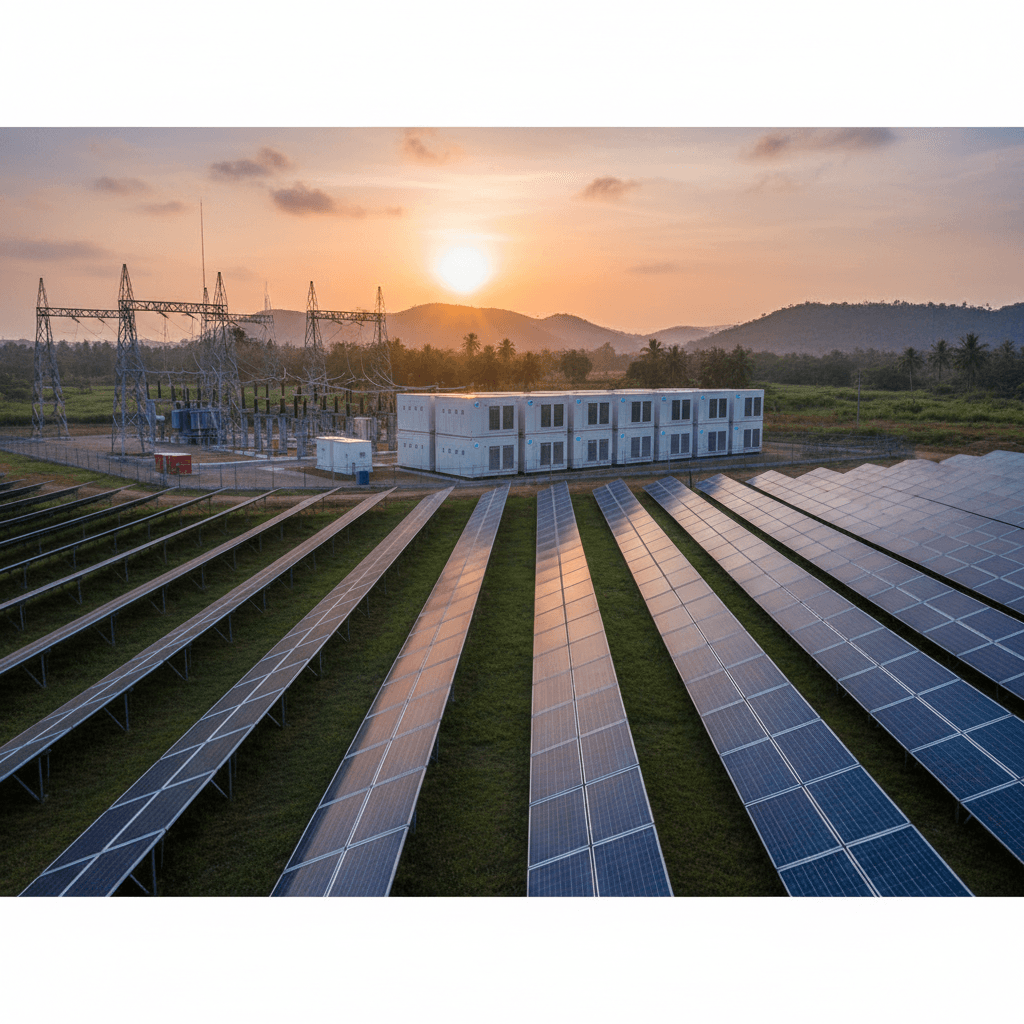
India’s grid planners say the country will need 411GWh of energy storage by 2032. By mid‑2025, only 490MWh was actually installed.
That gap is huge—and it’s exactly why the new 1,200MWh battery energy storage system (BESS) and 50MW solar hybrid project in Andhra Pradesh matters far more than a routine policy headline. It’s a glimpse of how large-scale storage, smart policy, and green technology are finally starting to line up.
This post breaks down what the SECI–Andhra Pradesh agreement really signals, how it fits into India’s broader storage strategy, and what it means for utilities, developers, and businesses looking to ride the next wave of clean energy and AI‑enabled grid intelligence.
What SECI and Andhra Pradesh Just Agreed To—and Why It’s Big
The core of the announcement is simple: Solar Energy Corporation of India (SECI) and the Government of Andhra Pradesh have agreed to develop:
- A 1,200MWh grid‑scale BESS at Nandyal, and
- A 50MW hybrid solar plant
Both will be developed under a CAPEX model, with SECI taking on the entire investment.
That structure matters. When a central agency under the Ministry of New and Renewable Energy (MNRE) carries the capital burden, it:
- De‑risks the project for the state
- Creates a bankable, replicable template for other states
- Signals to private developers and OEMs that serious public money is backing large‑format batteries
From a green technology perspective, this is not just about adding another solar plant. It’s about building storage into the grid’s DNA so renewables can move from “as available” to firm, dispatchable power.
Why 1,200MWh in Andhra Pradesh is strategically placed
Andhra Pradesh is already a major renewables state, with strong solar and wind potential and a growing industrial base. Adding a 1,200MWh BESS at Nandyal does three things:
- Soaks up daytime solar surpluses that would otherwise be curtailed
- Flattens steep evening demand peaks, improving reliability
- Creates a real‑world testbed for AI‑driven grid optimisation, price arbitrage, and ancillary services
For a country where new BESS additions in H1 2025 were just 48.4MWh—down 74% from H1 2024—this single project is a step change.
How This Fits Into India’s 2032 Storage Roadmap
India’s Central Electricity Authority (CEA) has laid out a clear number: by 2032 the system will need 411.4GWh of storage to manage daytime solar oversupply and sharp evening ramps.
- 236.2GWh is expected from battery energy storage systems (BESS)
- 175.2GWh from pumped hydro energy storage (PHES)
Right now, the country is barely scratching the surface.
From tenders to reality: 171GWh and counting
Since 2018, India has held tenders amounting to 171GWh of storage‑related capacity, covering:
- Standalone large‑scale BESS
- Solar‑plus‑storage hybrids
- Firm Dispatchable Renewable Energy (FDRE) contracts
- Round‑the‑Clock (RTC) renewable power supply
Tenders aren’t the same as operating assets, but they’re a leading indicator of where capital and policy are headed. According to the India Energy Storage Alliance (IESA), tendering plus direct government support is already reshaping the market.
The Andhra Pradesh projects slot into this landscape as a flagship CAPEX‑backed deployment that can de‑risk future private‑sector initiatives.
The June 2025 mega tender sets the tone
In June 2025, SECI issued a tender for 1,200MW of solar PV paired with 600MW/3,600MWh of storage on the ISTS network. Developers will:
- Build, own, and operate the assets
- Sign 25‑year PPAs with SECI
Put that next to Andhra’s 1,200MWh BESS and you see the pattern:
India is shifting from “pilot projects” to portfolio‑scale storage, embedded in long‑term contracts.
This is where serious private capital and green technology providers start paying attention.
Why BESS + Solar Hybrids Are the New Backbone of a Green Grid
The reality: you can’t run a high‑renewables grid without storage. Solar peaks when demand doesn’t, and demand peaks when solar doesn’t. BESS fills that gap with millisecond‑fast response.
What a 1,200MWh BESS can actually do
Depending on configuration, a 1,200MWh system could, for example:
- Supply 300MW for 4 hours, easing early‑evening peaks
- Or 150MW for 8 hours, covering long ramps and overnight support
That’s enough to:
- Reduce reliance on expensive, polluting peaker plants
- Cut grid frequency deviations and improve stability
- Provide ancillary services like frequency regulation and spinning reserve
When paired with 50MW of solar, the hybrid system can:
- Store surplus mid‑day solar that would otherwise be curtailed
- Offer firmed green power blocks into the market, not just raw solar
- Improve the project’s capacity factor and revenue certainty
Where AI and smart software come in
Large BESS projects only deliver full value when their operation is smart. That’s where AI and data‑driven optimisation—a core theme in green technology—step in.
AI‑enabled energy management systems can:
- Forecast solar generation and demand more accurately
- Optimise charge/discharge schedules against market prices and grid needs
- Predict battery degradation and schedule maintenance to extend asset life
I’ve seen this shift firsthand: projects that treat software as an afterthought leave 10–30% of potential revenue on the table. Projects that treat analytics and forecasting as core infrastructure turn storage from a cost line into a strategic asset.
Policy Architecture: CAPEX, Tariffs, and Pumped Hydro
India’s storage story isn’t only about lithium‑ion. It’s about matching use‑cases to the right technologies, supported by the right policy tools.
CAPEX mode vs tariff‑based bidding
The Andhra Pradesh projects are CAPEX‑driven: SECI funds and owns, the state benefits from capacity and reliability. Elsewhere, SECI is pushing tariff‑based competitive tenders, where developers bid to supply:
- Peak power from BESS
- Peak power from pumped hydro plants
This dual track matters:
- CAPEX projects help build anchor infrastructure and local supply chains
- Tariff projects unleash private capital and innovation on top of that base
SECI’s upcoming stakeholder discussions on pumped hydro peak power tenders will refine how storage is priced and contracted—crucial to building the 175GWh+ of PHES India is counting on.
Where pumped hydro and batteries each make sense
Think of it this way:
- BESS is ideal for:
- Fast response (seconds to minutes)
- 1–6 hour storage
- Locational flexibility near demand centers
- PHES excels at:
- Long‑duration storage (8–24+ hours)
- Seasonal balancing
- Very large energy capacities at low marginal cost
The Andhra Pradesh BESS doesn’t compete with pumped hydro—it complements it. Short‑ and medium‑duration batteries stabilize daily operations, while pumped hydro will take care of long, deep system needs.
What This Means for Developers, Utilities, and Businesses
For anyone working in clean energy, smart cities, or sustainable industry, this agreement is a signal: grid‑scale storage has moved from concept to procurement to concrete.
For project developers and OEMs
This is a good moment to sharpen your storage strategy:
- Align offerings with Indian tender typologies: standalone BESS, hybrid renewables, FDRE, RTC
- Build capabilities in AI‑driven energy management, not just hardware
- Prepare for both central CAPEX projects and tariff‑based bids
Most companies underestimate how quickly policy learning curves flatten. The states watching Andhra Pradesh today will be issuing their own tenders tomorrow.
For utilities and grid operators
The Andhra Pradesh projects offer a blueprint for:
- Structuring hybrid PPAs that pay for both energy and flexibility
- Embedding clear roles for BESS in ancillary services markets
- Using storage to delay or avoid transmission upgrades in constrained corridors
If you’re a utility planner, you should be building internal models that ask:
“What happens to our capex plan if we can count on 4–8 hours of flexible capacity from storage in this zone by 2030?”
That’s where the savings, and the emissions cuts, really start to add up.
For large energy users and city planners
Over the next decade, large grid‑scale systems like Nandyal’s will:
- Improve power quality and reduce outage risk
- Enable more corporate PPAs that include firmed green supply
- Create a more supportive environment for behind‑the‑meter storage at campuses, industrial parks, and data centers
This aligns perfectly with the broader Green Technology series theme: using digital tools and clean hardware to make cities, industries, and infrastructure more efficient and less carbon‑intensive.
Where India’s Storage Journey Goes From Here
The SECI–Andhra Pradesh agreement doesn’t single‑handedly close India’s 411GWh storage gap, but it does something just as important: it proves a model.
- A centrally backed 1,200MWh BESS shows that large‑format batteries are now seen as core infrastructure.
- A 50MW solar hybrid plant confirms that new renewable capacity is expected to come with storage attached, not bolted on later.
- CAPEX‑funded projects, backed by strong policy signals and smart software, open the door for private actors to move faster and with more confidence.
For anyone building or investing in green technology, the message is clear: storage is no longer optional. It’s becoming the quiet backbone that lets AI, solar, wind, and smart cities actually function at scale.
If you’re planning your next move in clean energy—whether that’s a utility‑scale project, an industrial microgrid, or a smart campus—now’s the time to ask:
“Where does storage fit in my plan—and how can I use digital intelligence to get the most from it?”
Because the places that answer that question well over the next few years won’t just meet climate goals. They’ll be the ones attracting investment, talent, and growth in the new energy economy.