Greece is turning a former coal region into a battery hub. Here’s what the 200MWh Amyntaio BESS reveals about green technology, storage, and AI-driven grids.
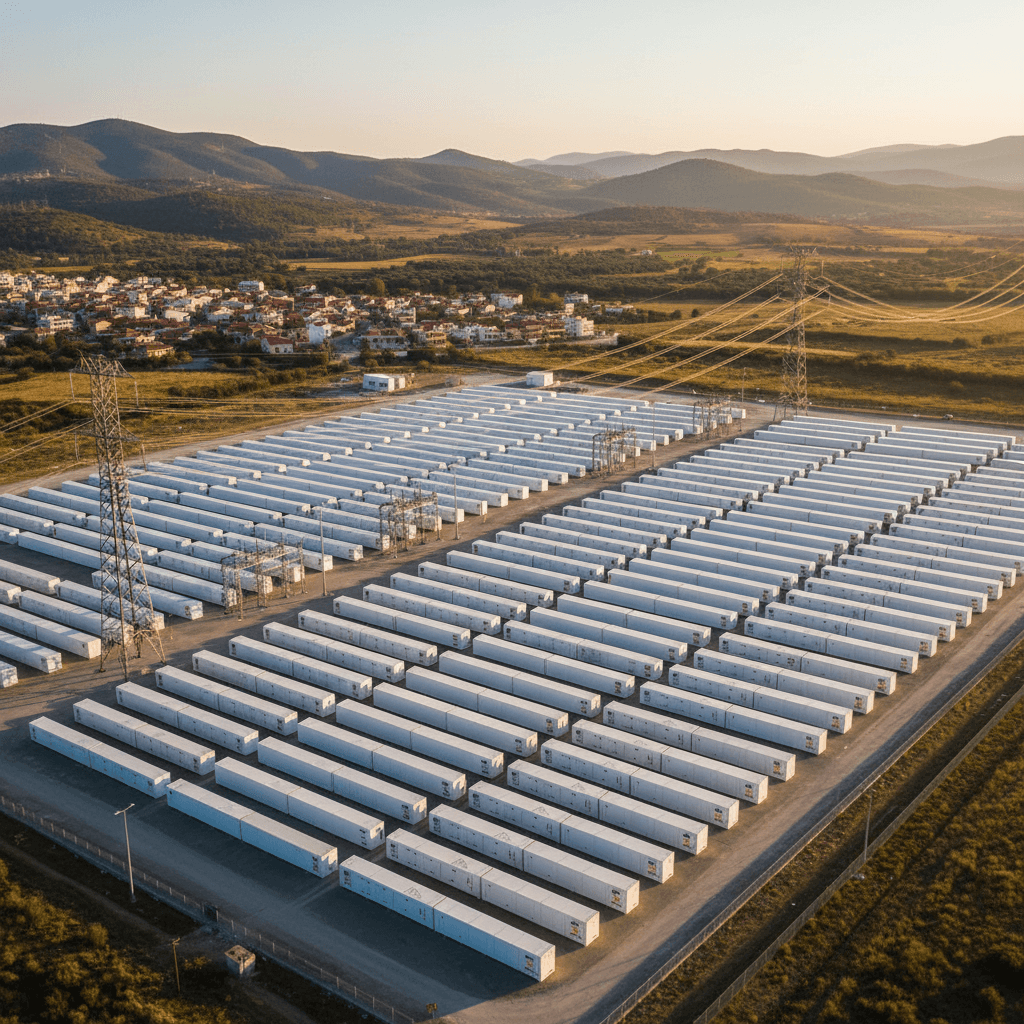
Greece just awarded a 200MWh battery project on the site of a retired coal plant. That’s not a render in a strategy deck. It’s concrete, steel, lithium iron phosphate – and a glimpse of how green technology is quietly rewriting Europe’s power map.
Most companies watching the energy transition focus on flashy new solar parks or offshore wind. The smarter ones pay close attention to what happens behind the scenes: grid flexibility, storage, and the data-driven control systems that make variable renewables behave like reliable power plants.
This matters because if you can’t store clean energy, you can’t scale it. Greece understands that now, and the Amyntaio battery energy storage system (BESS) shows how fast a coal-heavy region can pivot when policy, technology, and capital line up.
In this article, part of our Green Technology series, I’ll break down what’s happening in Western Macedonia, why the 50MW/200MWh Amyntaio BESS is more than just another project, and what it means for developers, investors, and any business betting on clean energy.
From lignite to lithium: what’s happening in Western Macedonia
Greece’s Public Power Corporation (PPC) spent decades running lignite coal plants in Western Macedonia. Now it’s pouring close to €6 billion into green energy in the same region, and storage is at the core of that shift.
The Amyntaio project is a clear example:
- Location: former 600MW coal-fired Amyntaio thermal power plant site
- Size: 50MW output, 200MWh usable energy (4-hour duration)
- Supplier: Trina Storage (the storage arm of Trinasolar)
- Technology: lithium iron phosphate (LFP) batteries in
Elementa 2containers - Role: grid services, capacity adequacy, renewable integration
The coal plant once provided baseload power. The new BESS will provide flexible capacity: fast response, short bursts of power, and precise control. Different job, same mission: keeping the lights on.
Here’s the thing about this kind of coal-to-storage conversion: it’s not just a PR story. It’s a smart asset move.
- Existing grid interconnections and substations are already in place.
- Industrial land use and local workforce are already energy-sector familiar.
- You replace high-emission baseload with low-emission flexibility, which is exactly what a renewables-heavy grid needs.
In Western Macedonia alone, PPC is building 860MW of BESS capacity plus two large pumped hydro projects at former mining sites (Kardia and South Field). That’s a textbook example of how a fossil region can become an energy storage cluster.
Inside the Amyntaio BESS: why the tech choice matters
The Amyntaio system isn’t just a box of batteries. It’s a tightly engineered grid asset designed for reliability, safety, and long-term performance.
What Trina Storage is supplying
Trina Storage is delivering a turnkey AC BESS package with a nameplate capacity of 244MWh, which nets out to 200MWh of operational capacity once you factor in usable energy, degradation margins, and system design.
The system includes:
- 60 Elementa 2 DC block battery cabinets (20-foot containers)
- 8 integrated PCS (power conversion system) + MV skid enclosures
- Long-term service agreement with 10-year performance and availability guarantees
Each Elementa 2 container provides around 4,073 kWh using Trina’s 306Ah LFP cells, with:
- Liquid cooling for tight temperature control and better lifetime
- Four layers of safety and threat detection, including:
- Honeywell Li-ion Tamer gas detection
- Automatic aerosol-based fire suppression
The result is a high-density, safety-first container that utilities are increasingly comfortable deploying at scale.
Why lithium iron phosphate (LFP) is the right call here
Choosing LFP chemistry over nickel-rich chemistries is a deliberate move for grid-scale projects:
- Thermal stability: lower fire risk, better for communities and regulators
- Longer cycle life: ideal for daily cycling in energy and ancillary markets
- Lower degradation rates: improves lifetime economics and reduces repowering frequency
For a coal-to-storage conversion in a politically sensitive region, the last thing anyone wants is a safety headline. LFP plus robust monitoring is exactly the kind of conservative, bankable choice that keeps financiers and regulators on board.
How this BESS will actually earn its keep
The Amyntaio system will provide several value streams:
- Frequency regulation: fast response to keep grid frequency within narrow bands
- Renewable integration: absorb excess solar/wind and release it when demand peaks
- Capacity adequacy: act as a dependable resource during stress events
From a revenue perspective, a 4-hour system like this is positioned for:
- Capacity mechanisms
- Ancillary service markets
- Arbitrage between low-price and high-price hours
The real unlock comes when you add AI-driven control and optimisation. With good forecasting and optimisation software, you’re not just reacting to markets; you’re predicting when to charge, discharge, or hold back, based on:
- Price curves
- Weather and renewable output
- System constraints and degradation costs
That’s where this project connects directly to the broader green technology + AI theme: storage hardware is the foundation, but smart algorithms are what maximise returns and grid value.
How Greece built a pipeline: policy, tenders, and clarity
Greece didn’t stumble into this. The storage market there has been built step-by-step through capital expenditure (capex) support schemes and regulatory reforms.
The key driver: RAEEY’s competitive BESS tenders, which have done three important things:
- Provided revenue certainty with long-term support payments of around €50,000 per MW per year.
- Clarified licensing and permitting, reducing entry risk for new developers.
- Standardised products (often 4-hour systems), which helps manufacturers plan capacity.
Since 2023, these tenders have awarded:
- 411MW of projects in the first auction
- 300MW in the second
- 189MW in the rerun third round (after a cancelled attempt due to unclear rules)
On top of that, independent power producers like Principia have already built large BESS assets, such as a 49MW / 127MWh project in Chalkidiki, one of the biggest operational systems in Greece right now.
The reality? This is what a functioning early-stage storage market looks like:
- The state de-risks initial projects.
- Developers and OEMs gain experience in a specific regulatory and grid context.
- The market gradually shifts from subsidy-backed to merchant and hybrid revenue models.
For developers and investors eyeing Greece—or similar markets in Southern and Eastern Europe—the playbook is clear:
- Track tender design and rule changes obsessively.
- Design projects around 4-hour duration and grid support use cases.
- Build local partnerships early (EPCs, advisors, aggregators, and optimisation providers).
Where AI and digital optimisation fit into this story
Battery hardware gets the headlines, but software and AI decide who makes money. That’s especially true as more gigawatts of BESS arrive on European grids.
For assets like Amyntaio and the broader PPC portfolio, AI-powered tools can:
- Forecast prices, renewables output, and demand with higher accuracy.
- Optimise dispatch across multiple value streams (energy, capacity, ancillary services).
- Manage degradation in real time, balancing profit vs. battery wear.
- Detect anomalies in performance before they become outages.
In practice, that looks like:
- Automated bidding into power markets, using models trained on historical price and weather data.
- Predictive maintenance that flags underperforming containers or PCS units before failure.
- Portfolio-level optimisation across hundreds of megawatts of storage, not just a single project.
If you’re building or financing BESS projects and you don’t have a clear digital strategy, you’re leaving money on the table. Hardware returns are already compressing; the edge is in software.
This is exactly why green technology today isn’t just panels, turbines, and batteries – it’s AI plus infrastructure working together.
What this means for developers, investors, and energy users
The Amyntaio project is one site in northern Greece, but the pattern is much bigger. Here’s how I’d read it if I were on different sides of the table.
If you’re a developer or IPP
- Look for coal and gas sites ripe for repowering with storage.
- Treat safety and community acceptance as non-negotiable design parameters.
- Build projects around 4-hour LFP BESS as a default in markets favouring capacity and flexibility.
- Invest early in digital optimisation rather than treating it as an afterthought.
If you’re an investor
- Focus on markets with clear tenders and capex support, like Greece, Italy, and parts of Eastern Europe.
- Prioritise sponsors with:
- Long-term service agreements
- Bankable OEMs
- Thoughtful repowering and end-of-life plans
- Ask direct questions about AI, dispatch strategy, and degradation modelling.
If you’re a large energy user or data centre operator
PPC is actively exploring 300MW-class data centre projects on former plant sites like Agios Dimitrios. Co-locating:
- Renewables
- Battery storage
- Large data loads
…on the same grid nodes is becoming a clear trend. It offers:
- Lower emissions per kWh consumed
- More predictable energy costs
- Potential new revenue streams from demand response and flexibility markets
For AI-heavy businesses, especially hyperscalers, this “green infrastructure campus” model is going to become a competitive differentiator.
Why Greece’s battery build-out matters for green technology
Amyntaio shows how fast a legacy coal region can become a battery and data infrastructure hub when policy, technology, and capital point in the same direction.
For the broader Green Technology story, the lesson is straightforward: the energy transition isn’t just about building more renewables. It’s about:
- Repurposing old assets instead of abandoning them.
- Using safe, bankable technologies like LFP-based BESS at scale.
- Layering AI and software on top to extract maximum value.
If you’re planning your own clean energy strategy—whether as a developer, investor, or large energy user—watch what’s happening in Western Macedonia over the next 2–3 years. It’s a real-world test case for how quickly a high-carbon region can pivot when storage, smart regulation, and digital optimisation come together.
The coal stacks are coming down. The batteries, wires, and algorithms are already on their way up. The only real question is how you position yourself in that shift.