Politicians can scrub the word “climate” from laws, but not from flood maps. Here’s how silent adaptation is reshaping risk — and where green tech fits in.
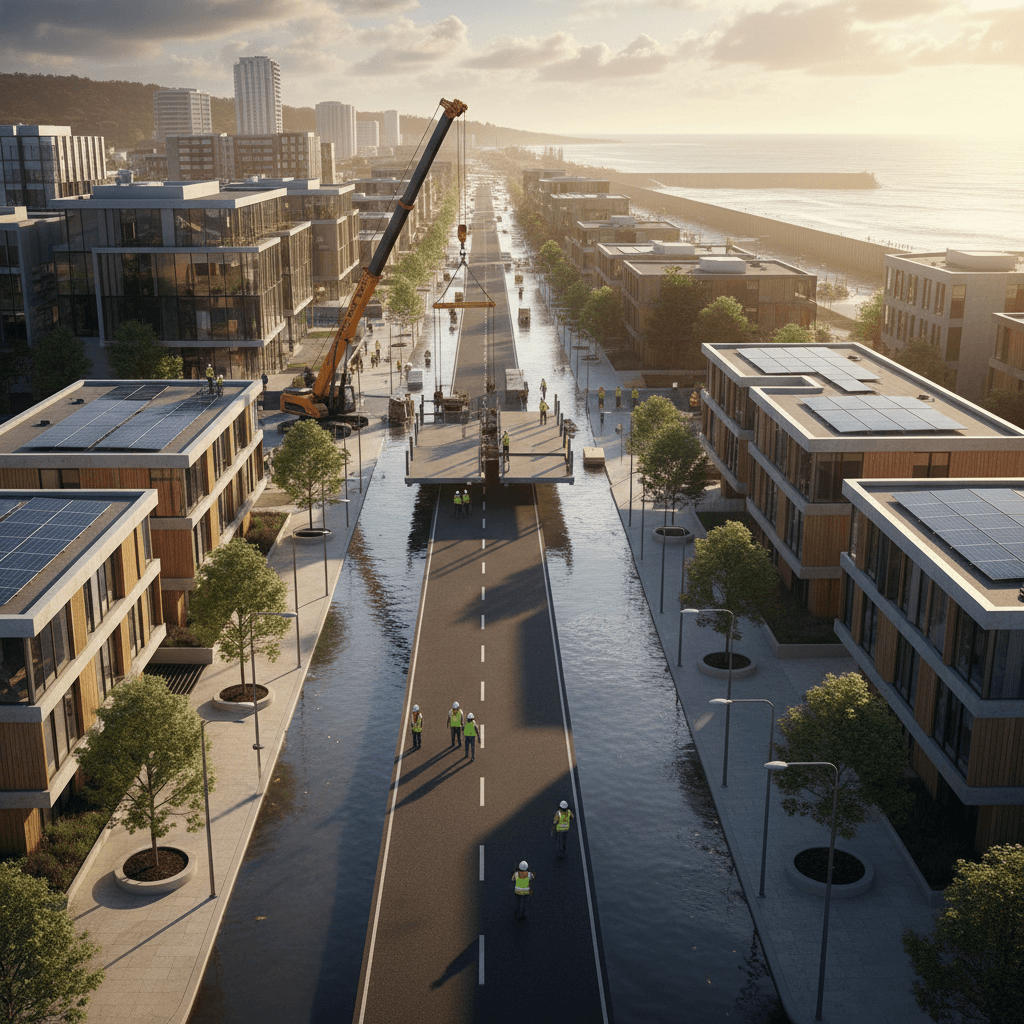
Most U.S. coastal roads, ports, and power plants were never designed for a world that’s 1.3°C hotter and still warming. Yet those same assets now sit in the crosshairs of floods, fires, and brutal heat — while a growing bloc of politicians tries to scrub the words “climate change” from laws and public websites.
Here’s the thing about “don’t say climate” politics: it doesn’t make the risk go away. It just makes adaptation more chaotic, more expensive, and more unfair.
This matters for anyone working in green technology, infrastructure, or sustainability. The demand for resilience solutions is exploding — even in places where leaders refuse to say why they’re needed. If you understand how to operate in that political fog, you’re several steps ahead.
In this post, I’ll break down how we ended up in a “Florida everywhere” moment, what silent adaptation looks like in practice, and how solution-builders can navigate the politics while still cutting emissions and winning projects.
What ‘Don’t Say Climate’ Politics Actually Looks Like
The U.S. is living through a strange split-screen reality:
- On one side, temperatures, floods, and fires are breaking records.
- On the other, national leaders are removing the phrase “climate change” from policy and public communication.
Florida is the template. While heat records and tidal flooding mount, state leaders have:
- Removed most references to climate change from state law.
- Framed climate policy as an attack from “radical green zealots.”
- Still quietly poured over $1 billion into a program called Resilient Florida to protect communities and infrastructure.
At the federal level, the pattern is similar:
- “Climate change” disappears from agency websites and communications.
- Long-term climate plans are repealed or gutted.
- Disaster and forecasting agencies lose funding — even as extremes worsen.
The reality? The hazards continue whether or not they’re named. So adaptation doesn’t stop. It just changes its label.
When climate becomes a banned word, it reappears as “flood safety,” “heat preparedness,” or “wildfire resilience” — but the engineering challenge is exactly the same.
For green tech companies, planners, and local governments, that’s both a headache and an opening.
Silent Adaptation: How Communities Prepare Without Saying “Climate”
Even in conservative or climate-skeptical regions, adaptation is already underway. The language shifts, but the projects are very real.
Concrete examples of “don’t say climate” adaptation
1. Florida’s coastal defenses
Miami Beach and towns in the Florida Keys are:
- Raising roads to deal with chronic tidal flooding.
- Upgrading pumps and drainage.
- Rebuilding seawalls and dunes.
These are climate adaptation projects in everything but name. On paper, they’re framed as flood mitigation or stormwater upgrades.
2. California’s wildfire “safety” programs
Utilities are:
- Burying power lines to reduce fire ignition risk.
- Hardening poles, transformers, and substations.
- Creating microgrids to keep critical services running during outages.
Again, the public label is wildfire safety and grid reliability, not “preparing for a hotter, drier climate.”
3. Post-disaster buyouts and relocations
After repeated floods, some counties and states are:
- Buying out homes in high-risk zones.
- Converting land into open space to absorb future floods.
- Supporting the relocation of entire neighborhoods.
These programs are sold as disaster recovery, not “managed retreat from climate impacts,” even though that’s what’s happening.
Why this framing exists
There are three main reasons:
- Political branding. Climate has become a tribal marker. Some politicians would rather approve a “storm resilience” bill than be seen backing “climate adaptation.”
- Short election cycles. Leaders prefer visible, near-term fixes (new pumps, new roads) over long-term emissions cuts whose benefits show up decades later.
- Public fatigue and cost anxiety. Many voters associate climate policy with higher energy costs. But they’ll back a specific, practical project that fixes a problem they can see.
If you’re in green tech or resilience planning, it’s smarter to work with this reality than to fight the wording on the front page of the bill.
Adaptation vs Mitigation: Why Framing Them as Opposites Is a Trap
A lot of climate debates still frame mitigation (cutting emissions) and adaptation (managing impacts) as rivals for funding and attention. That’s a mistake.
Here’s the blunt version:
- We can’t adapt our way through 3°C of warming.
- We also can’t mitigate fast enough to avoid the impacts already locked in.
The science backdrop
Current policies put the world on track for roughly 2.8°C of warming by 2100. We’ve already warmed about 1.3°C. That means:
- Heat waves, floods, droughts, and fires will continue to intensify.
- Infrastructure designed for a cooler climate will keep failing.
- The bill for disaster response will climb every year.
Adaptation is now unavoidable. But beyond a certain point, it becomes brutal and expensive.
“A 3-degree world is not a world in which adaptation can provide well-being and health. People are living in ruins and trying to survive.”
That’s the future you get if mitigation stalls.
Why adaptation work helps mitigation
In practice, adaptation often increases support for clean energy and efficiency rather than undermining it:
- Sticker shock: Once communities see the cost of raising roads, rebuilding seawalls, and relocating neighborhoods, the price tag of decarbonizing the grid looks pretty reasonable.
- Co-benefits: Many adaptation projects double as mitigation when done right — for example:
- Urban trees reduce heat and absorb carbon.
- Distributed solar plus storage improves grid resilience and cuts fossil fuel use.
- High-performance buildings stay habitable longer in heat waves and use less energy.
If you design solutions that do both, you future-proof your projects and your business.
Where Green Technology Fits: Practical Opportunity in a Messy Moment
For companies and organizations building green technology, this political landscape isn’t a barrier. It’s a map.
The demand is clear:
-
Cities need to keep people alive in extreme heat.
That points directly to:- Building performance upgrades
- Passive cooling materials
- Heat-resilient urban design (trees, cool roofs, shaded transit)
-
Utilities need a grid that doesn’t fail during storms and fires.
That favors:- Microgrids
- Storage
- Undergrounding and smart grid controls
-
Coastal communities need to protect or move critical infrastructure.
That requires:- Advanced flood modeling and sensors
- Nature-based defenses
- Modular, moveable facilities and housing
Whether the RFP says “climate resilience” or “storm hardening” is secondary. The technical problem to solve is the same.
How to position green solutions in ‘don’t say climate’ regions
If you’re trying to win projects or build partnerships in politically sensitive areas, language matters.
A few tactics that work:
-
Lead with risk, reliability, and savings
Phrases that tend to land well across the spectrum:- “Protecting critical infrastructure”
- “Reducing outage risk”
- “Avoiding future repair costs”
- “Keeping businesses open during disasters”
-
Translate climate impacts into local pain points
Instead of saying “climate change will increase flood risk,” say:- “Your 100‑year flood is now happening every 10–20 years.”
- “These roads will be underwater several times a year within the life of the bond you’re issuing.”
-
Pair adaptation with visible co-benefits
Projects gain support when people see multiple wins:- Shade trees that cut heat, improve health, and raise property values.
- Solar canopies that provide shade for parking and backup power for local services.
- Resilient housing that reduces insurance premiums and energy bills.
-
Use neutral or familiar labels when needed
You don’t have to hide your values. But you can be strategic with terminology in proposals:- “Resilience” instead of “climate adaptation”
- “Energy independence” instead of “decarbonization”
- “Risk reduction” instead of “climate response”
This isn’t about watering down the mission. It’s about matching the language of the buyer so good projects actually get built.
The Justice Gap: Who Pays for Adaptation — and Who Gets Left Behind
One of the ugliest aspects of “don’t say climate” politics is what it hides: a massive funding gap, especially for low-income communities and developing countries.
Recent assessments show:
- Developing countries will need hundreds of billions of dollars per year this decade for adaptation alone.
- Actual flows are a fraction of that — on the order of tens of billions.
Inside wealthy countries, the pattern repeats at a smaller scale:
- Wealthy coastal neighborhoods can raise roads, elevate homes, or move.
- Poorer communities often sit in the lowest-lying, hottest, or most polluted areas with the least political clout.
For anyone working on green technology or resilience, there are two takeaways:
-
Design for affordability and scalability.
The world doesn’t just need premium, bespoke resilience solutions. It needs:- Low-cost cooling solutions for renters.
- Plug-and-play solar + storage kits for small clinics and community centers.
- Modular flood protections for small towns, not just major cities.
-
Partner with organizations that prioritize equity.
That can mean:- Working with local nonprofits and community groups.
- Supporting workforce development so local residents benefit from resilience projects.
- Building financing models that don’t shut out low-income customers.
If adaptation is going to happen anyway, we might as well build it in a way that doesn’t deepen existing inequities.
What You Can Do Next: Turning Politics into Practical Progress
You can’t control who bans the word “climate” this year. You can control how you respond.
Whether you’re a city official, startup founder, engineer, or investor in green technology, three moves are especially powerful right now:
-
Anchor your work in real risk data.
Don’t argue climate as an abstraction. Model flood heights, outage hours, heat index days. Design around those numbers and show how your solution changes them. -
Build dual-purpose solutions: resilient and low-carbon.
If your product makes systems stronger and cleaner, you’re relevant in any scenario — and you’re harder to cut from budgets. -
Translate the science into the language your partners use.
If a client is comfortable saying “climate resilience,” use it. If they prefer “risk management” or “infrastructure reliability,” use that instead. The physics doesn’t care what’s on the cover page.
The political fight over the word “climate” will keep flaring up. But seawalls, microgrids, efficient buildings, and shaded streets aren’t culture-war symbols; they’re survival tools.
The sooner we treat adaptation and mitigation as one continuous project of redesigning how we live, the less this transition will cost — in money, lives, and political chaos.
And if you’re building the technologies that make that redesign possible, now is the time to be bold, practical, and very clear about the risks your work can reduce — whether or not anyone in the room says the word “climate.”