States are adopting climate superfund laws to make Big Oil pay for climate damage—and to fund real investments in resilience, justice, and green technology.
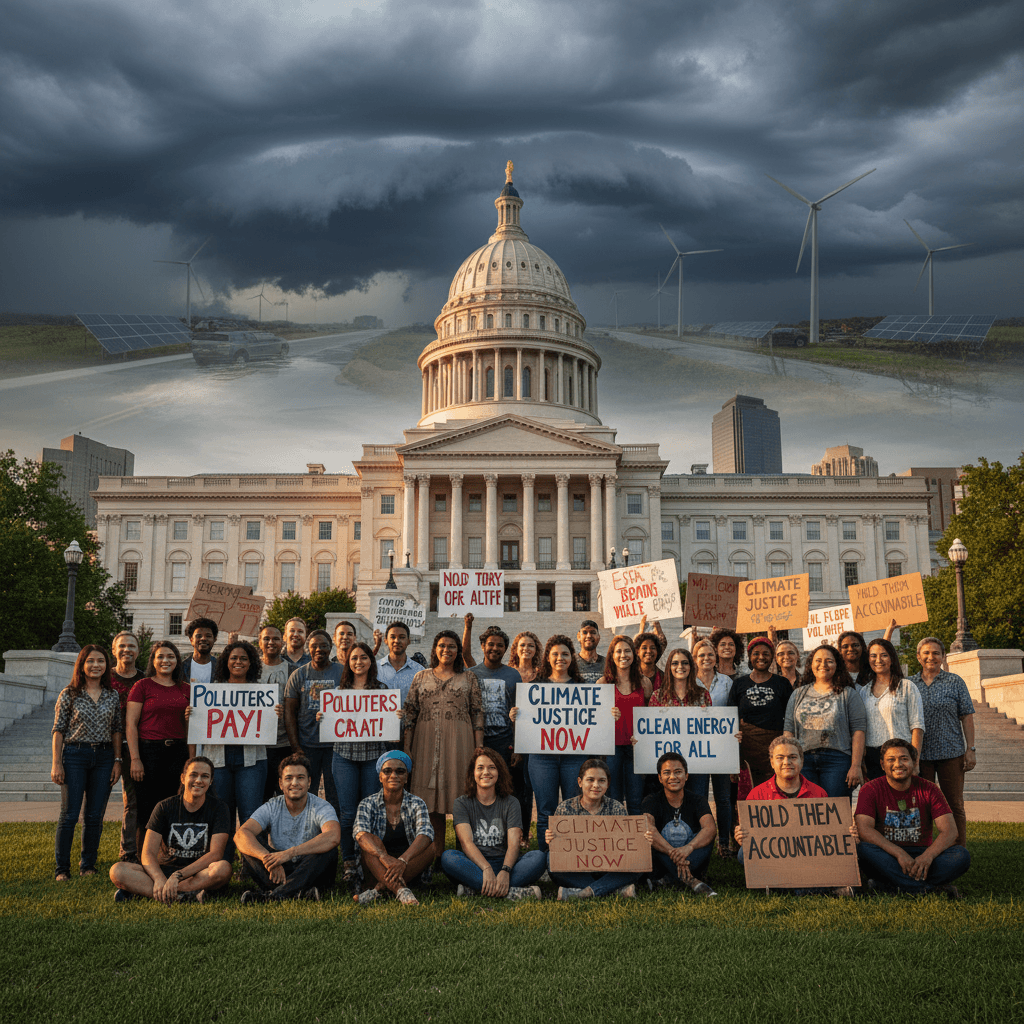
Why States Are Sending Big Oil the Bill
New Jersey is staring at a price tag of roughly $50 billion over the next 20 years just to deal with climate damage and resilience. That’s not an abstract projection; it’s busted culverts, flooded homes, washed-out roads, and higher insurance and energy bills for real people.
This matters because right now, taxpayers are covering almost all of that cost while the fossil fuel industry that caused the damage reports record profits. The Climate Superfund Act model flips that script: it treats climate damage like toxic pollution and makes major oil and gas companies pay a dedicated fee to help fund the cleanup.
New Jersey, Vermont, and New York are at the front of this shift. As green technology scales up and states look for ways to fund climate adaptation without blowing up their budgets, climate superfund laws are becoming one of the sharpest tools on the table.
What Is a Climate Superfund Law and How Does It Work?
A climate superfund law is a state policy that charges large fossil fuel companies a fee based on their historic greenhouse gas emissions and directs that money into a fund for climate-related costs.
Here’s the basic model New Jersey is considering, building on Vermont and New York’s laws:
- Who pays?
- The largest fossil fuel producers and refiners, like Exxon and Shell, that have emitted more than a certain threshold (New Jersey’s bill uses 1 billion tons of greenhouse gases since 1995).
- What are they paying for?
- Costs tied to climate change impacts within the state:
- Stronger stormwater systems and culverts
- Coastal defenses and flood protection
- Heat resilience (cooling centers, tree canopy, building upgrades)
- Disaster relief and rebuilding after storms, floods, and fires
- Costs tied to climate change impacts within the state:
- How much money are we talking about?
- In New Jersey’s case, an estimated $50 billion over 20 years.
- Where does the money go?
- A dedicated state fund. In New Jersey’s bill, over half of the funds are directed to overburdened communities—places that face high pollution, climate risk, and economic stress.
The key idea is simple: climate pollution is treated like a hazardous substance. If a company profited from selling products that caused that pollution, it shares responsibility for the damage.
Why States Are Acting Now While Washington Stalls
States are moving on climate superfund laws for one core reason: federal climate policy is stuck, but climate costs are exploding.
Bill McKibben’s point is blunt and accurate:
“We’re not getting anything done in Washington for the next year, so we need to do everything we can at the state and local level.”
The Budget Reality
Local officials are already paying to adapt to a hotter, wetter, more unstable climate:
- Departments of Public Works are upgrading 14-inch culverts to 18-inch and bigger because “the old book doesn’t work anymore.” Rainfall intensity has jumped.
- Towns are rebuilding the same bridges and roads after back‑to‑back floods.
- Coastal municipalities are scrambling to manage sea level rise and chronic tidal flooding.
There are only two options for who pays for this:
- Taxpayers and ratepayers, through property taxes, state budgets, and higher utility bills, or
- The companies whose products caused the damage, through legally mandated payments.
McKibben frames it in practical political terms:
“Who do you want to send the bill for repairing bridges and culverts and roads to—your taxpayers, or Exxon headquarters in Houston?”
For legislators worried about affordability, that’s the heart of the argument. Climate superfund laws don’t invent new costs; they reassign existing ones.
Answering the Big Question: Will This Raise Energy Prices?
No—climate superfund laws don’t control the price of oil or gas, and they don’t directly set electricity rates.
Here’s why the “this will raise your bills” talking point from the fossil fuel lobby doesn’t hold up:
- Oil is priced on a global market.
- A state-level fee on historic emissions doesn’t change the world oil price. A refinery in New Jersey doesn’t get to charge more for gasoline in just one state because it’s subject to a legal settlement or fee; it’s competing with global supply.
- The fee is backward-looking, not a new per-gallon tax.
- Climate superfund laws target past emissions and accumulated damage, not each new unit of fuel sold today.
- Real affordability pressure comes from climate damage itself.
- When floods destroy homes, insurance premiums jump.
- When heatwaves push the grid to its limits, utilities invest in emergency capacity and pass the cost to customers.
If anything, there’s a credible argument that weakening the political power of fossil fuel companies—by making them pay real money for their impacts—can make it easier and cheaper to:
- Build more renewable energy
- Upgrade grids for distributed solar and storage
- Expand public transit and electrification
All of those reduce long-term energy costs compared to staying hooked on volatile fossil fuel prices.
The Moral and Legal Case: Why “Make Polluters Pay” Is Sticking
The legal and ethical core of climate superfund laws is accountability: major oil and gas companies knew, decades ago, that their products would heat the planet and cause serious harm—and they chose to mislead the public instead of changing course.
Decades of internal research by fossil fuel companies showed:
- Their own scientists accurately projected warming trends
- They understood the link between burning fossil fuels and extreme weather, rising seas, and systemic risk
- They funded campaigns to cast doubt on climate science and delay policy
McKibben doesn’t mince words:
“It’s not that we shouldn’t just be sending these guys a bill. We should be putting them out of business. They’ve acted badly for a long time.”
That stance resonates because it feels fair:
- When a chemical company contaminates groundwater, we don’t expect residents to pay for the cleanup alone.
- When an industrial site leaves toxic waste, we use Superfund laws to recover costs from responsible parties.
Climate superfund laws extend that logic to greenhouse gases. If a handful of corporations earned hundreds of billions from products that destabilized the climate—while working to block alternatives—it’s reasonable that they fund the response.
How Climate Superfund Laws Advance Environmental Justice
Climate change doesn’t hit everyone equally. Low‑income neighborhoods, communities of color, and immigrant communities tend to sit in flood-prone areas, near refineries, or in urban heat islands with little tree cover.
New Jersey’s Climate Superfund Act explicitly addresses this by directing more than 50% of funds to overburdened communities.
What That Looks Like on the Ground
Here’s where those dollars can make a real difference:
-
Flood protection in frontline neighborhoods
Upgraded storm drains, raised roads, and floodable parks that absorb water instead of sending it into basements. -
Heat resilience in dense urban cores
Tree planting, cool roofs, shaded bus stops, and community cooling centers that reduce heat-related illness and deaths. -
Health protections near fossil fuel facilities
Air quality monitoring, building retrofits, and support for households transitioning to electric heating and cooking. -
Support for renters and low‑income homeowners
Grants for home resilience upgrades so that climate adaptation isn’t just a homeowners-with-savings thing.
Activists who showed up in Trenton captured the stakes well:
“Our communities pay with our pockets, or pay with our lives.”
Climate superfund laws won’t fix environmental injustice alone, but they channel real money toward the communities that have historically been asked to sacrifice the most.
What This Means for Green Technology and Climate Businesses
Here’s the thing about climate superfund laws: they don’t just punish past pollution; they create demand for climate solutions. For anyone working in green technology, this is where the opportunity comes in.
A $50 billion climate fund over 20 years in one state alone translates into thousands of projects that need products, services, and expertise, including:
- Flood‑resilient infrastructure design and materials
- Distributed solar and battery storage
- Smart grid and microgrid technologies
- Electric buses and charging networks
- Heat‑resilient building design and retrofits
- Nature‑based solutions like restored wetlands and living shorelines
If you’re building or scaling a climate or clean tech business, climate superfund policies can:
-
Create predictable funding streams.
Long-term funds let cities and states plan multi‑year projects, which is exactly what private partners need to invest in capacity and innovation. -
De‑risk adoption of new technology.
When public agencies have dedicated climate money, they’re more willing to pilot or procure low‑carbon technologies instead of defaulting to the cheapest status quo. -
Align climate justice and market opportunity.
Requirements to prioritize overburdened communities open up work in neighborhoods that have historically been locked out of infrastructure investment.
If you’re in the green tech space and you’re not tracking climate superfund legislation in the states where you operate, you’re leaving opportunities—and influence—on the table.
How Advocates Are Winning Against Deep-Pocketed Opponents
Most companies get this wrong: they assume fossil fuel lobbying is unbeatable. The reality? States like Vermont and New York have already passed climate superfund laws in the face of intense opposition.
McKibben’s read on why is pretty straightforward:
“If you don’t get out and organize, then status quo and vested interest always win… But when we organize on this stuff, we often triumph.”
Successful campaigns tend to share a few traits:
- Clear, relatable framing: “Make Polluters Pay” lands better than a 200‑page bill summary.
- Local storytelling: Public works officials, small-town mayors, and residents who have been flooded multiple times tell the story better than national figures.
- Broad coalitions: Faith leaders, labor, youth groups, immigrant justice groups, and environmental organizations standing together make it harder for lawmakers to dismiss the issue.
- Concrete numbers: Legislators hearing “$50 billion in avoided taxpayer costs” pay attention.
If you’re a business, nonprofit, or local leader who cares about climate resilience, you don’t have to watch this from the sidelines. Showing up, testifying, providing data, or simply endorsing climate superfund efforts can shift political calculations.
Where This Goes Next—and What You Can Do
New Jersey isn’t acting in isolation; it’s joining Vermont and New York in building a bloc of states that refuse to let fossil fuel companies off the hook for climate damages. California is already exploring a similar path. As more states adopt climate superfund laws, they’ll:
- Normalize the idea that climate costs belong on fossil fuel balance sheets
- Build stable funding for adaptation and resilience
- Accelerate deployment of green technology across infrastructure, buildings, and transportation
If you care about climate, green technology, or just not watching your tax dollars mop up private profits, this is the moment to plug in.
Here are practical steps you can take:
-
If you’re a resident in a state considering a climate superfund law:
Call your state legislators and be explicit: you support making major fossil fuel companies pay their share of climate costs. -
If you work in climate or clean tech:
Track these bills, speak up publicly, and position your work as part of how states turn superfund dollars into durable, equitable resilience. -
If you’re in local government or community leadership:
Start mapping your climate costs now. Hard numbers on flood damage, heat impacts, or infrastructure upgrades become powerful evidence in legislative debates.
The fossil fuel industry is counting on delay and confusion. Climate superfund laws cut through both with a simple premise: if you profit from destabilizing the climate, you help pay for stabilizing it. The faster that principle spreads, the faster we can build the resilient, low‑carbon systems we actually want.