Chile’s 1GWh Malgarida battery retrofit shows how solar-plus-storage, AI and smart grid design turn curtailment into opportunity and push green tech to maturity.
How Chile’s 1GWh Solar Battery Signals the Next Grid Shift
In 2019, 47% of Chile’s electricity came from renewables. By 2024, that number hit 70%. That’s the kind of growth most countries only talk about in strategy decks.
There’s a catch: in August 2025 alone, Chile had to curtail 3.2TWh of solar and wind. That’s clean power literally thrown away because the grid couldn’t handle it when it arrived. The response from serious players has been clear: big renewables are useless without big storage.
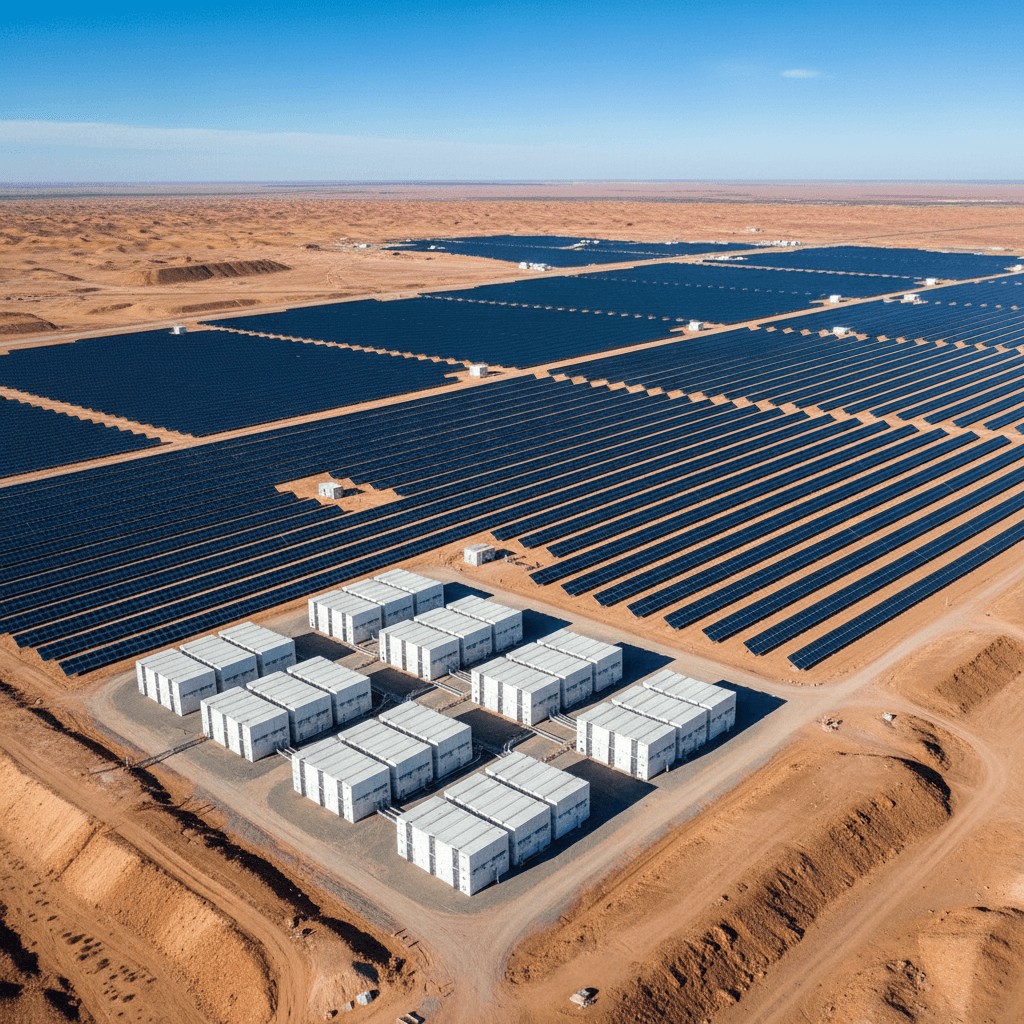
Acciona Energía’s decision to retrofit a 200MW/1,000MWh battery energy storage system (BESS) to its Malgarida solar plant in Chile’s Atacama Desert is a textbook example of where green technology is heading – and how smart operators, investors and policymakers can ride that wave instead of fighting it.
This article walks through what’s happening at Malgarida, why Chile is becoming a global testbed for large-scale solar-plus-storage, and how AI and smart energy management turn projects like this into real climate and business wins.
The Malgarida Retrofit: What’s Actually Being Built?
Acciona Energía is adding a 5‑hour, 200MW/1,000MWh battery system to its existing 238MWp Malgarida solar complex in the Atacama Desert.
Here’s what that means in practice:
- Battery size: 1GWh of storage – enough to supply roughly 200MW for 5 hours straight
- Plant context: Malgarida (two phases) was commissioned in 2021, with about US$170 million invested in the 535‑hectare PV facility
- Location: Atacama Desert – one of the highest solar irradiance areas on the planet
Acciona isn’t building a new plant from scratch. It’s taking an operating solar PV asset and retrofitting it into a hybrid solar-plus-storage facility. That’s a crucial shift: the future of green technology isn’t just more new capacity; it’s upgrading what already exists to be smarter and more flexible.
The battery will let Acciona:
- Store solar output during the day instead of curtailing it
- Dispatch clean energy in the evening peak when prices and demand are higher
- Support grid stability services (frequency regulation, ramping, reserves)
The reality? This isn’t just about one plant maximizing its PPA. It’s about proving a model that will be replicated across solar-heavy regions worldwide.
Why Chile Is Turning Into a Massive Battery Lab
Chile has quietly become one of the world’s most interesting energy storage markets.
A few numbers frame the story:
- Renewables share: 70% of electricity in 2024 (up from 47% in 2019)
- Curtailment: 3.2TWh of solar and wind curtailed in August 2025 alone
- Targets smashed early: A 2GW energy storage target for 2030 is expected to be hit in January 2026
- Future pipeline: 8GW of storage under construction, expected to push capacity 2GW beyond the country’s 2050 target of 6GW within two years
Most countries argue about whether they should build storage. Chile has moved on to how much, how fast, and where.
The 5‑hour BESS standard
In Chile, 5‑hour duration batteries have become the norm for grid-scale projects. That’s not random; it’s directly tied to the country’s generation profile:
- Huge PV output in the middle of the day
- Steep demand ramp in the late afternoon and evening
- Regular curtailment in sunny hours and high prices in evening peaks
A 5‑hour system like Malgarida’s can:
- Soak up excess solar from, say, 11:00–16:00
- Sell power and services from 18:00–23:00 when the grid needs it most
That’s not just a climate story. It’s a revenue stacking story. Storage projects in markets like Chile earn money from:
- Energy arbitrage (buy low, sell high)
- Capacity and reserve markets
- Ancillary services (frequency response, inertia-like support)
In other words, you don’t build 1GWh of batteries just to feel good about decarbonization. You build it because the business case is solid.
Chile’s mega-project pipeline
Acciona’s Malgarida retrofit is part of a much larger wave:
- AES Andes is constructing 2.2GWh of BESS across two hybrid projects (one solar‑wind‑storage, one solar‑plus‑storage)
- Grenergy is rolling out:
- Oasis de Atacama – 2GW solar + 11GWh BESS
- Central Oasis – 1.1GW solar + 3.8GWh BESS, with a first phase already under construction (340MW PV / 960MWh BESS)
- An EDF joint venture and others are pushing several additional GWh of storage through development and construction
For green technology professionals, Chile is becoming a reference market: if your system, software or business model works here at scale, you’ve got a strong story for expansion into other high‑renewables grids.
From Curtailment to Opportunity: Why Retrofitting Is Smart Business
Most companies focus on building new “flagship” projects. But retrofitting existing solar plants with battery storage is often the faster, lower‑risk move.
Here’s why Malgarida-style retrofits are attractive:
1. You stop wasting energy you already paid for
Acciona has a 238MWp plant generating massive daytime output in a region already saturated with solar. Without storage, a portion of that energy ends up curtailed.
Adding 1GWh of storage means the company can:
- Capture a significant share of energy that would otherwise be dumped
- Shift it to higher-value hours in the evening
- Reduce curtailment risk over the remaining project lifetime
That’s not incremental optimization; it can materially change the project IRR.
2. You reuse existing grid connection and infrastructure
Grid interconnection is often the most painful, slow, and expensive part of getting a project online. A retrofit:
- Reuses the existing grid connection
- Avoids starting from zero with permitting and land acquisition
- Shortens the timeline to commercial operation for the battery
For developers and IPPs, this is one of the most underused levers in green technology portfolios.
3. You future‑proof the asset against market and policy shifts
Markets are moving towards:
- Higher penalties or opportunity costs for curtailment
- Capacity and flexibility markets that reward dispatchable clean power
- Stronger grid codes and flexibility requirements
A stand‑alone solar plant is exposed. A solar‑plus‑storage hybrid can adapt to new tariffs, provide system services, and sign more creative offtake structures.
I’ll be blunt: if you own mid‑life solar assets in a high‑renewables region and you’re not seriously modelling a storage retrofit, you’re probably leaving money on the table.
Where AI Fits: Smarter Dispatch, Smarter Grids
This blog series is about green technology and AI, and Malgarida is a perfect lens. The battery alone is powerful; AI‑powered control turns it into a precision tool.
Here’s what that looks like in practice.
AI for dispatch and trading
A 5‑hour BESS needs smart decisions, not fixed schedules. AI and advanced analytics can:
- Forecast solar generation, demand, and prices hour-by-hour
- Predict curtailment risk and congestion patterns on key transmission lines
- Optimize when to charge and discharge down to 5–15 minute intervals
Instead of a static “charge by day, discharge by night” rule, AI systems can:
- Charge more aggressively on days with extreme curtailment risk
- Hold back energy if evening prices look weak and push discharge to late‑night peaks
- Combine arbitrage with ancillary services, maximizing revenue while staying within constraints
The result: higher revenue, lower degradation, more useful services to the grid.
AI for asset health and safety
Gigawatt‑hour batteries aren’t just big; they’re complex. AI helps operators:
- Detect early signs of cell or rack degradation
- Predict remaining useful life (RUL) and plan replacements
- Monitor thermal behavior to reduce fire risk
In a system like Malgarida’s, that can mean:
- Fewer unexpected outages
- Better planning for augmentation cycles
- Lower O&M cost per MWh delivered over the asset life
For investors and lenders, AI‑based asset health monitoring is quietly becoming a de‑risking tool.
AI at the grid level
Zoom out from Malgarida. Chile’s grid operator will be managing:
- Multiple multi‑GWh battery fleets
- High shares of variable renewables
- Long, skinny transmission corridors from the Atacama down to load centers
AI‑supported grid management can:
- Anticipate where congestion will hit
- Coordinate BESS fleets to absorb or release power where it helps most
- Minimize system‑wide curtailment while maintaining reliability
This is where green technology and AI overlap most clearly: intelligence is becoming as crucial as hardware.
What This Means for Developers, Utilities and Policymakers
Malgarida isn’t a one‑off curiosity. It’s a template. If you’re planning or operating energy assets, there are a few clear lessons.
For developers and IPPs
- Audit your portfolio for retrofit candidates: Prioritize large solar or wind plants in curtailment‑prone regions with strong grid connections.
- Model 4–6 hour BESS options: Especially where solar peaks don’t line up with demand. The Chilean 5‑hour standard is a good reference.
- Invest in smart control from day one: A mediocre BESS with great optimization software often beats a top‑tier system operated on fixed schedules.
For utilities and grid operators
- Treat storage as infrastructure, not a niche add‑on: Large BESS fleets are now essential for reliability in high‑renewables systems.
- Design tariffs and markets that reward flexibility: Encourage time‑shifting, congestion relief, and support services, not just raw MWh.
- Use AI to orchestrate fleets, not just individual plants: The real efficiency gains show up at system level.
For policymakers and regulators
- Align targets with grid flexibility: Capacity targets for renewables must be paired with storage and grid modernization goals.
- Create certainty for long‑duration and multi‑hour storage: Tenors, contracts, or auctions that favor 4–6+ hour systems will unlock serious private capital.
- Encourage retrofits, not only greenfield: Clear regulatory guidance and streamlined permitting for hybridizing existing plants can accelerate decarbonization.
The Bigger Picture: Green Technology Is Growing Up
Here’s the thing about projects like Malgarida: they signal that green technology is leaving its experimental phase.
Chile set ambitious renewable targets, hit them early, and discovered the hard way that generation without flexibility causes curtailment and congestion. Now, with projects like Acciona’s 1GWh BESS retrofit and multi‑GWh portfolios from players like Grenergy and AES Andes, the country is showing what a mature clean energy system looks like.
Energy storage, AI-driven optimization, and hybrid solar‑plus‑storage plants aren’t side projects anymore. They’re becoming the backbone of reliable, low‑carbon power systems.
If your business touches energy – as a user, producer, investor or policymaker – the question isn’t whether this model will spread beyond Chile. It’s how quickly you’re prepared to operate in a world where flexible, intelligently managed clean power is the default, not the exception.
Interested in where AI and green technology intersect next? Look at every solar plant, wind farm, and industrial site you work with and ask a simple question: what happens if this asset could think, store, and shift energy – not just produce it? That’s the direction Malgarida is pointing us toward.