Robot elevator integration via APIs is making smart buildings practical. Learn how two-way dispatch, safety modes, and standards enable multi-floor AMRs.
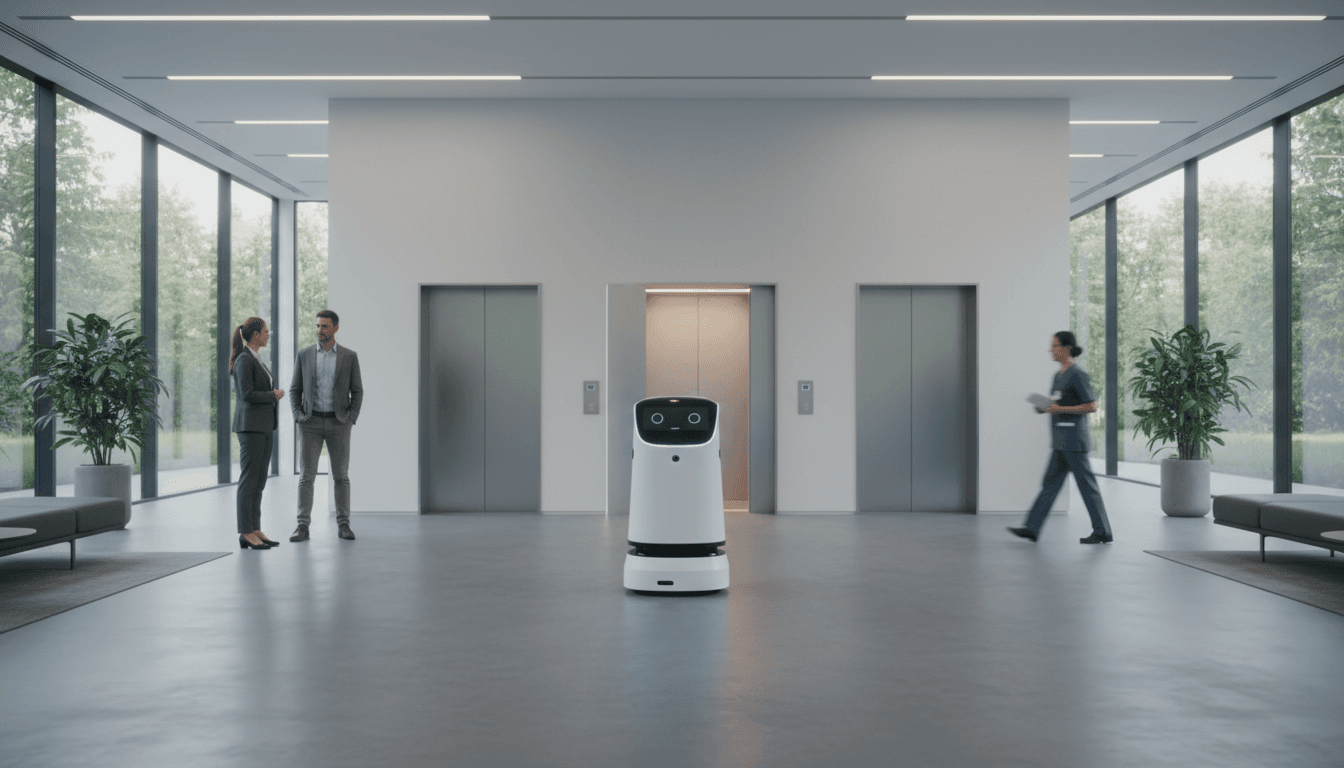
Robot Elevator Integration: The API Blueprint
A surprising bottleneck has been slowing down autonomous mobile robots (AMRs) for years: the elevator.
If you’ve ever watched a delivery robot glide through a lobby and then… stall at the elevator bank, you’ve seen the problem in real life. Robots are getting better at mapping, navigation, and human-aware motion planning. But a multi-floor building is still a “vertical maze” unless the robot can reliably request an elevator, understand what the elevator is doing, and react safely when building conditions change.
That’s why Otis’s approach to robot elevator integration matters beyond elevators. It’s a clear example of how AI and robotics are transforming industries worldwide by forcing traditional infrastructure—elevators, doors, access control, life safety systems—to become software-addressable and interoperability-ready.
Why elevators were the last big obstacle for AMRs
Elevators were hard for robots for one simple reason: most buildings were never designed for non-human “occupants” that need deterministic, machine-readable control.
A decade ago, many robot deployments that crossed floors relied on awkward workarounds:
- Physical button pushers (robot arms, styluses, or add-on actuators)
- One-off wiring between a robot vendor and a single elevator controller
- Property-by-property custom approvals because permitting and inspection rules varied widely
Those approaches don’t scale. A hotel chain rolling out service robots across 200 properties can’t afford 200 custom elevator retrofits—and a hospital can’t tolerate elevator behaviors that are unpredictable during emergency operations.
Here’s the stance I’ll take: AMR ROI in hospitals, hotels, and mixed-use buildings is capped until elevator integration becomes a standardized software capability. Floor-to-floor autonomy is what turns robots from “single-department helpers” into building-wide automation.
Otis Integrated Dispatch: what “robot-ready elevators” look like
The core idea behind Otis’s robot interface strategy is straightforward: stop treating elevator control as hardware tinkering and start treating it as a certified digital service.
Otis built a cloud-based system—Otis Integrated Dispatch—that exposes elevator interactions through APIs. Instead of a robot improvising with buttons, a robot system can programmatically:
- Call an elevator to a floor
- Request a destination floor
- Receive two-way status signals (elevator arriving, door state, service modes)
- Detect conditions where the robot should pause or reroute
That two-way communication piece is the real differentiator. The elevator isn’t just accepting commands; it’s publishing context. And context is what AMR autonomy stacks need to behave safely.
Otis also reports that, five years into this effort, it has engaged with 60+ robot companies, and it supports integration via documentation, a developer portal, and a sandbox environment for testing.
Treating robots like “building occupants” changes system design
Otis’s framing is telling: robots are treated as occupants.
That pushes integration toward “normal building behavior” rather than special-case hacks. For property teams, that’s the difference between:
- A brittle custom install that triggers inspections and maintenance headaches
- A manufacturer-supported interface that fits into existing service workflows
For robotics teams, it means something equally important: fewer unknowns. When the elevator behaves like a predictable system component (with known states and failure modes), AMR software can implement robust retry logic and safety fallbacks.
The practical architecture: how robot-to-elevator control usually works
Most teams picture elevator integration as “call elevator, go up.” In practice, reliable robot elevator integration is a state machine with timeouts, permissions, and contingency plans.
A typical architecture in a multi-tenant building looks like this:
- Robot mission planner decides a task requires floor change (e.g., pharmacy to ICU).
- Fleet manager (often cloud-based) requests elevator service for the robot.
- Elevator dispatch system assigns a car and returns status updates.
- Robot autonomy stack executes: navigate to the correct door, align, board, reposition, exit.
- Safety and exceptions override normal flow (fire service mode, medical priority service, maintenance).
What makes it hard isn’t step 2. It’s steps 4 and 5.
Retry logic and timing matter more than most teams admit
Elevator lobbies are noisy environments: people queue, doors cycle, and elevator assignment can change. A good integration design anticipates that reality.
Strong implementations typically include:
- Clear timeouts (how long the robot waits before re-requesting service)
- Idempotent requests (retries don’t create “duplicate calls”)
- Door-state awareness (avoid rushing doors or blocking traffic)
- Fallback routing (use stairs? no—use an alternate elevator bank or pause mission)
This is where AI comes in quietly. Not the headline-grabbing generative stuff—more like policy learning, crowd-aware navigation, and adaptive scheduling in the fleet manager so robots don’t create lobby congestion.
Safety, compliance, and emergency modes: the non-negotiables
Elevators live in a world of strict codes, inspections, and life-safety expectations. If your robot strategy doesn’t respect that, it won’t survive its first serious deployment.
Otis highlights an important capability: robots can be informed when elevators enter special operating conditions, such as:
- Fire service mode
- Medical team priority use
- Service/maintenance modes
That’s not just a “nice feature.” It’s the difference between a robot that becomes a hazard and a robot that becomes a good citizen.
A sentence worth keeping on a whiteboard: In a building emergency, your robot must default to being invisible.
The compliance shift: from “hardware mods” to “certified interfaces”
One of the biggest trends in smart buildings is that deployments are moving away from invasive on-site modifications.
When an elevator OEM provides a supported digital interface, you typically get:
- Cleaner inspection story (clear responsibility boundaries)
- More predictable service and maintenance
- Lower friction across jurisdictions that scrutinize elevator alterations
For robotics-as-a-service (RaaS) providers, this is huge. RaaS teams can’t scale if every new customer requires a bespoke elevator project with uncertain permitting.
Standards and interoperability: we’re finally seeing a path forward
The building automation world has a long history of proprietary protocols. Elevators have been no different.
What’s changing now is pressure from deployments: hospitals, hotels, and large commercial properties want multiple robot types operating together—delivery robots, cleaning robots, security patrol units—often from different vendors.
Otis points to emerging standards efforts such as Singapore’s SS 713, which encourages interoperability and anticipates multiple robots inside a building.
My take: the winning “standard” won’t be a single universal API. It’ll be a layered model:
- A common building-level interaction model (requests, states, priorities)
- OEM-specific adapters for elevators, doors, and access systems
- Middleware that normalizes commands and events across vendors
Middleware will matter as much as the elevator API
Middleware sounds boring until you have to integrate elevators, automatic doors, badge readers, and security policies across 30 buildings.
A practical middleware layer can:
- Normalize elevator event streams into simple robot-facing states
- Coordinate door access and elevator dispatch as one transaction
- Enforce policies (which robots can access which floors, at what times)
That’s the blueprint for AI-driven smart cities at the building level: robots become one more managed actor in building operations, not a bolt-on gadget.
Where this creates real ROI: hotels, hospitals, and warehouses with mezzanines
Robot elevator integration isn’t a science project. It’s a direct multiplier on automation value.
Hotels: service delivery without staff burn
Holiday and year-end travel peaks put pressure on hospitality teams. Robots that can deliver towels, toiletries, and room-service items across floors can reduce overnight workload and shorten response times—but only if elevators are reliable.
In a hotel, even minor elevator confusion becomes a guest experience problem. Digital dispatch plus status feedback is what keeps robots from getting “stuck and awkward” in public spaces.
Hospitals: time saved where it actually matters
Hospitals are full of short, frequent transport tasks: meds, specimens, linens, supplies. Many routes are cross-floor.
Elevator-aware AMRs can:
- Reduce non-clinical walking time for staff
- Improve consistency of routine deliveries
- Avoid disrupting priority elevator usage when emergency modes trigger
The big win is predictability. If the robot knows an elevator is in a special mode, it can pause, reroute, or hand off the task rather than forcing humans to intervene.
Warehouses and retail back-of-house: vertical automation is underused
Everyone talks about warehouse AMRs on flat floors. But many facilities have mezzanines, multi-level storage, or connected office/lab floors.
Once elevators become software-controlled, a “multi-floor AMR fleet” becomes realistic—and that opens automation options that used to require conveyors or lifts.
Implementation checklist: what to ask before you deploy
If you’re a robotics leader, facilities director, or innovation manager planning AMRs in a multi-floor site, these questions prevent expensive surprises.
- Which elevator banks are eligible for robot use? (public vs service elevators)
- What are the building’s priority rules? (medical priority, VIP floors, restricted access)
- How will emergency and service modes be communicated to robots?
- What’s the expected robot traffic volume at peak times?
- Who owns what when something fails? (robot OEM, elevator OEM, property ops, integrator)
- What does “safe failure” look like? (pause in lobby, return to dock, cancel mission)
A practical stance: don’t treat elevator integration as a feature. Treat it as critical infrastructure. It deserves the same rigor you’d give to access control or fire alarms.
What this means for smart buildings in 2026 and beyond
The most interesting part of the Otis story isn’t that an elevator can be called via an API. It’s that a 30-year installed base can be pulled into the software era through backward-compatible, manufacturer-supported integration.
That’s the pattern we’ll keep seeing as AI and robotics transform industries worldwide:
- Existing infrastructure gains new “digital surfaces” (APIs, event streams, cloud dispatch)
- Robots stop being edge cases and start being first-class building actors
- Middleware and standards slowly reduce integration friction across vendors
If you’re investing in AMRs for healthcare, hospitality, retail, or logistics, multi-floor autonomy is one of the clearest paths to better utilization and faster payback.
The forward-looking question I’d leave you with is simple: when every building system exposes machine-readable state—elevators, doors, HVAC zones, crowd density—how much of building operations becomes schedulable by fleet managers and AI control systems?